
AI-powered chatbots were initially introduced to simulate human conversations and provide instant responses. Today, sales chatbots go far beyond basic interaction by actively supporting product discovery, personalization, and conversion.
This guide owns the sales-chatbot question: what a sales chatbot is, how it differs from support chat, and which examples are designed to move a shopper or lead toward a purchase. If you need a broader vendor matrix spanning sales, support, helpdesk, and social messaging, use our separate comparison of the best AI chatbots for ecommerce.
Modern AI sales chatbots integrate directly with ecommerce systems, analyze product catalogs and shopper behavior, and deliver tailored recommendations based on customer intent. As a result, they help remove friction across the buying journey.
Beyond customer support, sales chatbots now address key business bottlenecks by improving lead capture, guiding purchase decisions, and automating revenue-driving actions. In this article, we cover eight sales chatbots that support tasks such as booking meetings, resolving inquiries, cross-selling products, and improving overall conversion performance.
8 Best Sales Chatbots to Boost Conversions
Sales chatbots typically communicate with shoppers using natural, human-like language while providing instant assistance. However, the best sales chatbots do much more than respond to questions.
The tools featured below extend beyond support by helping businesses identify high-intent shoppers, recommend relevant products, book meetings, and in some cases, take direct actions such as updating or canceling orders. Each platform addresses different stages of the ecommerce funnel, from discovery to conversion.
1. Tolstoy
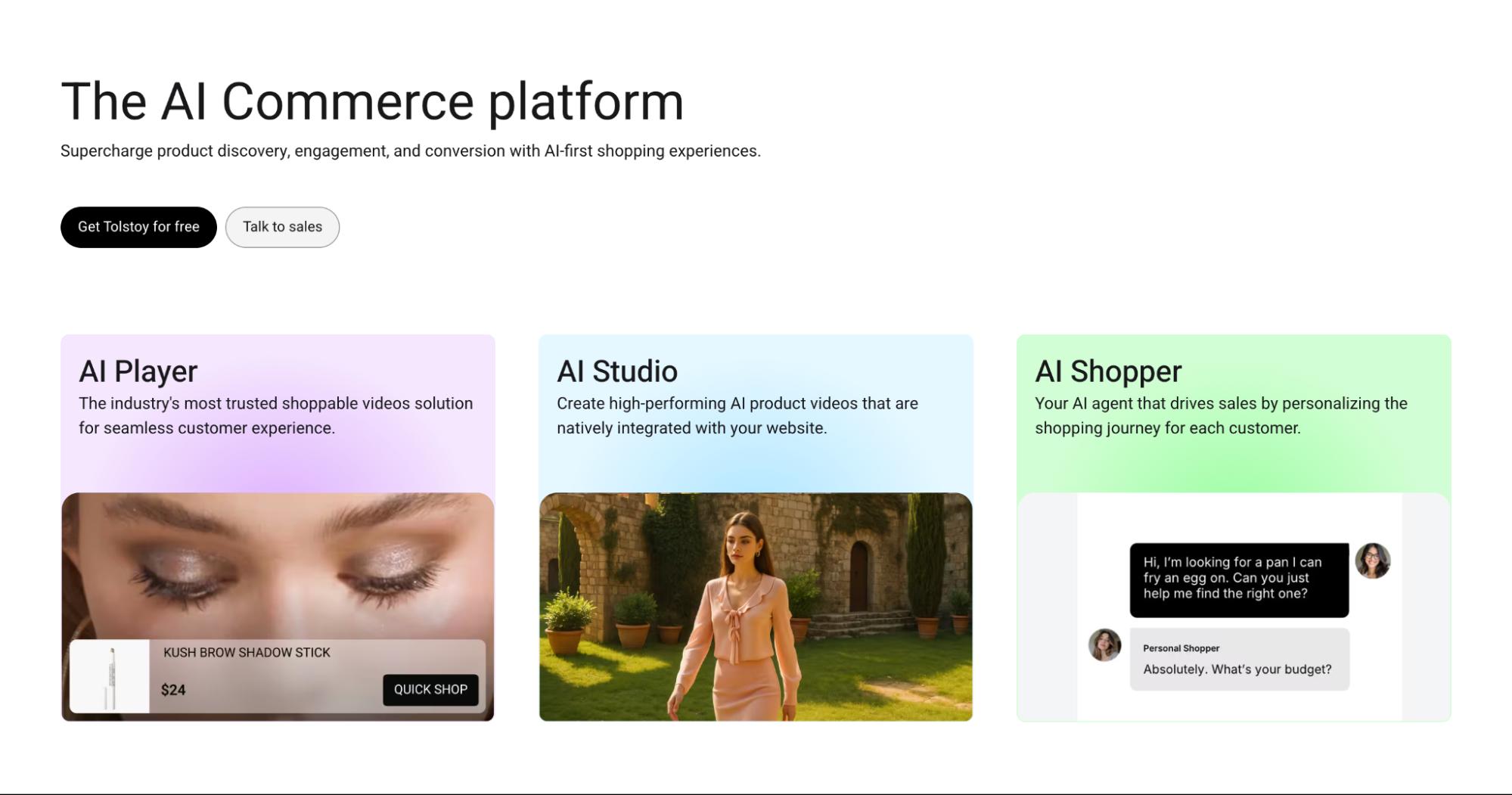
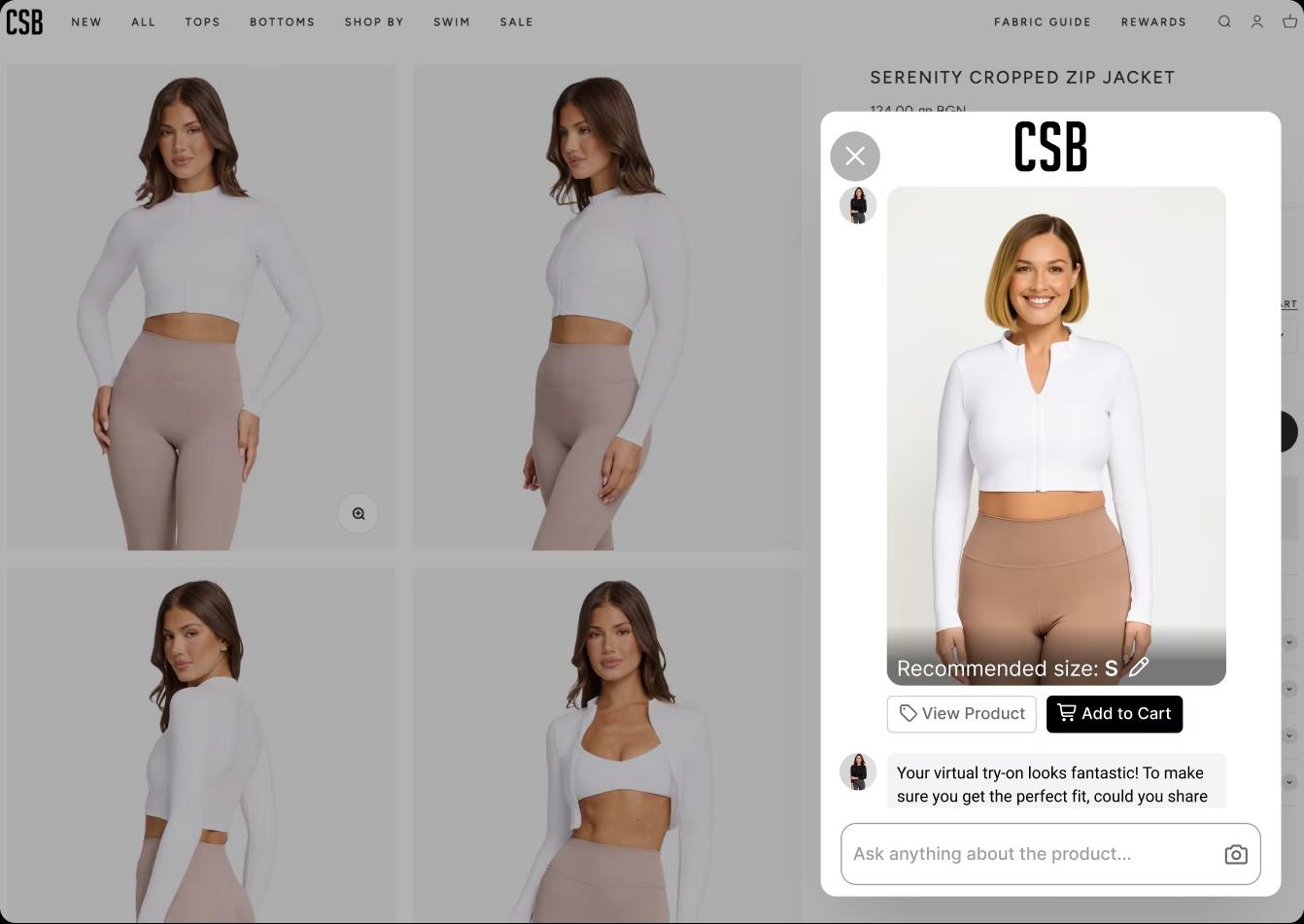
Tolstoy is an AI-powered sales chatbot and interactive commerce platform - built primarily for Shopify brands - designed to help shoppers discover, evaluate, and choose products directly on ecommerce sites. Its AI Sales Agent acts as a conversational, sales-focused assistant that answers customer questions, recommends products, guides sizing and fit decisions, and supports visual product exploration, including virtual try-on for compatible apparel collections.
Beyond basic chat functionality, Tolstoy supports guided product discovery through intelligent recommendations, sizing and fit assistance, and visual context that helps shoppers make confident purchase decisions. Its AI Player enables rich, interactive content and shoppable videos that complements conversational shopping, while AI Studio, its AI-powered images and videos generation platform, helps brands generate and scale product content and guided scripts that power smart question flows and recommendations.
2. Intercom
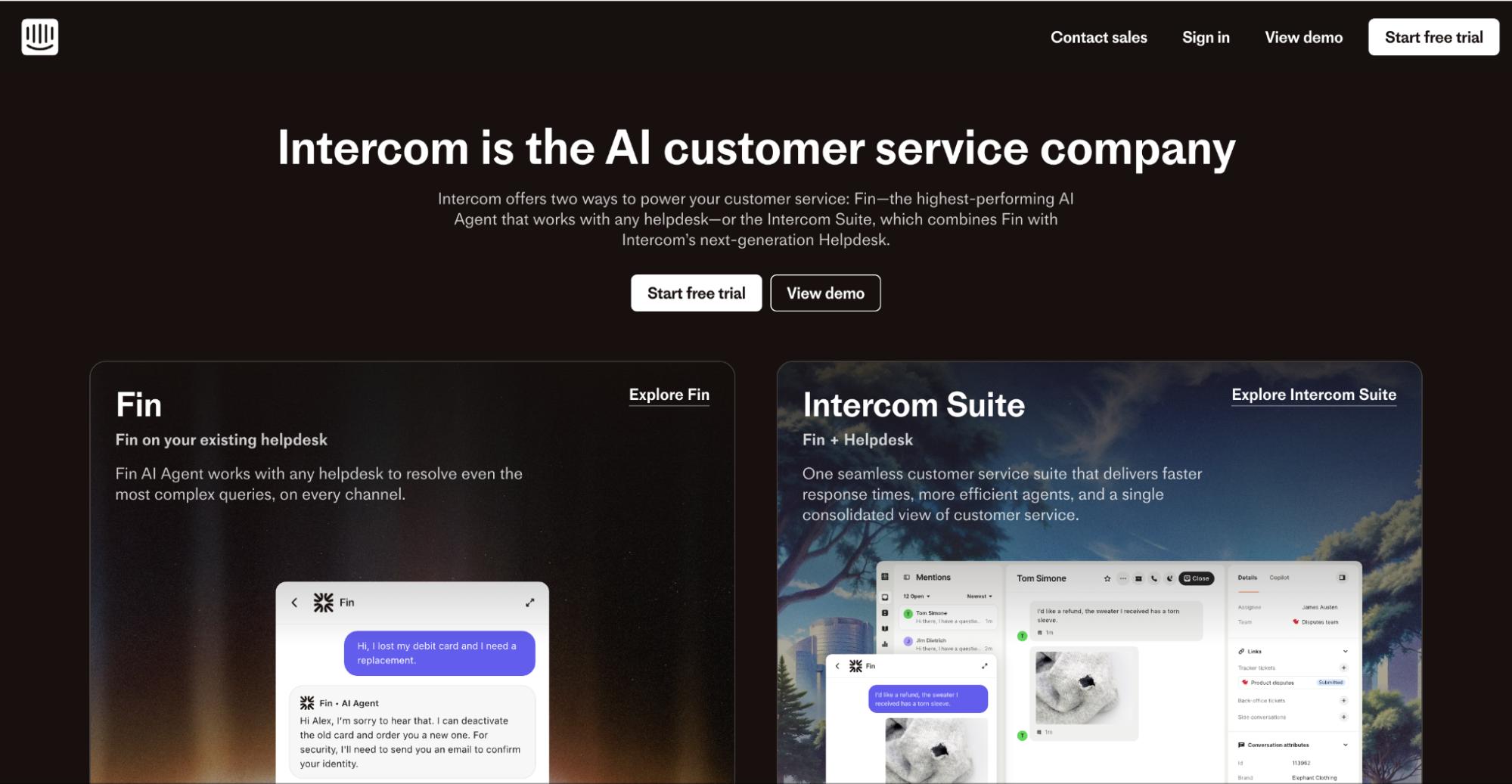
Intercom offers an AI agent (Fin) alongside a full customer support and helpdesk platform. It is designed primarily for handling customer inquiries across pre- and post-sale interactions, using AI to resolve common questions while routing more complex issues to human agents.
Intercom supports multiple channels, including live chat, email, and messaging apps, and integrates with internal systems to give agents context when stepping in. Its strength lies in scalable support automation, ticket deflection, and structured handoff between AI and human teams rather than direct product-led selling.
3. Drift
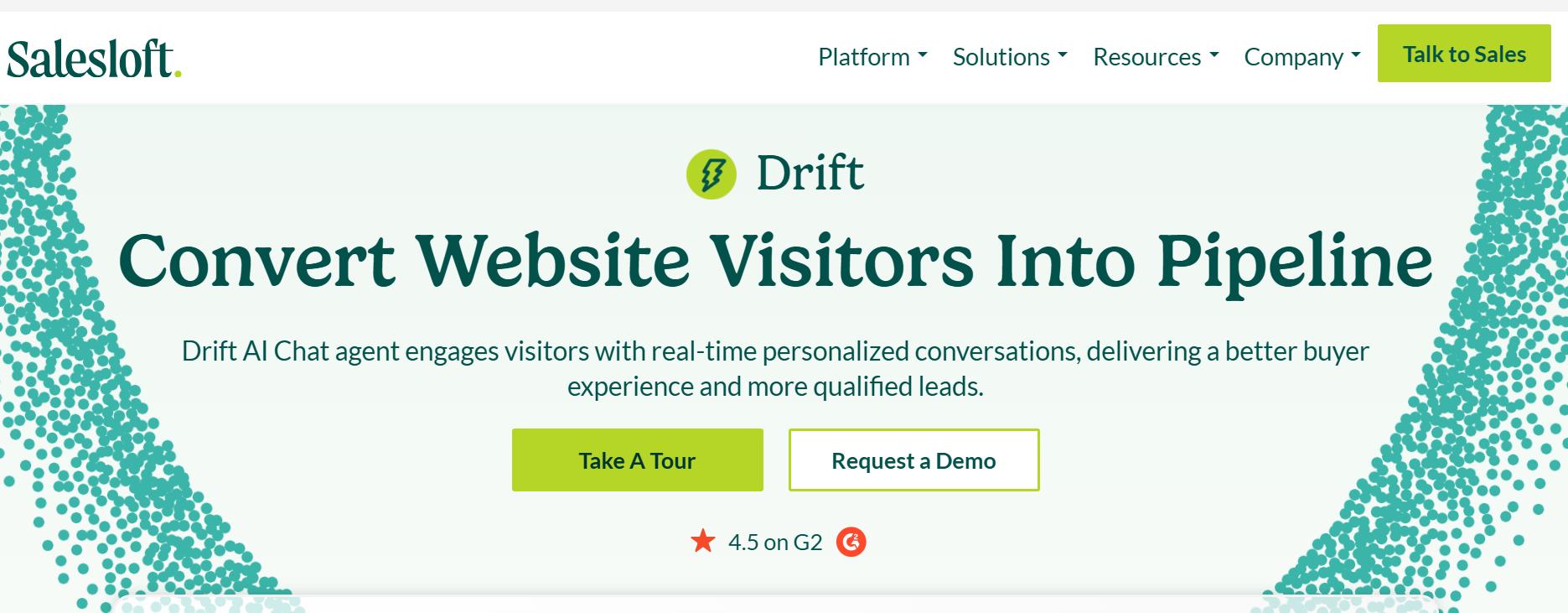
Drift is a conversational marketing and buyer engagement platform that operates as part of Salesloft’s revenue orchestration suite. It focuses on engaging high-intent website visitors, qualifying buyers, and routing conversations to sales teams in real time.
Drift is primarily used in B2B environments, where it helps identify buying intent, personalize website conversations, and move qualified prospects into sales workflows. It is less focused on transactional ecommerce and more on pipeline generation, account-based marketing, and complex sales cycles.
4. HubSpot Chatbot Builder
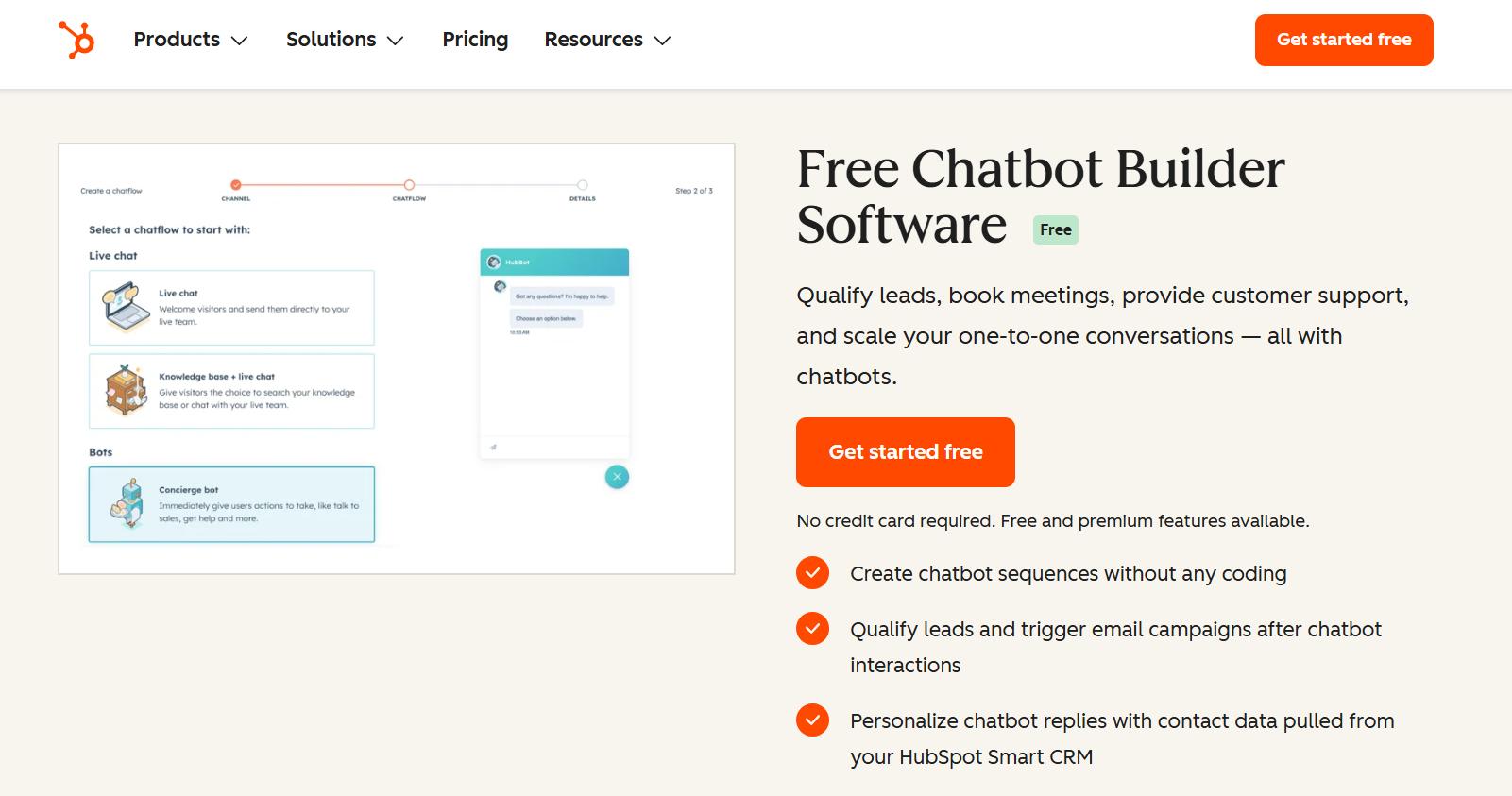
HubSpot’s Chatbot Builder is a no-code tool for creating rule-based and AI-assisted chat experiences within the HubSpot ecosystem. Teams can use it to capture leads, qualify prospects, book meetings, answer common questions, and route conversations to live agents.
Because it is natively integrated with HubSpot CRM, inbox, and help desk tools, the chatbot can personalize responses using existing contact data and automatically sync collected information back to the CRM. It is best suited for teams already running sales, marketing, or support workflows on HubSpot.
5. Gorgias
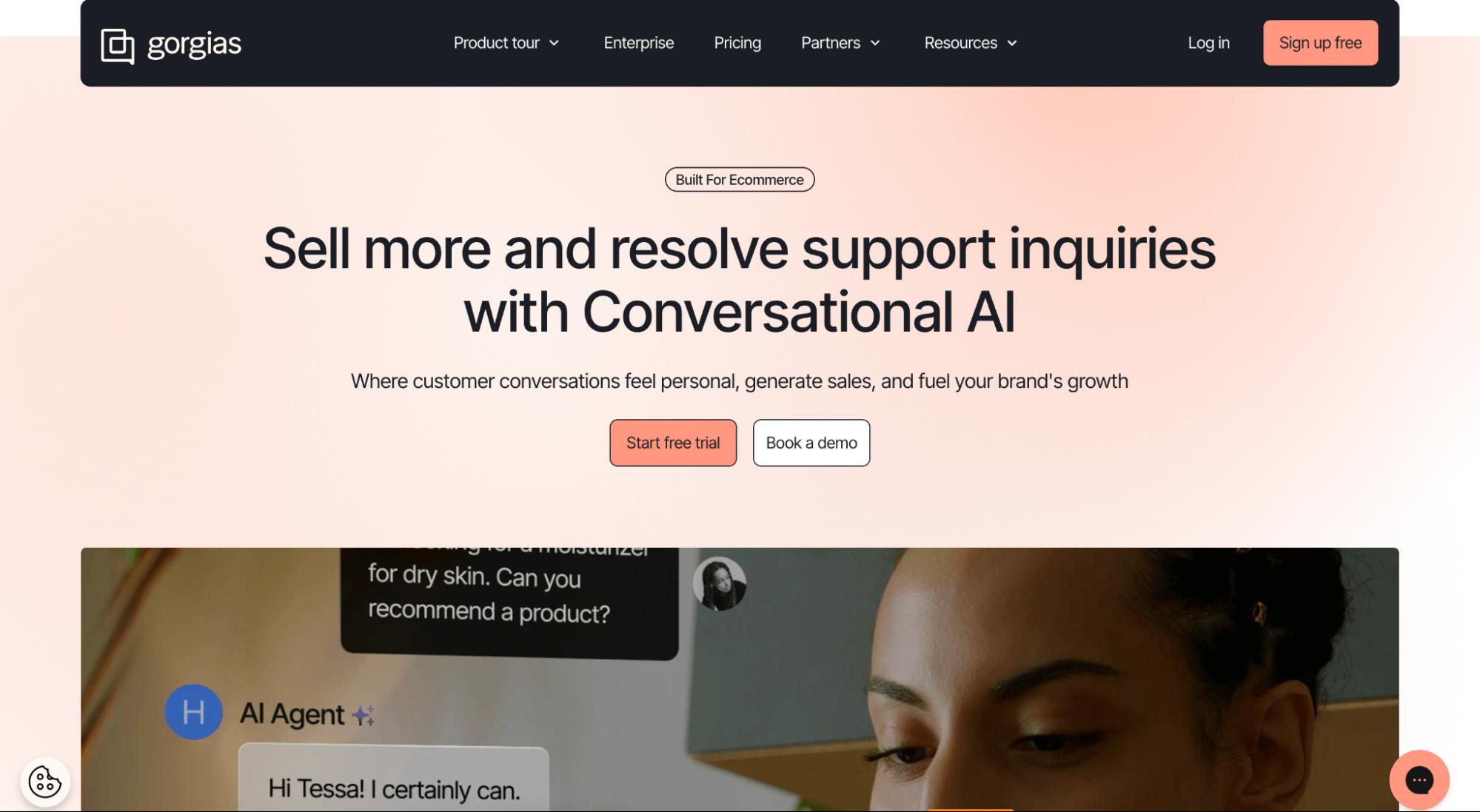
Gorgias is an ecommerce-focused support platform with AI-assisted responses and deep integrations into platforms like Shopify and Magento. Its AI features help automate replies, suggest responses, and surface order context during conversations.
With the appropriate permissions and configuration, Gorgias allows agents to take direct actions from chat, such as updating shipping details, managing returns, canceling orders, or handling subscriptions. While primarily a support tool, it also supports pre-purchase questions and sales-assist scenarios tied closely to order and product data.
6. Tidio
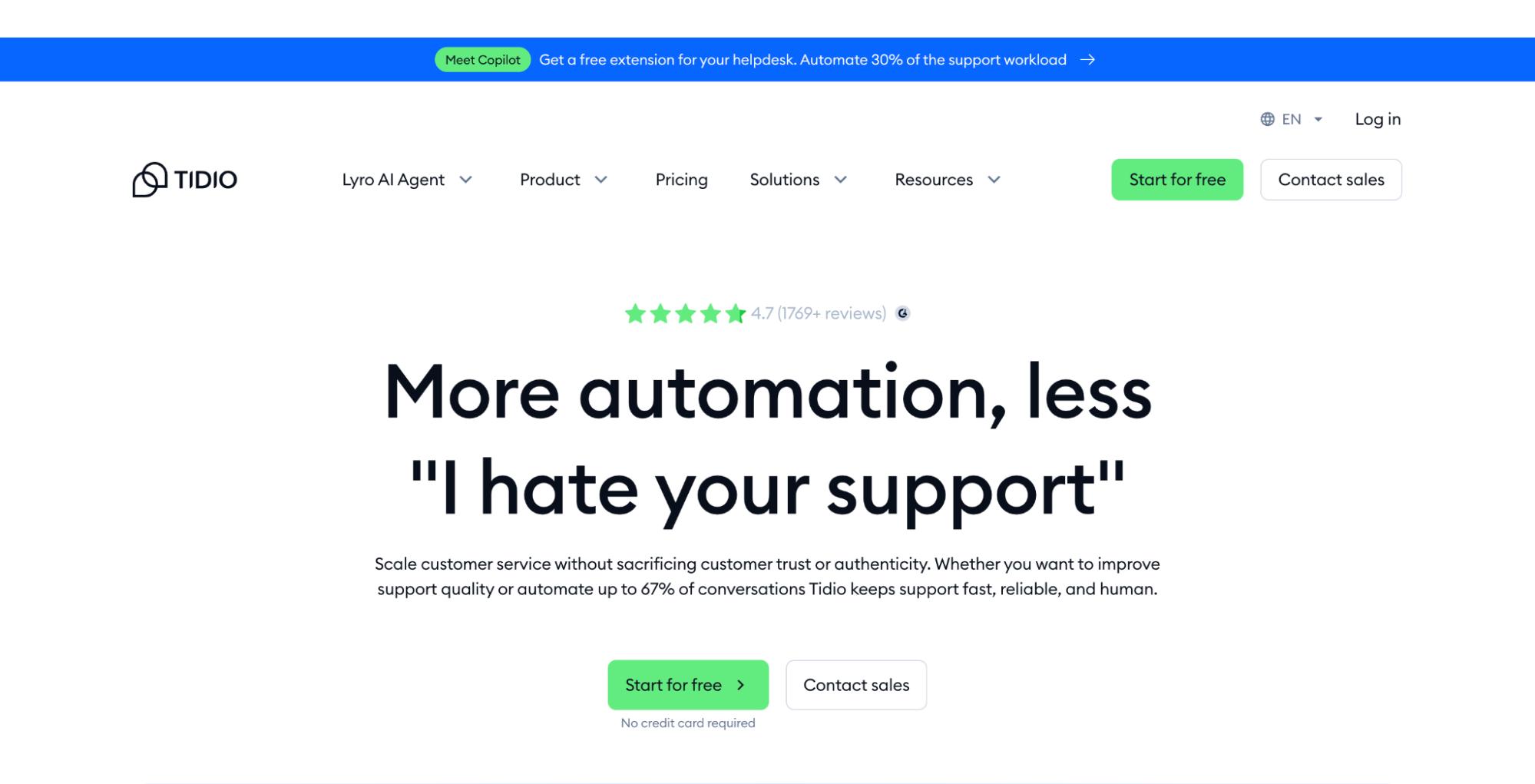
Tidio combines live chat, a helpdesk, and its AI agent (Lyro) to help small and mid-sized businesses automate customer conversations. Lyro is designed to handle frequently asked questions and routine inquiries using knowledge-based responses, while human agents can step in as needed.
Tidio supports multichannel messaging and is commonly used by smaller ecommerce stores looking for affordable, easy-to-deploy chat automation that improves first-response coverage rather than fully replacing human interaction.
7. ManyChat
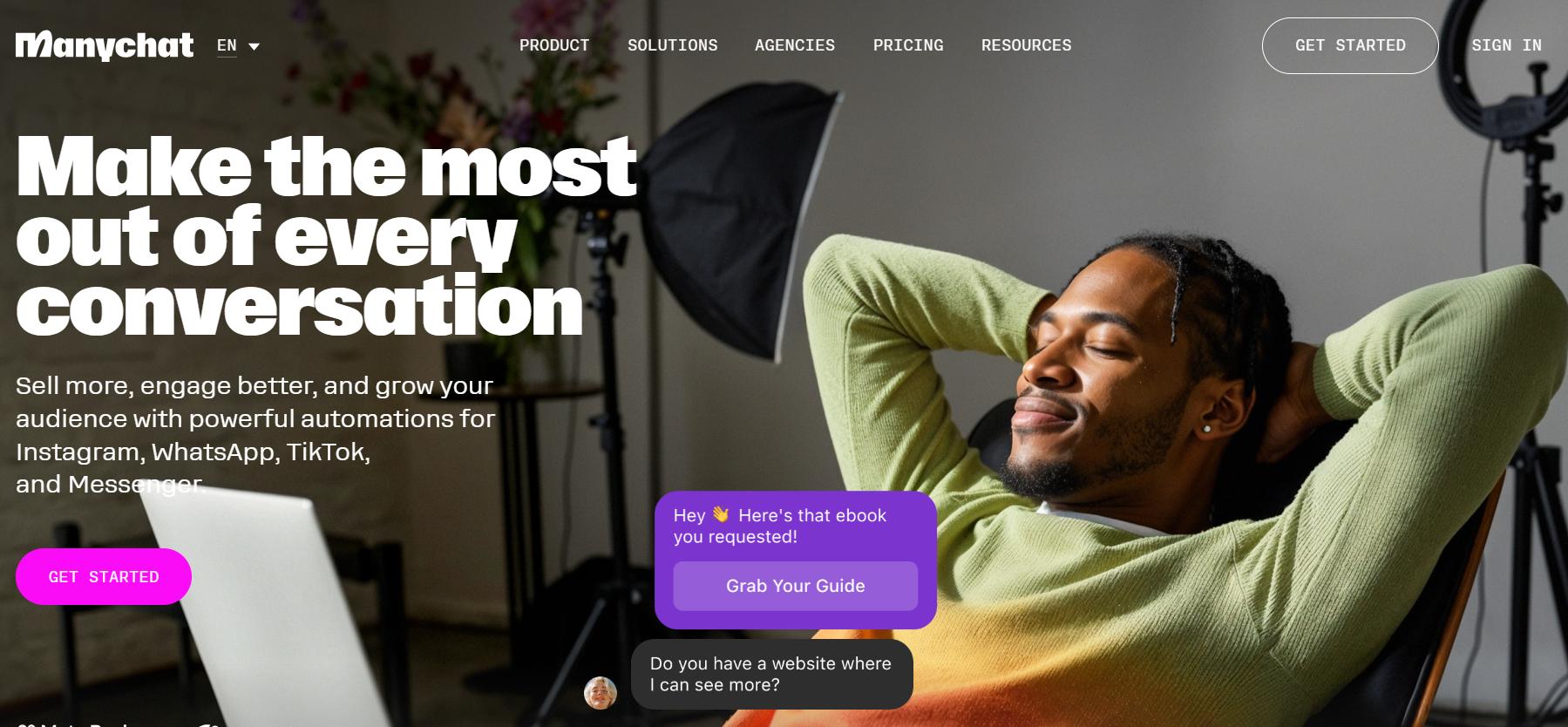
ManyChat is a conversational marketing platform focused on social and messaging channels such as Instagram, WhatsApp, Facebook Messenger, and TikTok. It enables brands to automate replies to comments, DMs, and messages, and to move conversations into structured chat flows.
ManyChat is widely used by social-commerce and creator-led brands to nurture leads, promote products, and drive sales directly within messaging apps. Its core strength is turning social engagement into one-to-one conversations and conversion opportunities.
8. LiveChat AI
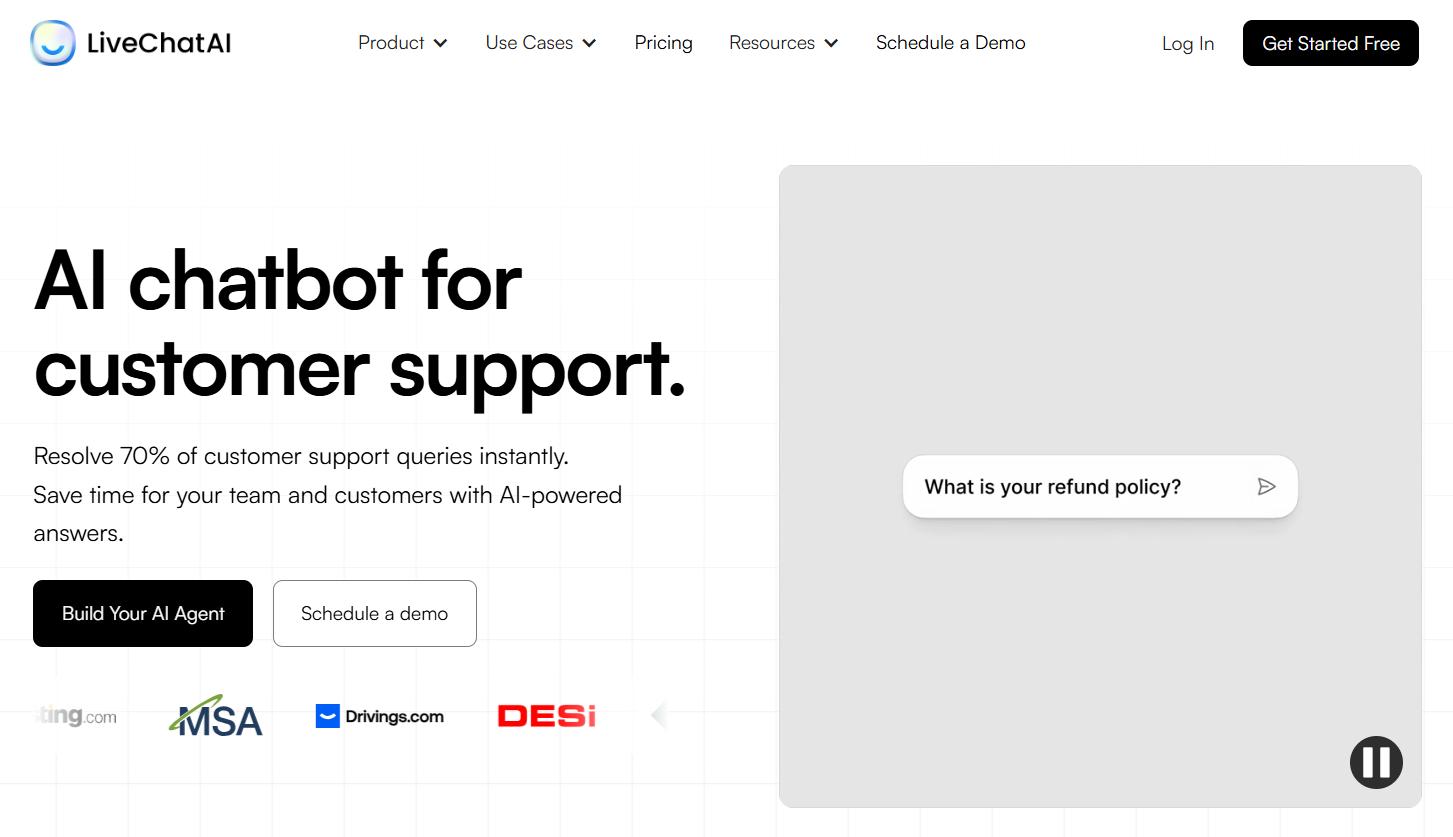
LiveChat AI is an independent, no-code AI chatbot platform designed to automate website conversations by leveraging your own data sources. It allows teams to create AI chatbots for lead capture, customer inquiries, and booking workflows without technical setup.
LiveChatAI integrates with tools such as Calendly and CRM systems, supports workflow automation, and provides analytics to monitor performance and resolution rates. It is best suited for teams looking for a lightweight, AI-first chatbot without replacing an existing live chat stack.
Sales Chatbot Comparison Overview
Although these AI sales chatbots share some overlapping capabilities, each is built to serve distinct use cases and business needs. Some focus on guided product discovery, while others prioritize customer support automation, lead qualification, or social commerce.
The comparison below highlights how each tool differs in AI functionality, ecommerce integrations, and ideal use cases, helping you evaluate which solution best aligns with your growth goals:
| Tool | AI Capabilities | E-Commerce Integrations | Best For |
|---|---|---|---|
| Tolstoy | AI-powered personal shopper, guided product discovery, contextual recommendations, sizing & fit assistance, virtual try-on for supported apparel, interactive content support via AI Player, and scalable content generation via AI Studio. | Shopify, Wix, Klaviyo, Gorgias, HubSpot, Zapier, and more. | E-commerce brands that are prioritizing videos, virtual try-on, and personalized shopping experiences. |
| Intercom | AI-powered helpdesk, real-time response, escalations, omnichannel support (live chat, email, WhatsApp). | WhatsApp, Google Analytics, Instagram, Salesforce, HubSpot, and more. | Companies that need AI-powered customer support that can handle complex cases while supporting multiple communication channels (email, chat, WhatsApp). |
| Drift | Conversational AI, high-intent buyer identification, and brand voice customization. | Salesforce and CRMs. | B2B organizations that seek sales‑oriented chat automation and lead qualification. |
| HubSpot Chatbot Builder | Chatbot builder, lead collection, meeting bookings, CRM integration, personalized responses. | HubSpot CRM and Smart CRMs. | Teams that want a free and easy-to-use chatbot builder integrated with HubSpot CRM. |
| Gorgias | AI-driven customer support, ticket handling, edit and cancel Shopify orders, and product recommendations. | Integrates with 100+ apps and platforms, including Shopify Plus, Tolstoy, Loop Returns, WooCommerce, and BigCommerce. | E-commerce businesses that want to automate order management, returns, shipping, and general customer inquiries with the help of AI. |
| Tidio | AI agent, customer query management, brand voice matching, and intent recognition. | Shopify, BigCommerce, Shopware, Wix, Squarespace, OpenCart, Klaviyo, and more. | Businesses that want to implement AI-powered automation in customer service, mimicking human interaction. |
| ManyChat | Social media automation, lead nurturing, sales closure, chat-based engagement, and automated comment interactions. | Instagram, WhatsApp, Messenger, TikTok, Shopify, Mailchimp, Klaviyo, Hotmart, HubSpot, and more. | Social-first brands and marketers seeking automated lead nurturing and engagement across messaging platforms. |
| LiveChat AI | AI chat agent builder, meeting booking, payment processing, and sending leads to CRM. | Stripe, CRM, and Calendly. | Businesses that want to book meetings, process payments, and manage leads through an automated AI-powered solution. |
Essential Features to Look For in a Sales Chatbot
Sales chatbots help ecommerce businesses boost conversions, automate repetitive actions, improve customer satisfaction, and capture valuable shopper insights. Choosing the right features ensures your chatbot supports both revenue growth and operational efficiency. Below are the core capabilities to evaluate when selecting a sales chatbot:
Conversion and Revenue Features
Effective sales chatbots actively support purchasing decisions rather than simply answering questions. They help guide shoppers toward products, remove hesitation, and streamline checkout experiences.
Personalized Product Recommendations
AI-powered chatbots use customer behavior, product data, and intent signals to deliver relevant product recommendations. Unlike human agents with limited availability, chatbots can engage shoppers 24/7 and respond instantly with tailored suggestions.
Upsell and Cross-Sell Automation
Many sales chatbots can automatically upsell or cross-sell products by recognizing shopper intent. They may suggest premium alternatives, complementary items, limited-time discounts, or bundles. For example, a chatbot assisting with flight bookings might also recommend hotel accommodations or add-ons.
Shoppable Chat Experiences
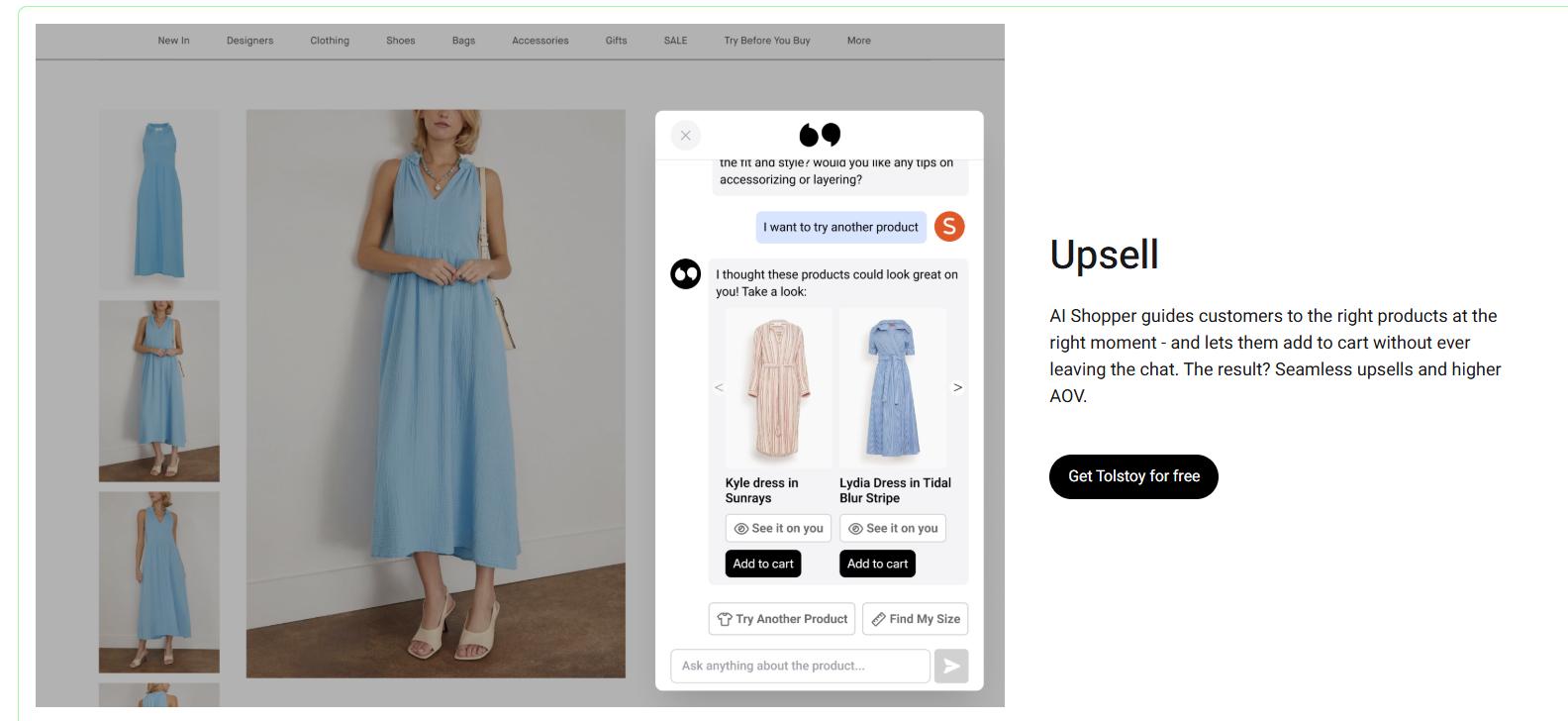
Some sales chatbots enable in-chat shopping actions. Platforms like Tolstoy allow shoppers to view carts, add items, and continue checkout directly within the chat experience, reducing friction and minimizing drop-offs.
Automation and Engagement Features
Sales chatbots function as always-on engagement tools while also supporting lead generation and qualification. With automation and behavioral logic, businesses can maintain control over how conversations progress.
Automated Lead Qualification
AI chatbots can capture leads during conversations and sync them to CRM systems, as seen with platforms like Drift and LiveChat AI. Some solutions qualify leads automatically based on behaviors such as cart activity, browsing patterns, or declared budget.
24/7 Customer Engagement
Sales chatbots resolve common questions at any time, reducing response delays. In some cases, they can also perform actions such as updating order details, booking meetings, or canceling orders, eliminating the need for customers to wait on human agents.
Behavior-Based Messaging
Chatbots often trigger messages based on shopper behavior, such as prolonged browsing, cart abandonment, or exit intent. For example, if a shopper adds a product to their cart but hesitates, the chatbot may suggest similar items, offer assistance, or present a discount.
AI-Driven Conversation Flows
Custom conversation flows allow chatbots to guide users toward purchases using conditional logic. For example, when a shopper asks about shoe availability, the chatbot might respond with size-specific options and suggest a virtual try-on where supported.
Technical and Operational Features
To operate effectively, sales chatbots must integrate seamlessly with ecommerce platforms and supporting tools such as CRMs, calendars, and payment systems.
E-Commerce Platform Integrations
Most ecommerce-focused chatbots integrate with platforms like Shopify, WooCommerce, and BigCommerce. These integrations allow the AI to access product catalogs, order data, and customer history, enabling accurate responses and order-related actions.
Analytics and Conversion Tracking
Sales chatbots collect insights into engagement, conversions, and purchasing behavior. These metrics help businesses identify issues such as cart abandonment and trigger targeted actions, including personalized offers or follow-up messaging.
How to Choose the Right Sales Chatbot for Your Store
Before selecting a sales chatbot, identify which areas of your ecommerce funnel need improvement and how automation can support those goals. The right chatbot should integrate smoothly with your existing systems while offering features that directly impact conversion.
| Step | Description |
|---|---|
| 1. Evaluate Your Conversion Bottlenecks | Identify where shoppers drop off, such as abandoned carts, unclear product information, or slow responses. |
| 2. Identify Key Use Cases | Clarify what tasks the chatbot should handle, including upselling, answering FAQs, or guiding shoppers through purchase decisions. |
| 3. Check Integration Depth With Your Existing Tech Stack | Ensure the chatbot integrates with platforms like Shopify, CRMs, and marketing tools already in use. |
| 4. Assess Customization & Branding Options | Choose a solution that aligns with your brand’s look, tone, and customer experience. |
| 5. Compare AI Quality and Training Requirements | Evaluate how accurately the chatbot understands questions and delivers natural responses. |
| 6. Understand Total Cost of Ownership | Account for pricing factors such as usage limits, message volume, seats, and optional add-ons. |
| 7. Test the Chatbot’s Ability to Deliver Real-Time Product Guidance | Confirm the chatbot can provide relevant recommendations based on live shopper behavior. |
Why Tolstoy Stands Out Among Sales Chatbots
Tolstoy goes beyond traditional chat by combining conversational AI with visual, interactive commerce experiences. It not only responds to questions but actively guides shoppers through discovery, evaluation, and purchase.
- AI-Powered Conversational Commerce and Content Support: Tolstoy’s platform combines AI-assisted chat with interactive content support via AI Player and scalable creative assets from AI Studio. This means not only does the AI Sales Agent guide customers through discovery and purchase, it’s backed by rich contextual content and dynamic responses that align with the brand’s identity and product strategy. Brands can generate and manage product content, guided scripts, and visual assets that feed directly into conversational flows, improving relevance and engagement at every touchpoint.
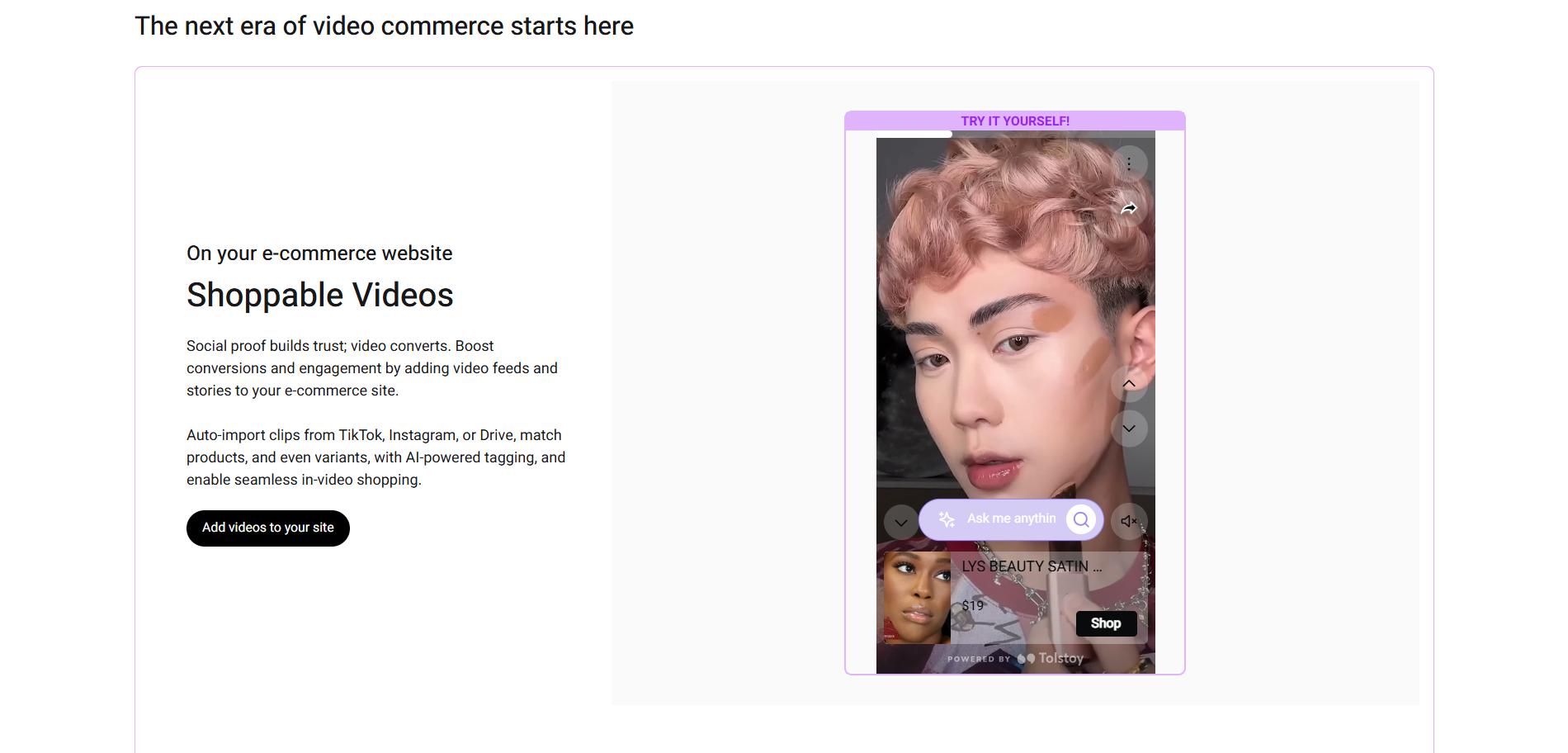
- Context-Aware Product Recommendations: Tolstoy understands shopper intent and delivers accurate, relevant recommendations instead of relying on static rules or generic responses.
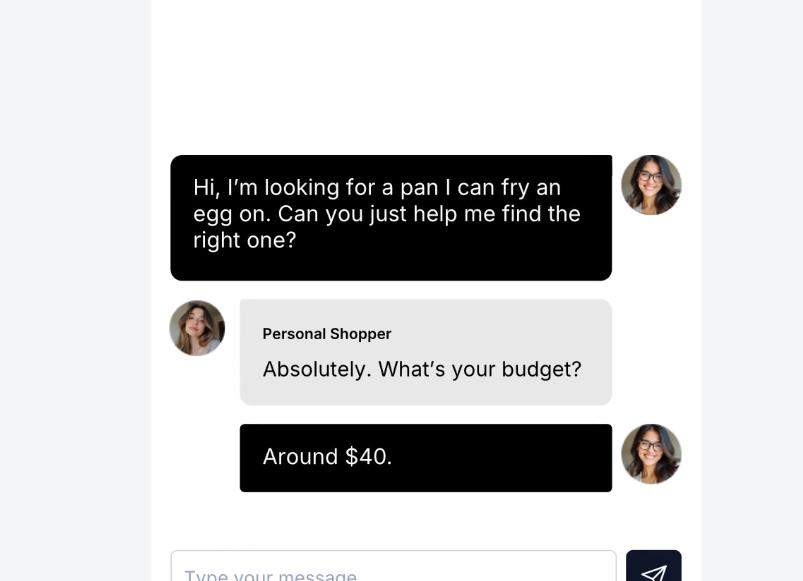
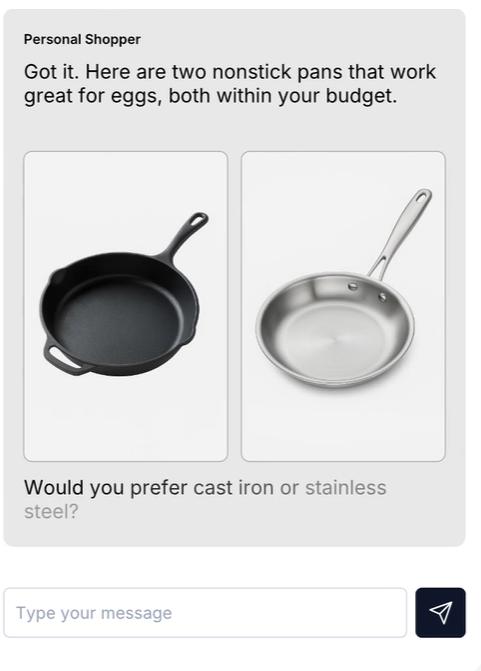
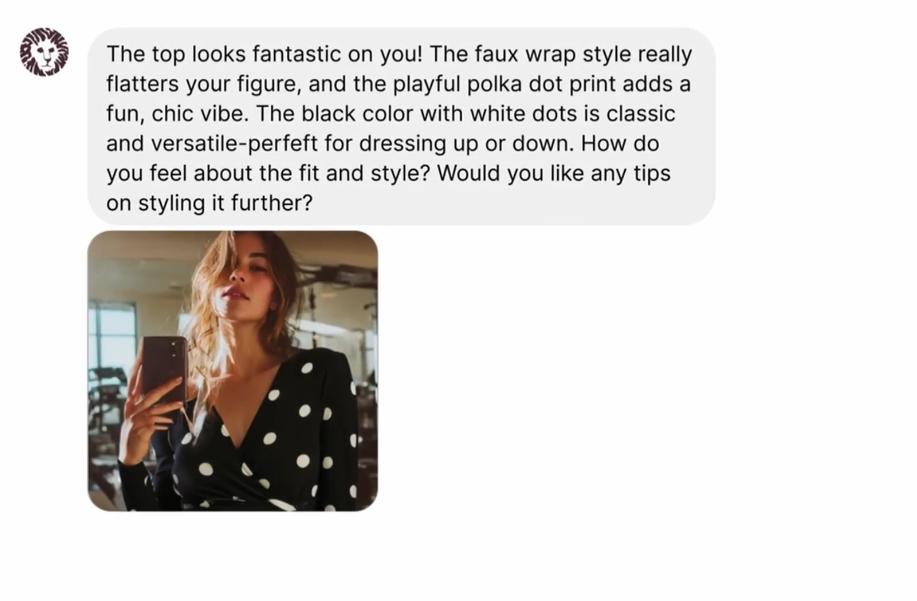
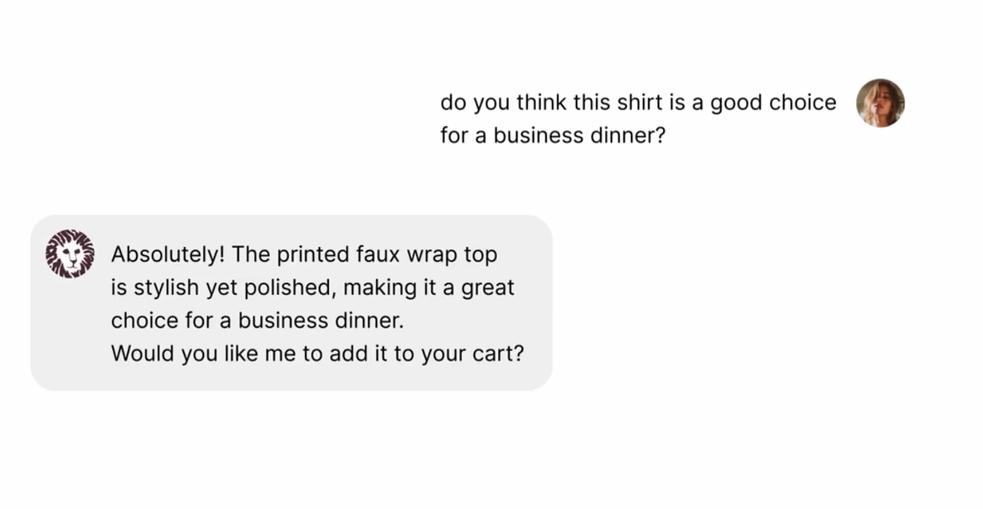
- Real-Time Guided Shopping and Fit/Sizing Support: The platform helps shoppers identify suitable products, choose sizes, and make confident purchase decisions. Its “See It On You” feature enables virtual try-on for supported use cases.
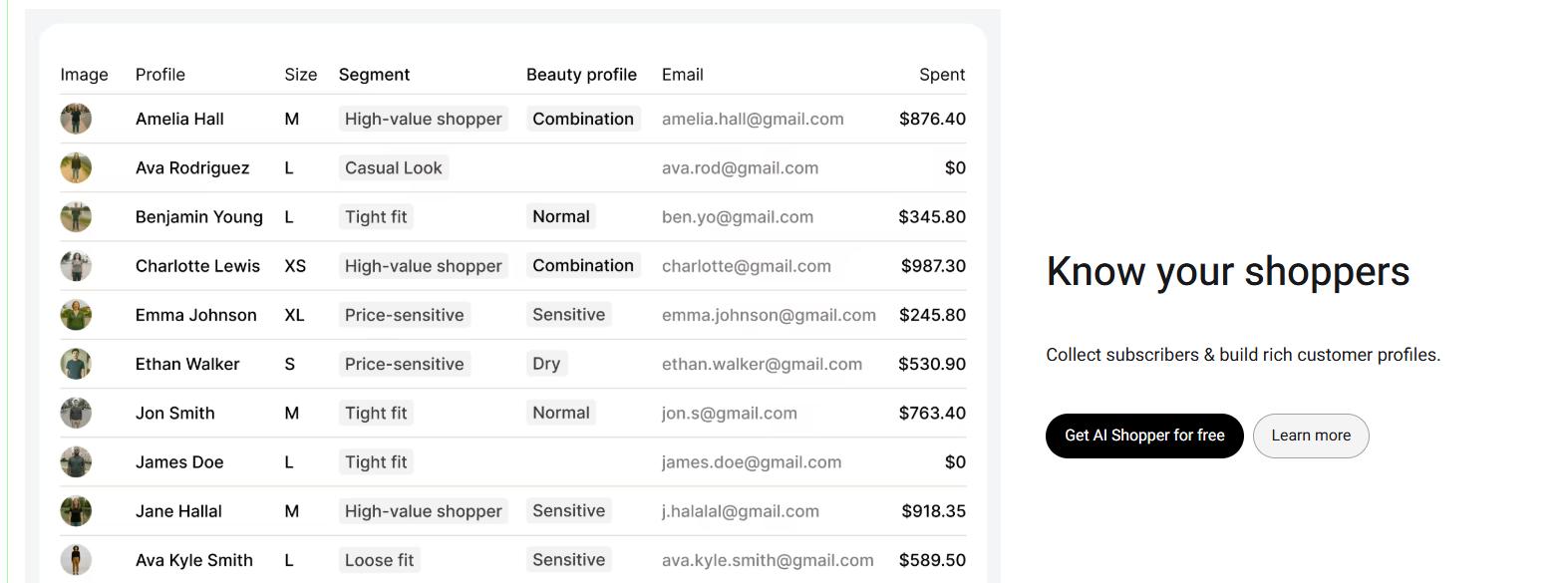
- Leverages Data from Conversations & Video Interactions: Through chat, questions, and video interactions, Tolstoy leverages customer-provided data that brands can use to improve personalization and marketing.
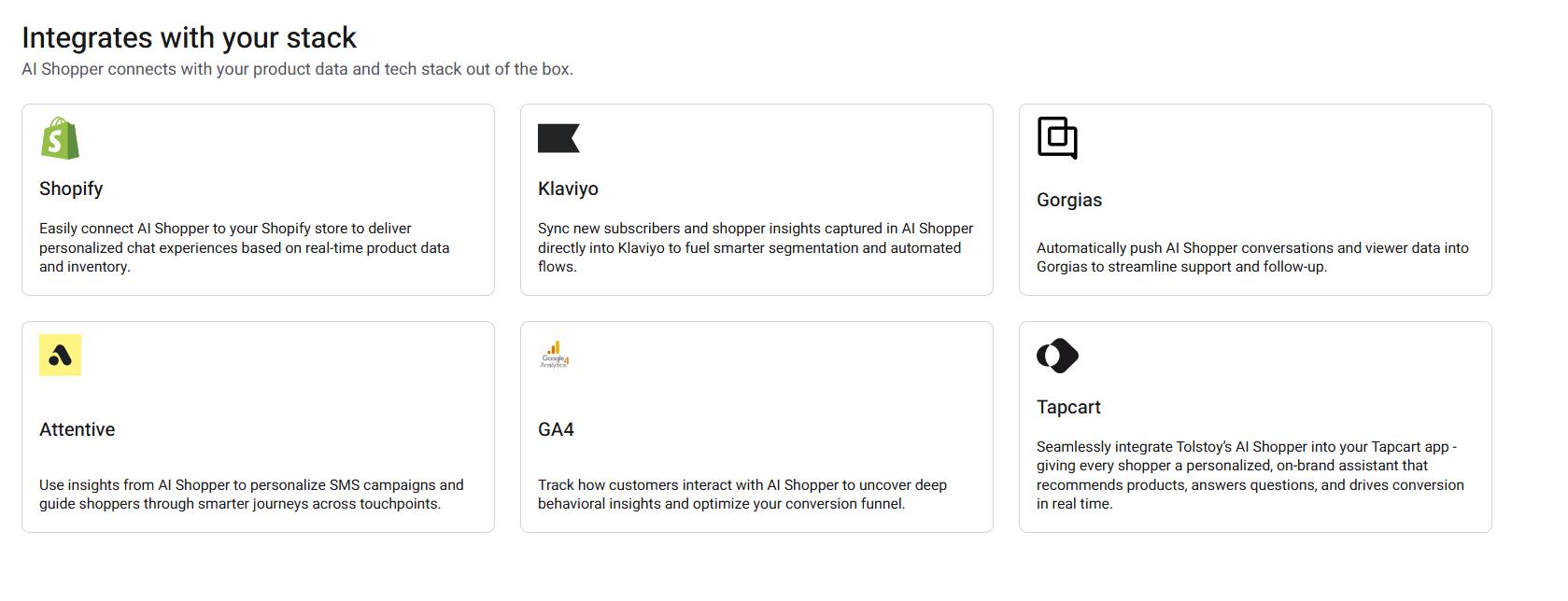
- Seamless Shopify Integration with No Developer Lift: Tolstoy integrates with Shopify without requiring heavy development effort.
- Highly Engaging On-Site Experiences that Lift Conversion Rate and AOV: By combining contextual recommendations, interactive content, and guided selling, Tolstoy helps increase both conversion rates and average order value.
Conclusion
The sales chatbots featured in this article address common ecommerce challenges, from abandoned carts to unclear product decisions. While each tool offers value in specific areas, Tolstoy stands out by unifying AI-driven shopping assistance, interactive video, and visual product exploration in a single platform.
By reducing decision friction and guiding shoppers through structured buying experiences, Tolstoy helps ecommerce brands improve engagement, boost conversions, and drive sustainable revenue growth.
Frequently asked questions
What is a sales chatbot?
A sales chatbot is an AI assistant that guides shoppers toward a purchase instead of just answering support tickets. It recommends products, answers pre-purchase questions about fit, shipping, and returns, and can add items to cart, turning conversations into conversions on your storefront around the clock.
Are there free AI chat options for handling sales inquiries?
Yes. Several sales chatbot platforms, including Tolstoy, offer free plans or trials that cover conversational selling basics such as product Q&A and recommendations, with limits on volume or branding. Free tiers are a good way to validate that chat actually lifts conversion before paying for automation.
How do sales chatbots actually increase conversions in e-commerce?
Sales chatbots help improve conversions by: Delivering personalized product recommendations based on shopper behavior Supporting cross-selling and upselling within the conversation Offering virtual try-on and guided fit assistance where supported Enabling easy add-to-cart and checkout actions Capturing zero-party customer insights to improve personalization
What’s the difference between a support chatbot and a sales-focused chatbot?
The key differences are: Support chatbots focus on answering customer questions and resolving issues Sales chatbots guide shoppers through product discovery and decision-making Sales chatbots provide recommendations, sizing help, and purchase guidance Support chatbots are reactive, while sales chatbots are conversion-driven
How does Tolstoy’s AI guide shoppers through product discovery?
Tolstoy improves product discovery by: Using AI Sales Agent to understand intent and answer questions Delivering recommendations personalized to behavior, preferences, and context Surface-fit guidance and visual product insight (e.g., AI-powered virtual try-on for supported apparel) Supporting rich content and conversational assets generated by AI Studio Combining guided chat with interactive content via AI Player to reinforce relevance and product value
Can Tolstoy’s sales chatbot integrate with existing Shopify themes and workflows?
Yes, Tolstoy integrates smoothly by: Working with existing Shopify themes without requiring custom development Syncing with Shopify product catalogs and workflows Deploying quickly with minimal setup or technical effort
Create with Tolstoy
Put these ideas into practice
Turn your product ideas into AI images, videos, and shopping experiences.