Key Takeaways
- UGC builds instant trust: Real photos, reviews, and videos from customers feel more authentic than paid promotions. Shoppers rely on this content to judge quality before buying.
- UGC boosts conversions: When buyers see honest reviews or unboxings, they gain confidence. This leads to more sales and fewer returns.
- UGC increases traffic: Customer posts and reviews naturally improve search visibility and expose your brand to new audiences on social platforms.
- UGC strengthens loyalty: Featuring customer content makes people feel valued. When shoppers see their own photos or stories showcased, they are more likely to stick with your brand.
- UGC is easy to source and low cost: You can find existing content online or encourage more through follow up messages, branded hashtags, or challenges. Since customers create it on their own, it acts as free marketing.
What Is UGC?
UGC is User-Generated Content which is created by individuals. The content can be in a variety of forms such as text, photos, videos or podcasts. Here are the most common types of UGC:
Reviews and Ratings
Reviews are the most common form of UGC. Reviews can be given as star ratings, comments, pictures and videos.
Testimonials
While reviews are a quick overview, testimonials are a longer, more in depth story about a customer’s experience. These are usually inspirational stories that go into detail of before and after the use of a product.
Unboxing Videos
Subscription companies offer customers more than just a product, but the experience of opening a gift and the element of surprise. Audience members enjoy watching unboxing videos as a way to discover new products. Another reason for the popularity of unboxing videos is for potential buyers to verify the quality of a product before purchasing it themselves.
Entertainment
Most of the time UGC isn’t centered around a product but is just created for pure fun – like this Mission Impawsible TikTok.
How Is UGC Different From Influencer Marketing?
Influencer-Generated Content is motivated by material compensation such as money or services. When an Influencer is being paid to advertise a product, their opinion becomes biased and less trust-worthy. According to a Stackla report, “UGC was shown to be 8.7x more impactful than influencer content and 6.6x more influential than branded content in consumers’ eyes – with 79% of people saying user-generating content highly impacts their purchasing decisions.”
Benefits of UGC for eCommerce
With shopping moving online and there being more options to choose from, consumers look at brand trust to help them make decisions. A potential buyer wants reassurance they are getting a quality product and superior service. User-generated content such as reviews and unboxings help buyers make decisions, as well as helps online stores increase sales. Below are a few examples of the benefits of UGC.
Builds Trust
User-Generated Content is the most trustworthy form of marketing available. In Nielsen’s 2021 Annual Marketing Report, 89% of consumers trust recommendations from people they know and 71% trust opinions from influencers. Comparatively, branded content such as online banner ads and ads on search engine results were less likely to be trusted.
Creates Lasting Loyalty
Humans have a need to feel seen and heard. When customers feel recognized and validated on an individual level by a company, they form a loyalty to the brand. “43% of consumers say they would be more likely to continue engaging with and purchasing from a brand if it shared their photos or videos” (2021, Stackla).
Boosts Conversion Rates
When a customer views authentic reviews, they become more confident in their decision, leading to higher sales and less returns.
If you are turning customer content into paid or onsite creative, use this guide on how to structure UGC ads so the story stays clear and conversion-focused.
Increases Traffic and Brand Discovery
Search engines look for specific keywords associated with websites. As users leave reviews and write about the brand, those keywords naturally increase the SEO score of an online store. Additionally, when users post about their experience with a product on social media, it leads to greater brand discovery. Smartly.io reported, “82% of Gen Z consumers use social media as a way of finding new brands.”
Saves Money
As user-generated content is voluntarily created, it is free marketing for a company.
Most Effective Platforms for UGC
Here's a list of the top social media sites:
- YouTube
- TikTok
Reviews are also found on Amazon, Yelp and Google.
How to Get UGC
The first way to know if you have UGC is to search online. As UGC is created without incentives, there might already be content on your brand out there. However, there are ways to encourage consumers to create content without putting pressure on them.
Emails and SMS
Follow up on a sale with a personalized message to your customer. Get creative in asking them to leave reviews and unboxing videos.
Hashtags
Creating a hashtag unique to your brand will encourage social sharing. Fashion label ASOS created #AsSeenOnMe for customers to post photos of themselves in ASOS’s clothing.
Challenges
Tiktok challenges can go viral within minutes. Create a specific task based on your product and share it with your audience. An example of a branded TikTok challenge was Colgate’s #MakeMomSmile campaign.
Influencers
While influencer marketing is not UGC, a sponsored ad by an influencer could inspire their followers to do the same.
Good to Remember
UGC works best when it’s context-aware, so place it where doubt happens: size selection, variant comparison, or quality verification.
Effects of Including UGC on Your Online Store
Consumers actively seek out user-generated content such as reviews, unboxings and product displays to make decisions. When you put UGC directly on your product page, you are helping the buyer make a decision. Stackla reported the following:
- “80% of consumers say they’d be more likely to purchase a product from an online store if its website had photos and videos from real customers.”
- “58% of consumers have left an ecommerce store without purchasing because the site didn’t contain any customer reviews or photos.”
- “71% of consumers agree they’d be likely to purchase from an online store if the brand made it easy to click-to-purchase an item directly from an inspirational image.”
Pro Tip: Use “Creator Clusters” to Personalize Discovery Automatically
Here’s a sneaky-powerful way to make your UGC work 3× harder without producing anything new.
- Group UGC by Need State: Create clusters like “fit checks,” “quality close-ups,” “real-life routines,” and “before/after.”
- Mix Customers With Micro-Creators: Add a few niche creators to each cluster. Shoppers see both “people like me” and “people who know their stuff,” tightening trust and speeding decisions.
- Deploy Clusters Across the Funnel: Use high-energy clips for PLPs, slow-detail clips for PDPs, and testimonial clusters in email/SMS post-click journeys.
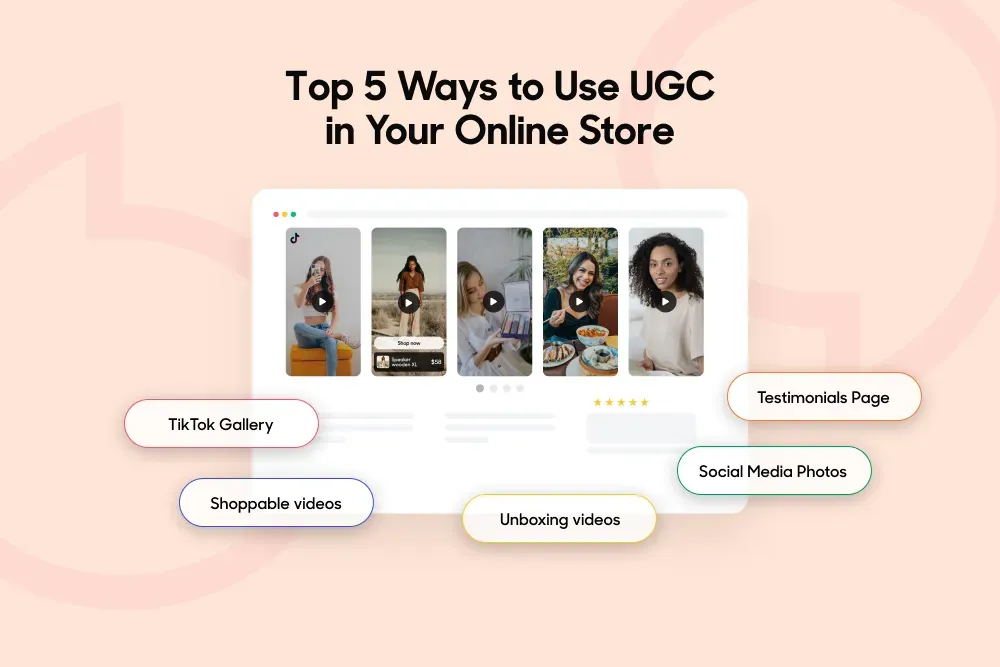
Top 5 Ways to Use UGC in Your Online Store
Numerous studies show that user-generated content has an influence on purchasing decisions. Add UGC directly to your online store to have an immediate impact on sales.
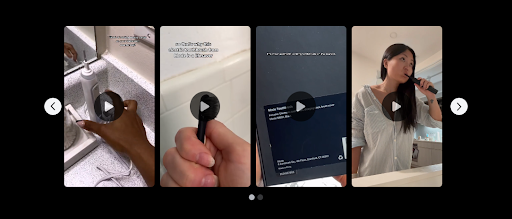
1. TikTok Gallery
2. Shoppable Videos
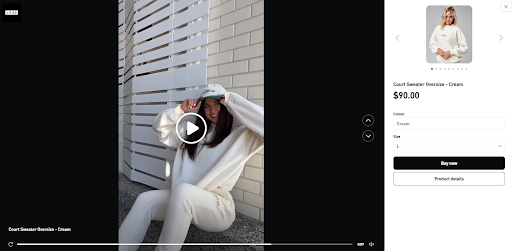
Feature customers using your product on your homepage. With shoppable video galleries, customers can click-to-purchase from inside your video.
3. Unboxing Carousel

Display customer unboxings directly on your landing page to showcase your product.
4. Social Media Photos
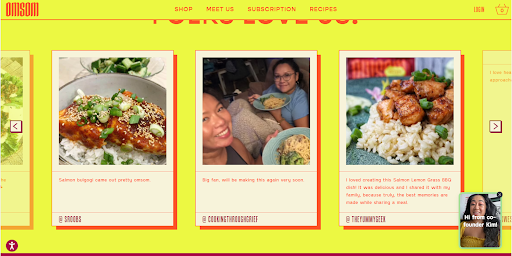
Gather photos in one place on your website to show testimonials from your customers. Common places to display social media photos are on the landing page, product page and in the footer of the entire website.
5. Testimonials Page
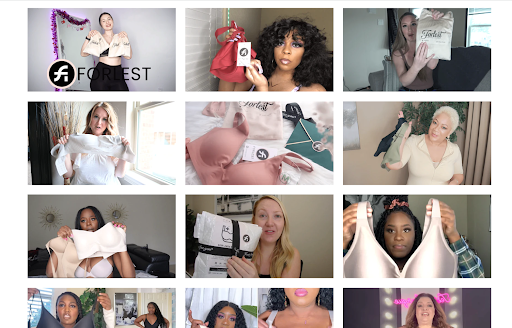
Having a page dedicated to clients sharing their stories can inspire future buyers to join the community.
UGC in the AI Era
AI-powered UGC is especially valuable for small and growing brands that want the authentic, creator-led look without the upfront cost of hiring influencers or customers. It’s also ideal for brands that want to test messaging quickly, experiment with different creative directions, and iterate without long production timelines. AI makes it possible to access the UGC “vibe” early, even before a strong creator community is established.
To get started, brands can use AI tools to generate UGC-style videos that feel native to social and eCommerce environments. E-commerce-focused platforms like Tolstoy AI-Studio enable high-quality, realistic videos in the right formats for product pages and shoppable experiences. By testing multiple avatars, settings, visual styles, and messaging variations, brands can quickly learn what resonates most with their audience, achieving optimized performance faster, with lower costs and without lengthy review cycles.
References
Nielsen. (2022). Global Annual Marketing Report 2022.https://annualmarketingreport.nielsen.com/wp-content/uploads/sites/16/pdf/full_report_1666535864_1744248833.pdf
IAB. (2019, May). User-Generated Content for Marketing and Advertising Purposes.https://www.iab.com/wp-content/uploads/2019/05/IAB-UGC-for-Marketing-and-Advertising-FINAL-May-2019-2.pdf
Stackla. (2021, August). Post-Pandemic Shifts in Consumer Shopping Habits: Authenticity, Personalization and the Power of UGC.https://www.nosto.com/wp-content/uploads/2021/08/Stackla-Post-Pandemic-Shifts-in-Consumer-Shopping-Habits-Data-Report_FINAL_compressed.pdf
Smartly.io. (2022, May). How to Engage Gen Z on Social Media.https://www.smartly.io/ebooks/how-to-engage-gen-z-on-social-media
Frequently asked questions
What platforms automate UGC for ecommerce stores?
Tolstoy automatically imports customer and influencer videos from Instagram and TikTok, tags products, and publishes them as shoppable galleries on your store. Yotpo and Loox automate review and photo collection, while Billo and Insense source new creator content. Together they cover collection, rights, and on-site distribution.
How can new ecommerce stores start collecting UGC without already having a big audience?
You can kick-start UGC by engineering lightweight prompts at key customer touchpoints. Add a post-purchase email asking for a photo, unboxing clip, or short review with one clear example. Offer optional templates (“Show how it looks,” “Show how you unboxed it”) to reduce creative friction. Feature early submissions prominently on your homepage to motivate more customers. Track which prompts generate the highest-quality content for future automation. See how other brands demonstrate effective UGC placement in these short shoppable video examples .
Where should beginners place UGC on their website to drive the biggest lift in conversions?
Place UGC directly where shoppers feel the most uncertainty, near price, “Add to Cart,” or product variant selectors. Test a small 3–5 clip UGC block above the fold on top-selling SKUs. Add a scroll-stopping unboxing or testimonials carousel mid-page to re-engage hesitant buyers. Show social photos near the bottom to build trust before the final decision point. Monitor bounce rate before and after placement to quantify ROI. For additional inspiration, explore ways interactive videos can increase sales .
How do advanced teams measure which UGC formats, reviews, unboxings, TikToks, impact conversion most?
High-performing teams analyze UGC performance by mapping content type to specific funnel events. Tag each UGC asset with its format (photo, unboxing, testimonial) and surface it in analytics. Compare add-to-cart rates for product pages with vs. without each asset type. A/B test narrative formats (story-driven vs. quick review) to identify where trust accelerates purchase. Attribute sales by analyzing which UGC pieces users interact with before purchase. For advanced strategy ideas, see the broader guide on ecommerce personalization and its impact on buyer confidence.
How can I use Tolstoy’s AI Player to turn UGC into high-converting shoppable experiences?
Tolstoy’s AI Player converts UGC into conversion-ready experiences by surfacing the right videos on the right pages and making every clip instantly shoppable. Easily sync customer videos, unboxings, and reviews to your website with Tolstoy AI Player. Place the player on product pages, PLPs or homepages to allow click-to-purchase directly inside the content. Turn UGC videos into a mobile-first scrolling experience, right on your site. Track which UGC clips viewers interact with most to optimize placement.
How to leverage the Tolstoy AI player to gain visibility in LLM using UGC?
Tolstoy’s AI Player makes UGC videos visible to LLMs by assigning structured metadata to each video. Enable automatic JSON-LD so each UGC video includes search-friendly context like product references and timestamps. Turn video carousels into lists, with full context and product links.
Create with Tolstoy
Put these ideas into practice
Turn your product ideas into AI images, videos, and shopping experiences.