
An AI chatbot can meaningfully reduce the load on human support teams, especially for repeat questions like order status, returns, shipping policies, and product basics. But the best ecommerce chatbots in 2026 aren’t just “support bots.” They’re increasingly used as conversion assistants: answering product questions in real time, guiding shoppers to the right items, capturing emails, and helping brands personalize follow-ups. Below are eight strong options worth evaluating in 2026.
This page is the broad ecommerce vendor comparison. It compares sales assistants, support agents, helpdesks, and social-message automation by their primary job. For the narrower definition, buying criteria, and conversion-focused examples, see our guide to sales chatbots.
10 Best AI Chatbots for Ecommerce to Drive Sales and Conversions
AI chatbots come in different forms. Some are built for ecommerce sales experiences, while others are customer service platforms used across many industries. The tools below can help you converse with shoppers in real time, automate common questions, collect leads, and improve customer experience across key touchpoints.
1. Tolstoy - AI Sales Agent with Virtual Try-On and AI Search
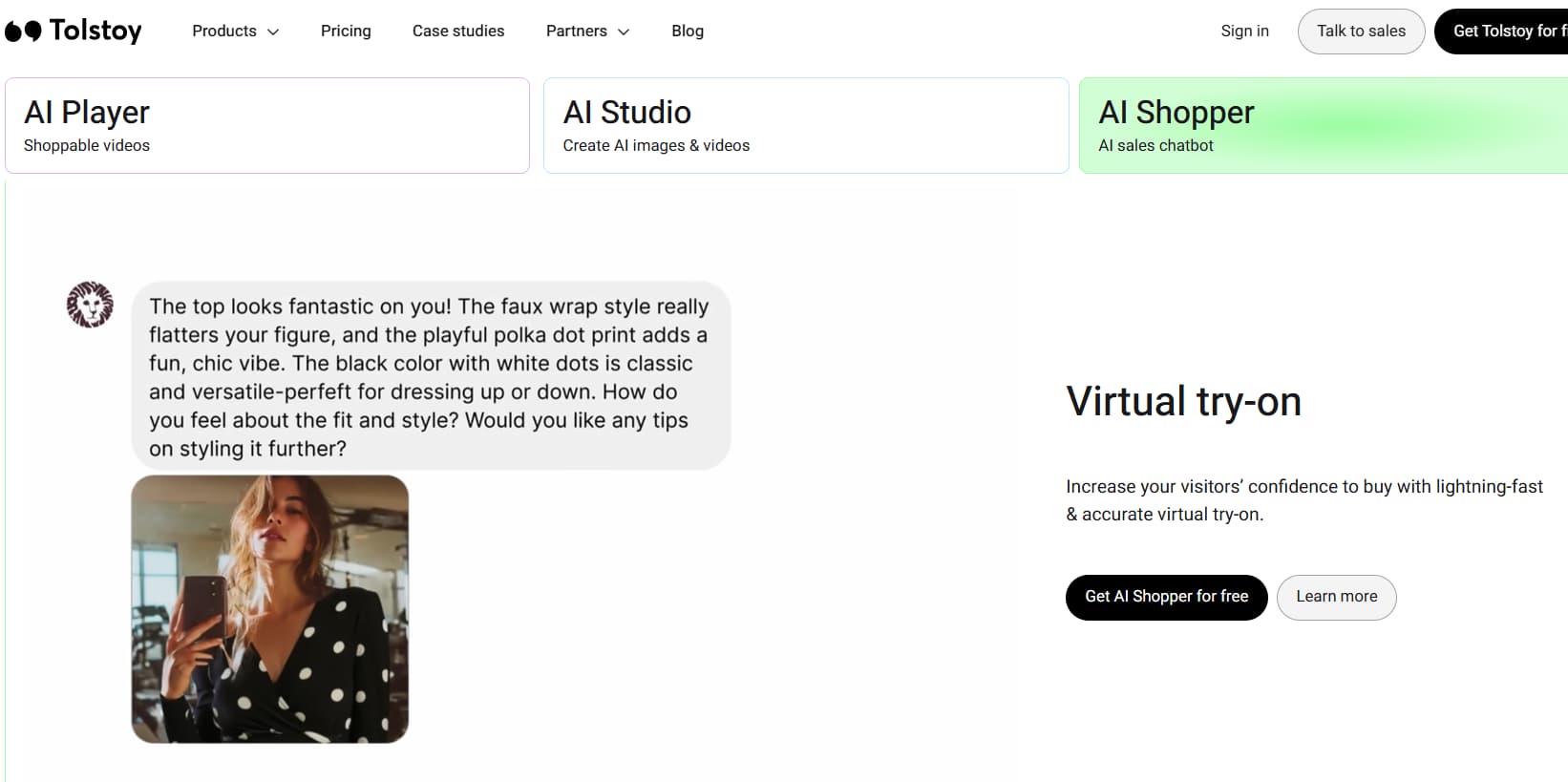
Tolstoy’s AI Sales Agent is an AI sales agent designed to chat, answer product questions, recommend items, and drive purchase confidence, built specifically for e-commerce and Shopify brands. It can function like “ChatGPT for your brand,” combining conversational answers with shopping actions. AI Sales Agent also includes AI Search and “Top Questions” on product pages, where it can automatically surface and answer common questions per product (with team editability).
For apparel and fit-sensitive categories, Tolstoy’s virtual try-on is a core capability, framed around “See It On You,” “Find Your Size” (measurement-based sizing recommendations), and “Complete the Look” cross-sells to increase AOV.
Tolstoy also emphasizes upsells inside chat, including the ability to guide shoppers and let them add to cart without leaving the conversation, as well as “zero setup” training on your catalog and brand rules.
2. Tidio - AI Agent for Support Automation With Actions
Tidio offers Lyro AI Agent, designed to automate customer service conversations and deflect repetitive questions. Where it stands out is “Lyro Actions,” which can connect to external services via secure workflows so the AI agent can do more than answer, like retrieving order data or completing certain account-related tasks (depending on your setup). For ecommerce brands that want a unified live chat + helpdesk environment with AI deflection and workflow automation, Tidio is often a practical starting point.
3. Gorgias - Ecommerce Helpdesk AI With Shopify-Aware Actions
Gorgias is a customer service help desk built tightly around ecommerce workflows, especially for Shopify stores. It brings support conversations into one place and can use AI to help resolve common requests. A key differentiator is its AI Agent Actions capability for Shopify, which - when configured - can handle tasks like canceling orders, changing shipping addresses, and removing items (with safeguards and handoffs when payment changes are required).
4. Intercom - AI Agent + Helpdesk for Support at Scale
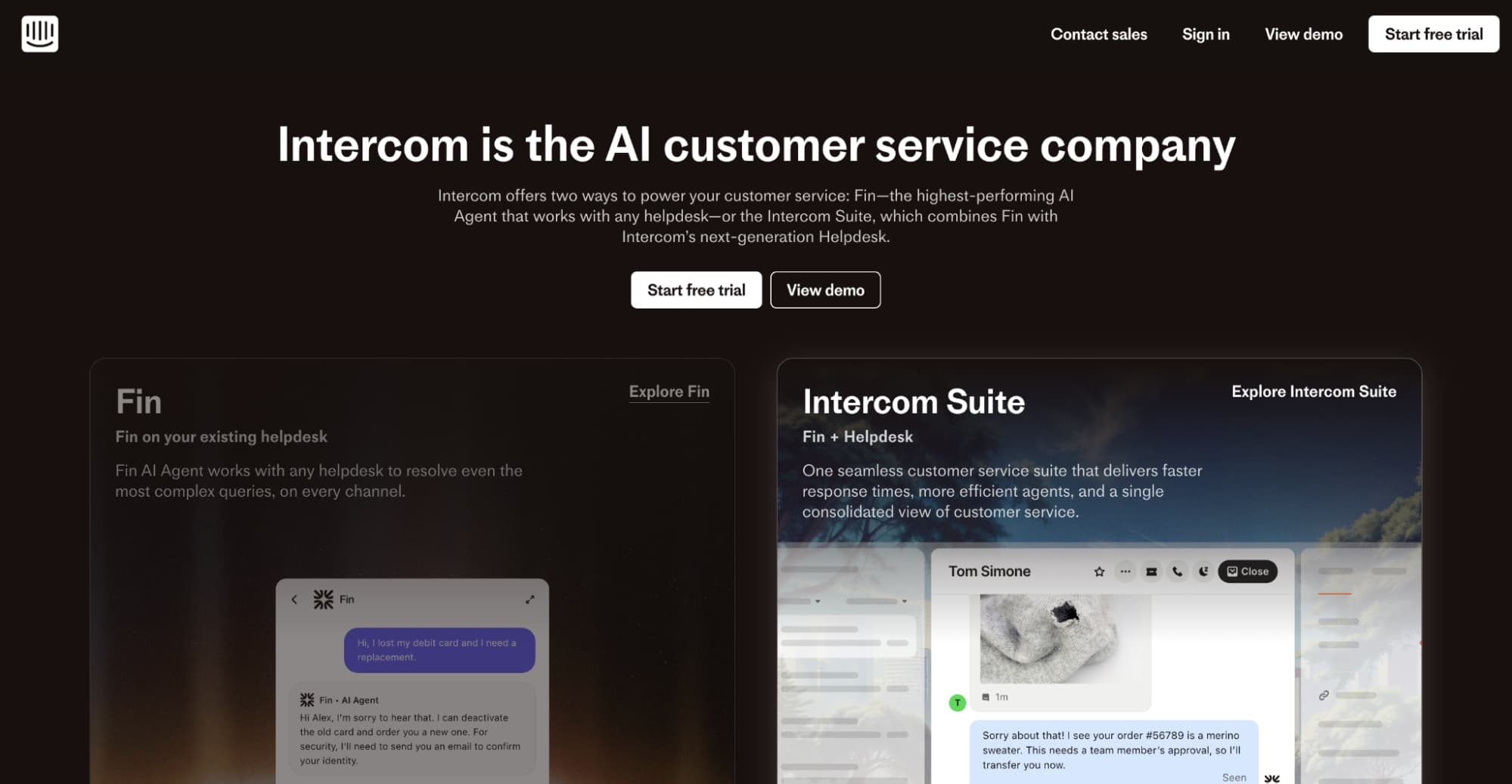
Intercom pairs its customer service suite with Fin, its AI Agent designed to resolve customer questions across channels and escalate complex cases appropriately. Intercom is often best for teams that want a mature customer service stack with automation, reporting, and a unified helpdesk experience that can scale across products and regions.
5. Ada - Omnichannel AI Platform for Customer Service Automation
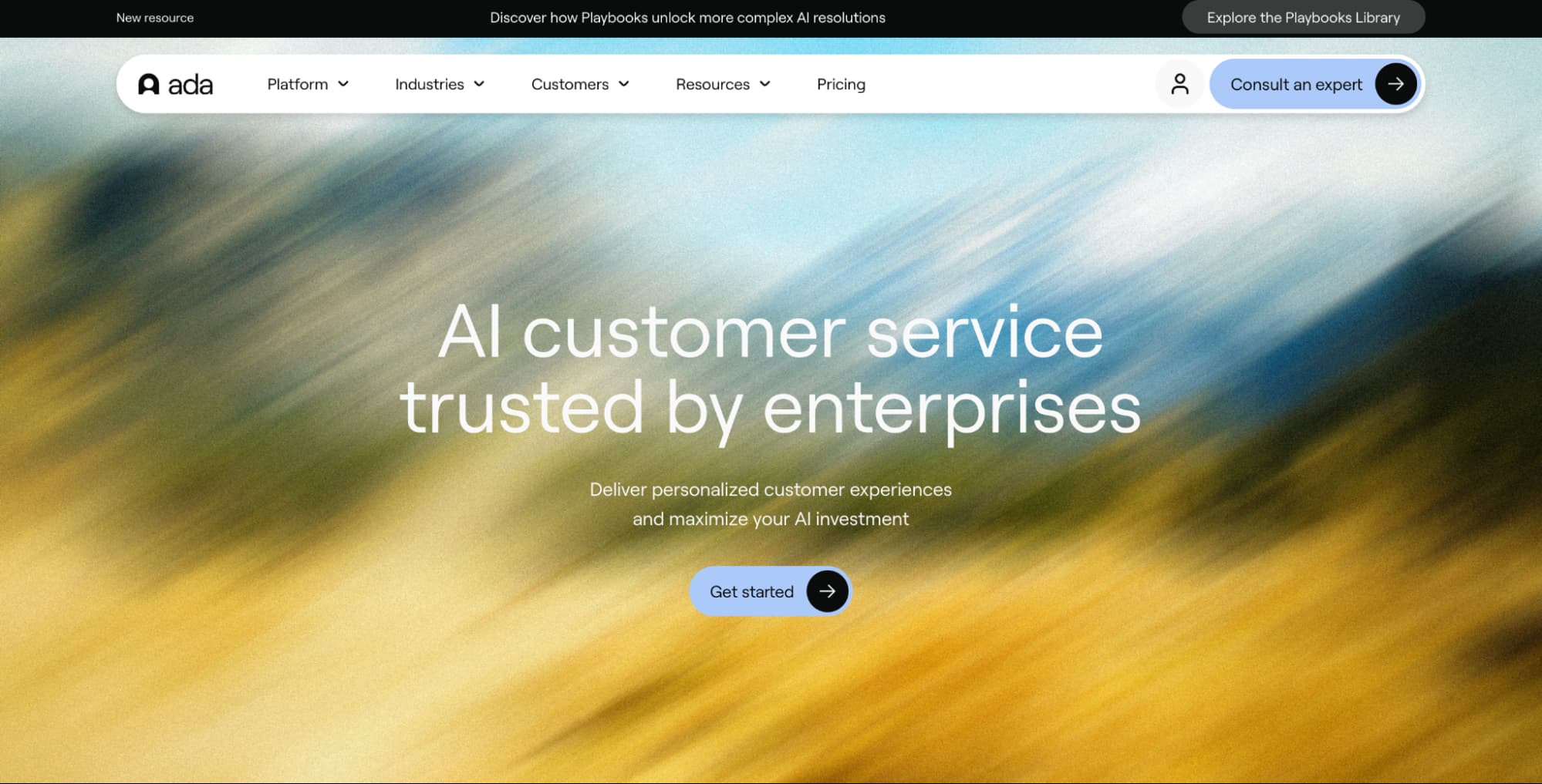
Ada is an enterprise-focused platform for building, deploying, and optimizing AI customer service agents across channels. It positions itself as an omnichannel AI customer service platform that supports chat, voice, email, and social experiences through a single system. Ada can be a fit for larger organizations that need governance, workflow control, and ongoing optimization for automation at scale.
6. Drift (Salesloft) - Conversational AI for Revenue and Lead Qualification
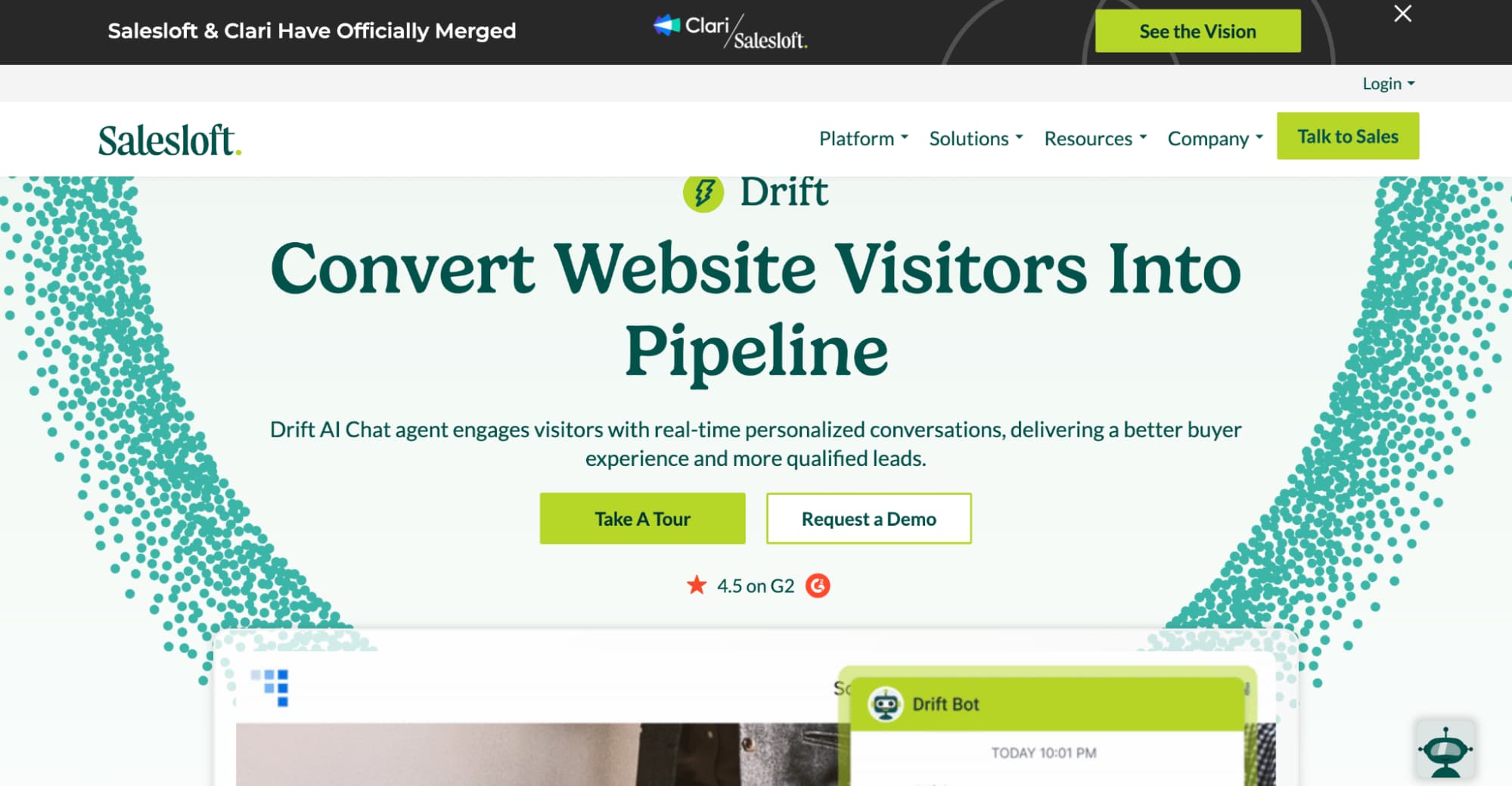
Drift (now under Salesloft) is best known for buyer conversations and lead qualification, especially for sales-led organizations. It’s typically used to engage site visitors, capture intent, route leads, and create pipelines. While it can be used by ecommerce brands for high-intent conversations, it’s generally more aligned to revenue teams than order-operations support.
7. LivePerson - Conversational AI Platform for Messaging and Voice
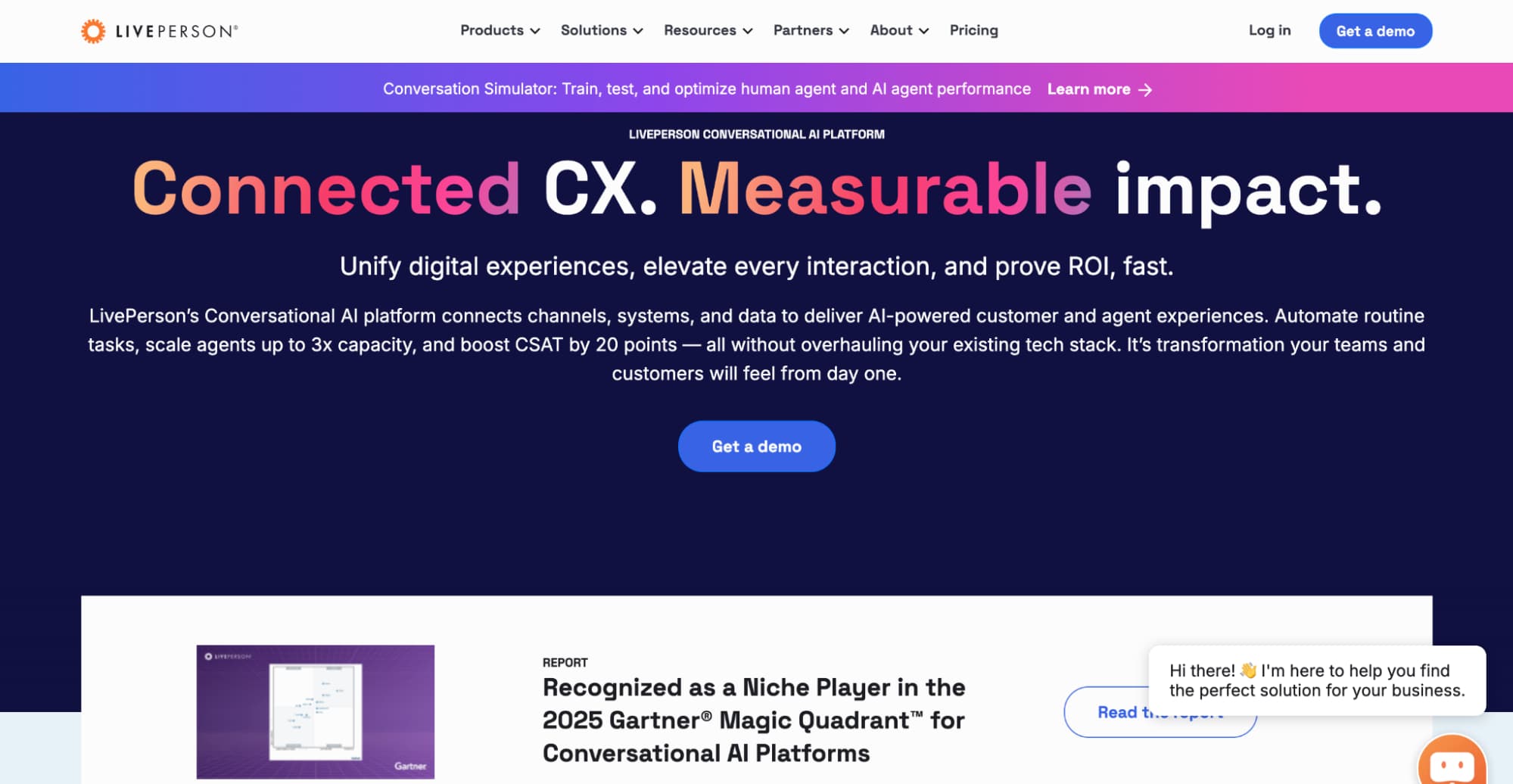
LivePerson positions its platform around connected conversational experiences across messaging and voice, with an emphasis on personalization and enterprise-scale customer engagement. It’s often considered by enterprises that need orchestration across channels, systems, and large support operations.
8. ManyChat - Chat Automation for Social Commerce

ManyChat focuses on chat marketing automations for social platforms, helping brands engage audiences, capture leads, and run automated conversations across channels like Instagram, WhatsApp, TikTok, and Messenger. It’s a strong option when your primary growth motion depends on social DMs, comment automation, and messaging-based conversion flows.
9. Rep.ai - AI Sales Concierge for Conversational Revenue
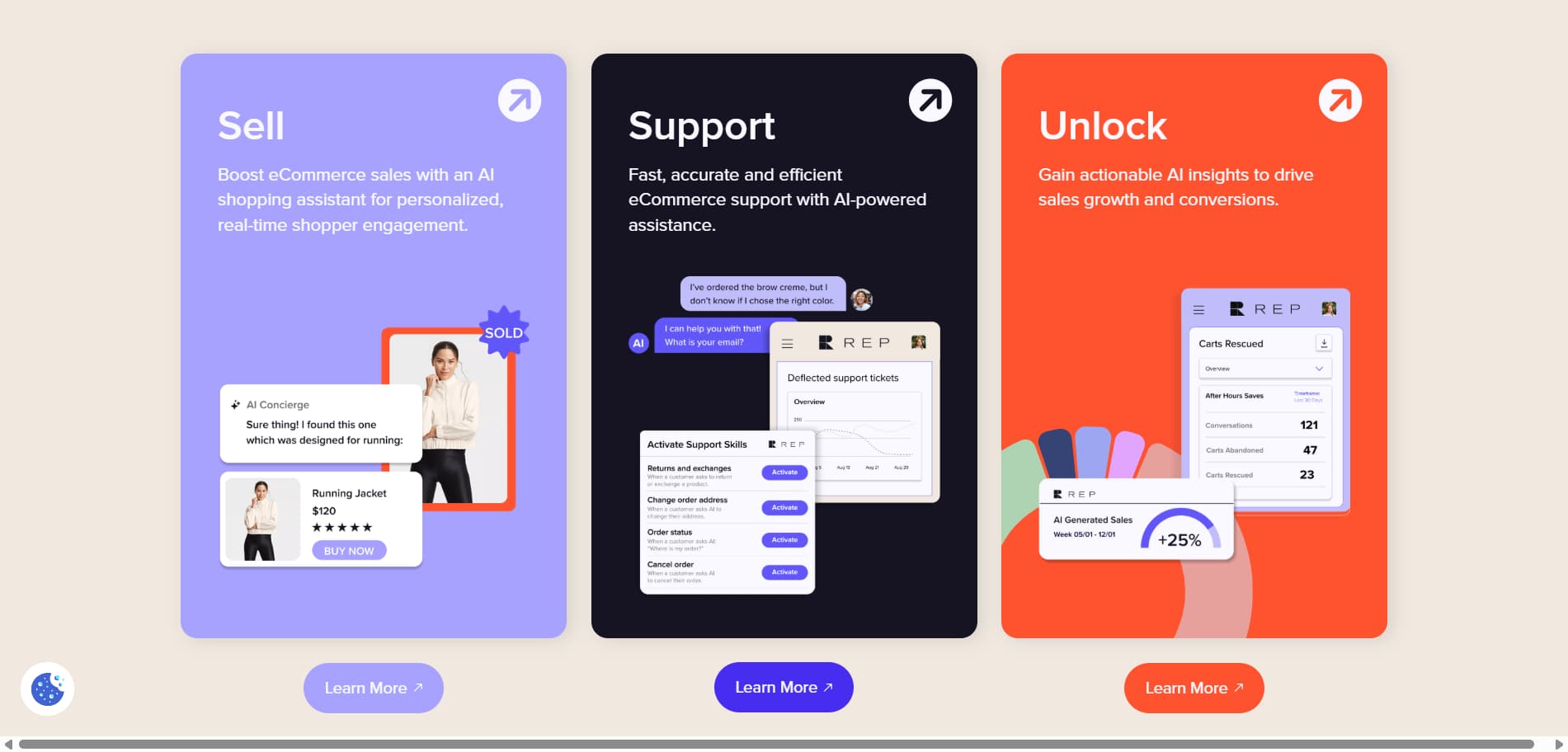
Rep.ai positions itself as a proactive AI sales concierge that focuses on the 'pre-purchase' phase of the funnel. Using a proprietary data engine, it monitors shopper behavior to trigger conversations at high-intent moments, such as when a user lingers on a size chart or an out-of-stock item. Beyond support automation for tracking and returns, Rep.ai excels at product discovery, using natural language to guide shoppers to the right SKU and supporting in-chat 'Add to Cart' actions. It is designed for brands that want a hybrid model where AI handles the bulk of sales assistance but can seamlessly hand off high-value customers to live human agents.
10. Angle - AI Shopping Assistant for Shopify
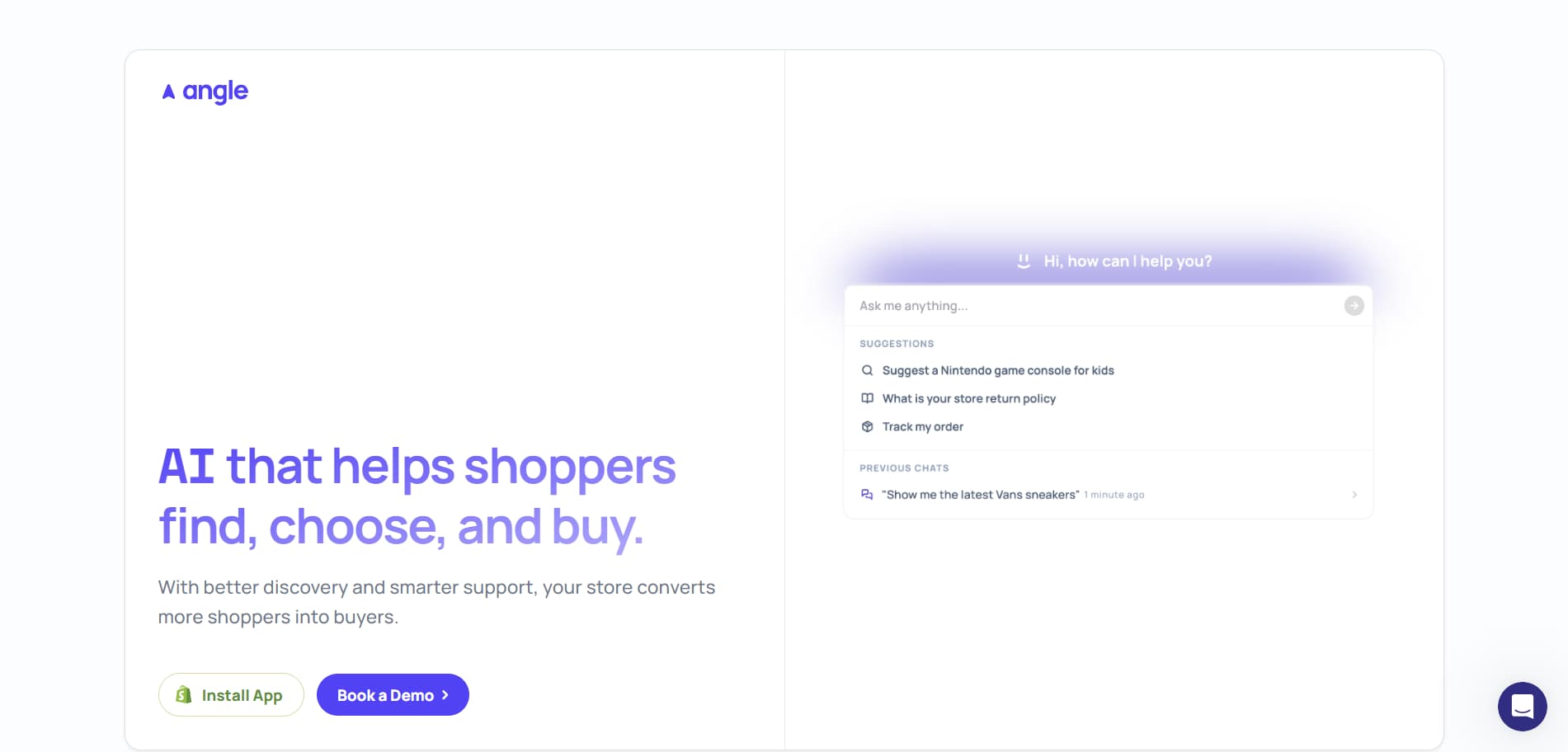
Angle is a specialized AI shopping assistant built natively and exclusively for Shopify stores. It leverages semantic search to turn vague chat queries into precise product discoveries, helping shoppers find exactly what they need even if they don't use exact keywords. Angle’s 'Zero-Config' setup allows it to automatically ingest product catalogs, allowing it to greet customers and answer FAQs within minutes of installation. It emphasizes 'intent-based' shopping, where the bot can recognize when a customer is ready to buy and provide direct add-to-cart assistance to minimize drop-off.
AI Chatbots for Ecommerce Comparison Overview
| Tool | Primary Strength | Common Deployment | Typical Ecommerce Fit |
|---|---|---|---|
| Tolstoy | AI sales chat + AI search + virtual try-on + product recommendations | On-site chat + PDP + feed experiences + mobile app contexts | Shopping assistance, conversion, fit/sizing guidance |
| Tidio | Support automation + AI actions | Website chat/helpdesk | Support deflection and workflow automation |
| Gorgias | Ecommerce helpdesk + Shopify-aware AI actions | Support channels + helpdesk | Shopify support + operational requests |
| Intercom | AI agent + helpdesk suite | Customer service channels | Scaled support organizations |
| Ada | Omnichannel AI service automation | Enterprise CX channels | Enterprise service automation |
| Drift | Revenue conversations + lead qualification | Website | Pipeline/lead capture use cases |
| LivePerson | Messaging + voice conversational platform | Enterprise channels | Large-scale conversational CX |
| ManyChat | Social DM automation | Social messaging | Social commerce + lead capture |
| Rep.ai | Proactive behavioral triggers + sales concierge | On-site chat, product pages, checkout flow | Product discovery, upselling, order support, hybrid AI plus human chat |
| Angle | Semantic product search for Shopify | Shopify store chat, product pages | Guided shopping, real-time recommendations, FAQ handling, add-to-cart assistance |
Essential Features to Look for in AI Chatbots for Ecommerce
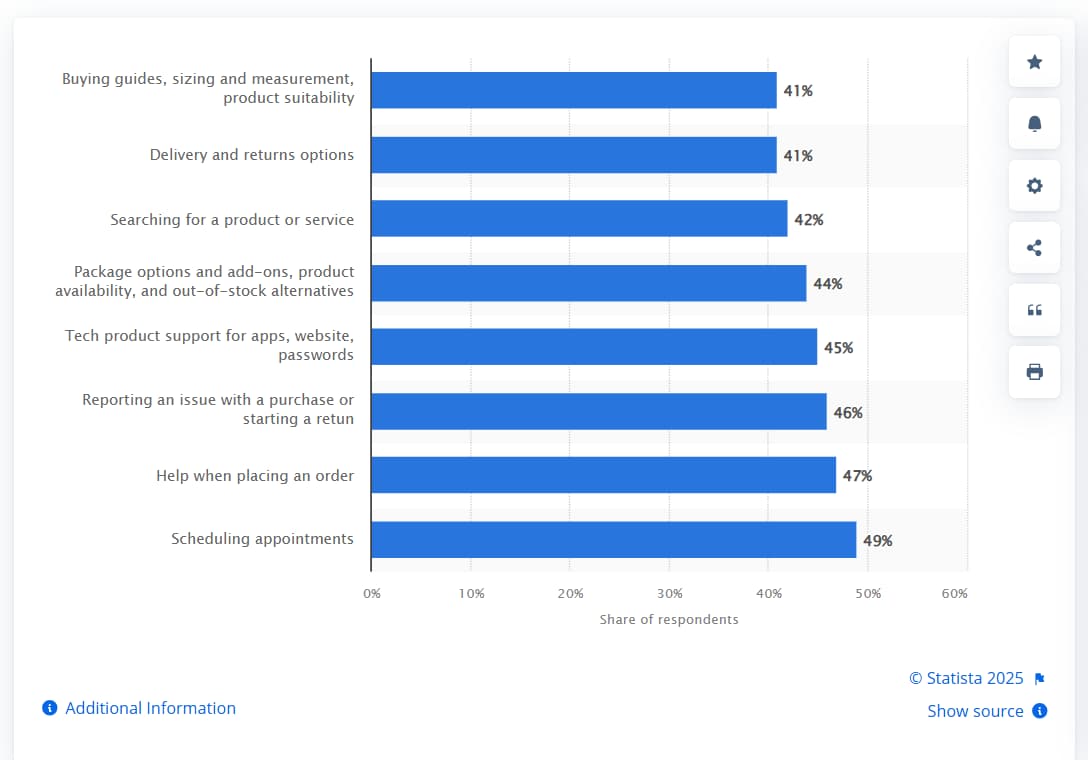
A Statista report reveals that most consumers use chatbots for things like scheduling appointments, shopping online, product discovery, sizing guidelines, and even return/delivery information.
When you’re looking for AI chatbots for ecommerce, make sure the chatbot has the most important features as per your needs. Here are the most important features to look for in AI chatbots for ecommerce:
- Product Discovery and Personalized Recommendations: The best ecommerce assistants help shoppers find the right items quickly, especially when the shopper describes needs (“blue t-shirts that pair with black jeans”) rather than exact product names. Tolstoy’s AI Sales Agent is explicitly positioned around answering, recommending, and selling in real time.
- Conversational AI for Pre-Purchase and Post-Purchase Journeys: Chatbots should handle pre-purchase questions (fit, availability, product comparison) and post-purchase questions (order status, returns, address updates). For example, Gorgia's AI Agent Actions can handle Shopify order changes in configured cases, while tools like Tidio can use actions to retrieve or send data via workflows.
- Integration with Ecommerce and CX Platforms: A chatbot is only as good as the data it can access. Integration with your catalog, inventory, and customer service tools enables accurate answers and reduces “hallucinated” responses. Tolstoy highlights out-of-the-box connections to systems like Shopify and CX/marketing tools.
- Support for Visual and Interactive Shopping Experiences: In ecommerce, visuals matter. Some platforms support interactive shopping flows (video, quizzes, try-on experiences). Tolstoy emphasizes virtual try-on and sizing recommendations as part of its sales-assistant experience.
- Context Awareness and First-Party Data Capture: Good assistants retain context (what product is being viewed, what the shopper asked, what they prefer) and progressively build better personalization. Tolstoy positions AI Sales Agent around collecting rich preference data for segmentation and lifecycle marketing when shoppers sign in.
- Analytics for Conversion, Engagement, and Revenue Impact: You should be able to measure the chatbot’s impact - engagement, assisted conversions, top questions, and where shoppers drop off. Most mature platforms offer analytics, but the depth varies widely by tool and plan.
How to Choose the Right AI Chatbot for Your Ecommerce Store
Your chatbot should match your business goal and your operational reality. In many cases, the best option isn’t the “smartest” chatbot - it’s the one that integrates cleanly, supports your workflows, and can be safely controlled. Here are a few key things to consider before selecting the right AI chatbots for ecommerce:
| Consideration | Key Points & Insights |
|---|---|
| Define Whether Your Goal is Support, Sales, or both. | Decide if your priority is support deflection, conversion assistance, or a combined experience. This choice will narrow your tool category fast. |
| Evaluate On-Site vs. Social vs. Multi-Channel Coverage | Determine where your shoppers interact most (website, PDP, mobile app, social DMs), and choose tools optimized for those surfaces. |
| Assess Brand Control, Guardrails, and Knowledge Sources | Ensure you can control tone, policies, and “what not to say,” and confirm how the bot learns from your product/brand data versus only FAQs. |
| Ensure Seamless Integration with Your Existing CRM and Support Stack | Choose a chatbot that can connect to your catalog, CX tools, and marketing systems so answers stay accurate and workflows stay efficient. |
| Measure Impact on Conversion Rate and Average Order Value | Ask vendors how they report assisted revenue, engagement, and journey insights, and validate with a pilot on high-traffic pages. |
How Tolstoy Powers High-Converting AI Chatbots for Ecommerce
Tolstoy’s AI Sales Agent is built around a sales-assistant experience that aims to move shoppers from questions to confident purchases. Here’s how:
- AI Search That Feels Like “ChatGPT for Your Brand”: Tolstoy’s AI Sales Agent is an always-on chat that can answer questions, recommend products, and sell in real time. It also supports an AI search experience for shoppers who prefer typing what they want rather than navigating menus.
- Top Questions on PDPs to Reduce Purchase Friction: Tolstoy highlights automatically surfacing top questions per product, generated from product data and editable by the team, so shoppers get fast answers where it matters most: on product pages.
- Virtual Try-On and Sizing Guidance for Fit Confidence: AI Sales Agent emphasizes realistic virtual try-on and measurement-driven sizing recommendations, plus cross-sell suggestions designed to “complete the look” and lift AOV.
- Upsells That Don’t Break the Conversation: The AI Sales Agent can guide shoppers to the right products at the right moment and support add-to-cart without forcing shoppers to leave the chat - aimed at smoother upsells and higher AOV.
- Integrations that Connect Chat to the Stack: Tolstoy integrates natively with platforms like Shopify for catalog and inventory access, Klaviyo for syncing subscribers and shopper insights, Gorgias for support workflows, Attentive for personalized SMS journeys, GA4 for behavior tracking, and Tapcart to bring AI Sales Agent into mobile apps.
To see how AI Sales Agent and AI Studio work together for your catalog, book a free AI Studio demo.
Conclusion
All the tools in this list can improve ecommerce conversations in different ways - some are strongest for customer support automation, others for social commerce, and a few for conversion-focused guided shopping. When choosing an AI chatbot, start by defining whether your primary need is support, sales, or both, and then validate integration depth, brand control, and measurement.
If you want a more conversion-oriented experience, Tolstoy’s AI Sales Agent is designed specifically to answer product questions, recommend items, support virtual try-on and sizing guidance, and connect those conversations to the broader ecommerce stack.
Frequently asked questions
Which AI ecommerce tools improve both SEO and chatbot performance?
Look for platforms that publish structured, crawlable content while they converse. Tolstoy, for example, marks up videos and product Q&A with JSON-LD so search engines and AI assistants can read them, while its AI Sales Agent answers shoppers on-site, improving discoverability and conversion from the same content.
What’s the difference between AI chatbots for ecommerce and traditional live chat tools?
The key differences are: AI chatbots are designed to answer questions using context and knowledge sources (like product data, policies, and help content), and they can automate a large share of repetitive conversations. Traditional live chat tools primarily route conversations to humans and rely on predefined scripts, rules, or manual responses. AI chatbots can also support advanced commerce experiences - like product recommendations, guided shopping flows, and automated operational actions - depending on the platform and integrations.
Can AI chatbots actually increase ecommerce conversion rates and AOV?
They can, especially when used for pre-purchase assistance. Chatbots can increase conversion and AOV by helping shoppers find products faster, answering common objections (fit, shipping, returns), and recommending add-ons or bundles at the right moment. The key is ensuring the chatbot has accurate product knowledge and strong guardrails so it doesn’t confuse or mislead shoppers.
How does Tolstoy’s AI chat differ from standard ecommerce chatbots?
AI Sales Agent is an AI sales agent built to answer, recommend, and sell, with features designed for shopping confidence - like AI search, top product questions on PDPs, and virtual try-on/sizing guidance for fit-heavy categories.
Can Tolstoy’s AI chatbots work alongside existing support or live chat tools?
Yes, you can integrate Tolstoy with various support or live chat tools like: Intercom Gorgias tawk.to LiveChat HelpScout Drift HubSpot
Create with Tolstoy
Put these ideas into practice
Turn your product ideas into AI images, videos, and shopping experiences.