
What Is an AI Concierge?
An AI concierge is like a human concierge we see in stores, but a virtual assistant powered by artificial intelligence. These AI assistants are designed to engage in conversations and provide a more personalized shopping experience.
Even though similar, an AI concierge is not a regular chatbot; it can analyze the intent of customers and respond with relevant answers. It can infer intent and respond with relevant guidance, and many platforms improve performance over time through tuning, analytics, and feedback loops. AI concierges are typically used to automate customer inquiries, order tracking and returns, personalized product recommendations, upselling and cross-selling, and more.
Why AI Concierge Matters for E-Commerce Brands
AI concierges can help meet rising customer expectations in the competitive e-commerce space. These solutions help your customers make purchase decisions faster while automating various sales and support funnels.
Faster Buying Decisions
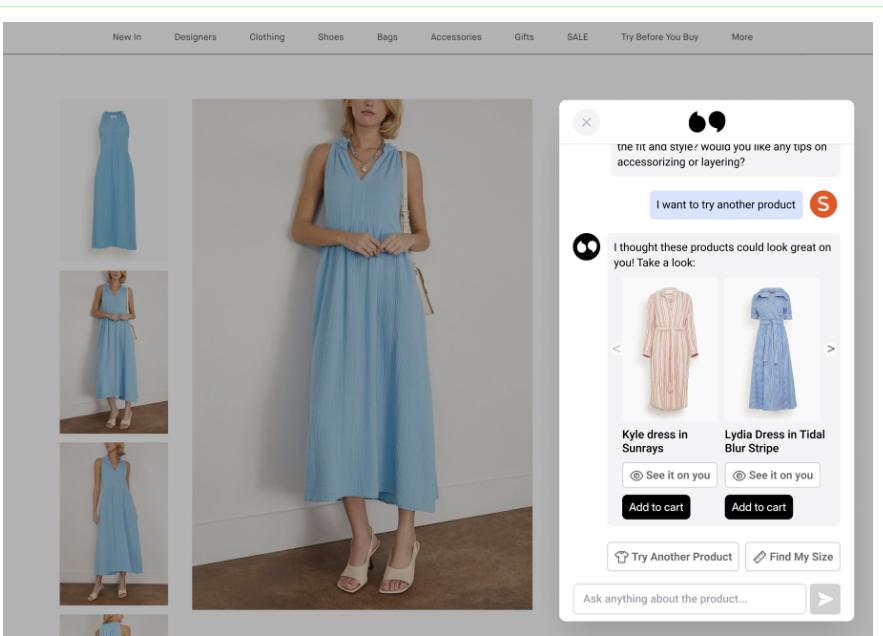
AI concierges can evaluate a customer’s shopping journey and recommend the next steps based on their intent. Let’s say a shopper needs to select a dress from several options. An AI concierge can prompt a shopper to check reviews, compare options, offer virtual try-on, or pull up sizing guidance to help them decide.

Rising Shopper Expectations
The age of AI brings new expectations as well. Shoppers now demand faster, personalized experiences rather than robotic chatbots or slow human support that takes more time. AI concierges fill the gap by offering faster yet personalized support that feels more helpful to shoppers. For example, a customer can browse a product page and take instant help from an AI concierge to find more about the product and explore additional options.
Scale Without Increasing Support Costs
While human agents are capable of attending to a specific number of customers, AI concierges can handle much more. Such AI systems are scalable and can interact with multiple people at the same time. You do not have to increase your staff or add an additional system to handle more visitors.
Revenue Impact Across Funnels
AI concierge’s use is not limited to answering questions; it can be integrated into various stages of your sales funnel. With the help of an AI concierge, you can generate leads, provide post-purchase support, and automatically upsell/cross-sell products.
How AI Concierge Works
AI concierges can understand a shopper’s intent, and they are context-aware. This helps them recommend highly relevant products and provide purchase guidance to the customers. This kind of an AI-powered tool is not rule-based but dynamic, which learns from its interactions.
- Shopper Intent Recognition: AI concierges infer what a shopper is trying to accomplish based on the pages they visit, the questions they ask, and the options they interact with. If someone is browsing summerwear, the concierge can proactively surface the most relevant items, suggest sizing guidance, and highlight current promos that match the shopper’s goal, without making them dig.
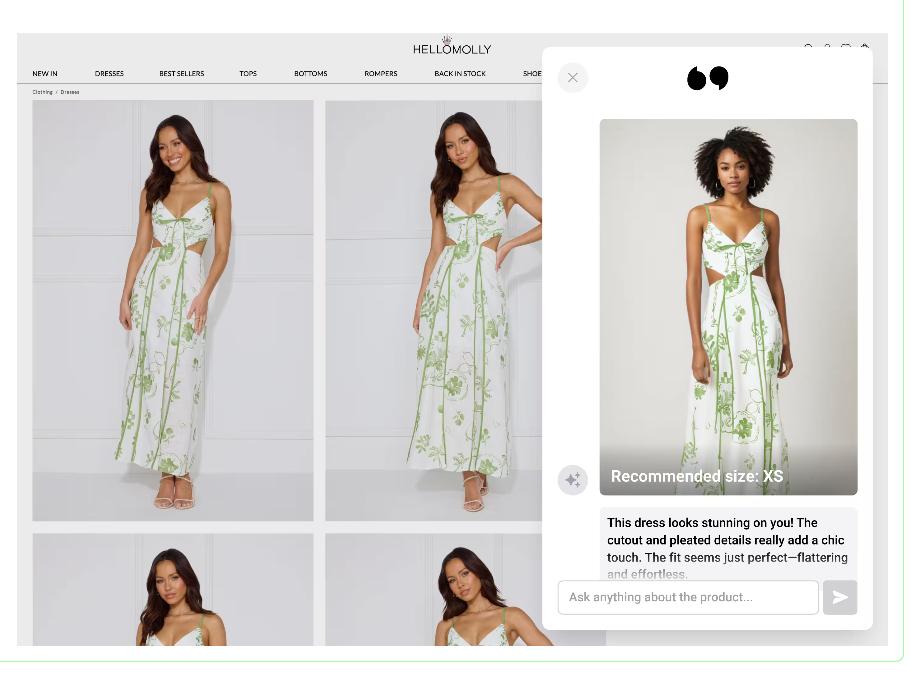
- Context-Aware Guidance: AI concierges can understand the context and combine it with a customer’s intent. For example, if someone has bought a fitness tracker, the AI may suggest workout apparel to them when they visit again. In more advanced setups, the AI can also enable virtual try-on experiences, letting shoppers see how a dress fits or how makeup shades look on them using photos or device-based scanning, helping reduce uncertainty before purchase.
- Product Matching Logic: AI concierges can analyze a shopper’s past behavior, demographic data, specific preferences, and various product attributes, such as size, color, brand, and features. By analyzing these attributes, it can match products according to a customer’s preferences. If a shopper says, “I need a biodegradable phone case under $100,” an AI concierge can translate that into filters (material, price, phone model compatibility, style) and return a short, high-intent set of matches, so the shopper reviews a handful of good options instead of scrolling a catalog.
- Real-Time Actions: AI concierges can take actions in real time based on customers’ interactions and intent. Depending on the platform and integrations, AI concierges can trigger next-best actions, like directing shoppers to checkout, surfacing promos, or routing support requests, based on intent and behavior.
- Learning From Interactions: AI concierges use machine learning to learn from every interaction and start identifying patterns. The more it interacts with customers, the better it becomes at understanding their preferences, behaviors, and pain points.
AI Concierge Use Cases for Customers
AI concierges help both sellers and customers in many ways. It allows customers to find the right products and make decisions, while also helping sellers reduce cart abandonment and increase sales through personalized product recommendations, upselling, and cross-selling.
Guided Product Discovery
Customers don’t have to browse hundreds of products or look up their details to find the right one. They can take help from an AI concierge integrated into the website’s products, which can narrow down choices by learning customers’ preferences. A customer may share their budget range, style preferences, use case (work, gym, gifting, travel), and size/fit concerns to find the best product. In some cases, this guidance extends to virtual try-on, where shoppers can preview how products like foundation shades or apparel might look on them by scanning their face or uploading a photo, making product selection faster and more confident.
Video-Based Buying Assistance
Images and written copy aren’t enough for some products. Often, products like smart gadgets or apparel can be better displayed in videos. AI concierges can do more than just converse; they can show video product demos, unboxing clips, how-to videos, etc., to help shoppers make the best purchase decision. For example, if a customer asks, “How does this vacuum work on carpets?”, the AI concierge responds with a demo video.
Abandoned Cart Recovery
AI concierges can reduce drop-offs by stepping in when shoppers hesitate, answering last-mile questions (shipping timelines, returns, warranty), resolving objections (fit, compatibility, price), and recommending close alternatives when an item feels like the wrong choice. Depending on the platform’s integrations, recovery can happen via on-site prompts, persistent assistance during the session, or coordinated follow-ups through email/SMS.
Upsell and Cross-Sell Experiences
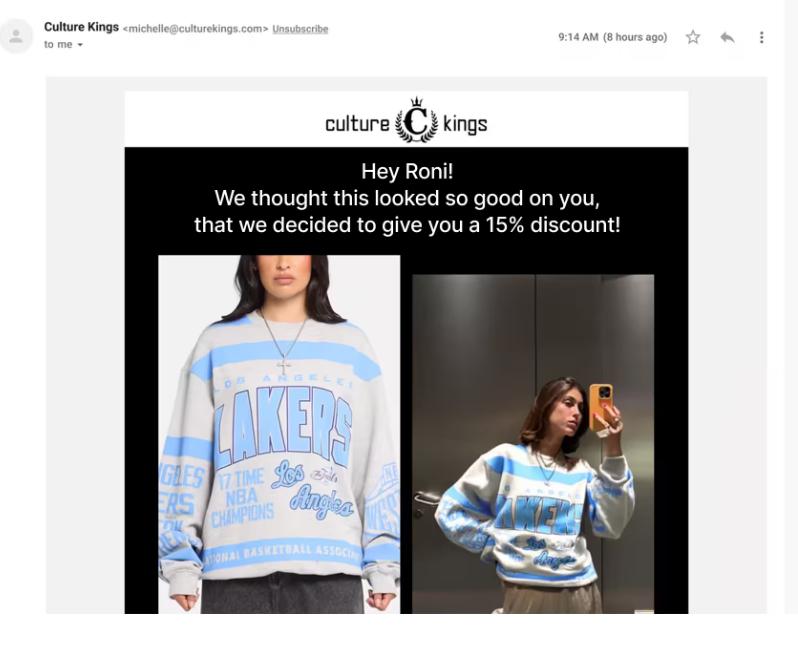
AI concierges can suggest add-ons that make sense in context, based on what’s in the cart, what typically pairs well, and what the shopper is trying to do. If someone adds a laptop, the concierge can recommend a compatible sleeve, a mouse, or an extended warranty plan - framed as “helpful bundles,” not random extras.
Support Deflection
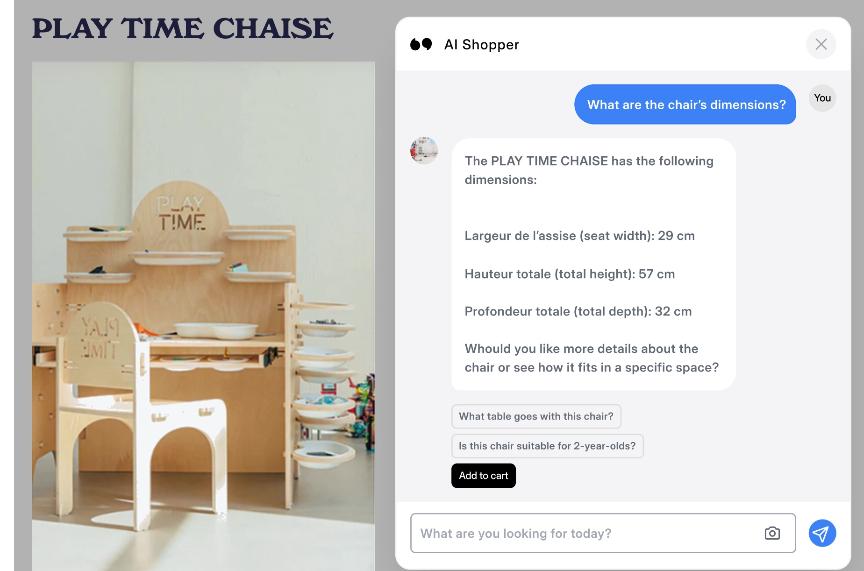
An AI concierge can handle repetitive and complex questions with personalized responses that aren’t robotic or predefined. They respond in real time, reducing the frustration of waiting. Some implementations can surface order details, answer policy questions, and route change requests (like address updates) to the right workflow or agent, depending on system permissions and integrations.
AI Concierge Personalization Capabilities
AI concierge systems can analyze customer behavior and content, and share personalized insights in real time. At the same time, it can collect zero-party data from shoppers, helping sellers create customized, relevant marketing campaigns.
Behavior-Based Recommendations
AI concierges can learn from browsing history, clicks, previous purchases, and time spent on specific product pages. Based on these behavioral actions, they offer customized recommendations by predicting what shoppers may buy next. For example, if a customer frequently browses winter coats, the AI may start suggesting scarves, gloves, and boots to pair with a coat.
Zero-Party Data Collection
AI concierges collect zero-party data by asking shoppers simple, value-driven questions, such as preferred fit, budget range, color/material preferences, or use case. Because the shopper is volunteering the info intentionally, the concierge can use it immediately to narrow options and later to personalize recommendations and messaging in a way that feels helpful rather than invasive.
Context-Aware Messaging
Beyond “what the shopper clicked,” AI concierges can adapt based on session context, such as browsing stage, device, and engagement signals. In some implementations, additional inputs (such as location) may also shape responses. For example, if a shopper repeatedly filters by price or compares lower-cost options, the concierge can emphasize value, like free shipping thresholds, bundles, or best-selling budget picks, without sounding pushy.
Real-Time Personalization
AI concierges adjust guidance as the session evolves. If a shopper is stuck between two products, the concierge can surface the most decision-helpful info (differences, reviews, sizing/fit guidance, compatibility checks). If the shopper moves toward checkout, the concierge can shift to friction removal - shipping clarity, return reassurance, or the fastest path to completing the purchase.
Measuring AI Concierge Performance and ROI
By tracking and measuring conversion rate, assisted conversions, funnel drop-off reduction, and other key metrics, companies can evaluate an AI concierge’s impact in their business growth. Here are the most important metrics to measure:
- Conversion Rate and AOV Lift: Since this AI system guides customers through their shopping journey, it increases the likelihood of frictionless checkout and increased order value. Brands should measure conversion rate and AOV (average order value) to understand AI’s effectiveness.
- Engagement and Completion Rates: AI concierges can engage customers and provide suggestions and guidance, helping them make a successful purchase. High engagement and completion rates indicate good performance.
- Funnel Drop-Off Reduction: AI concierges reduce drop-offs by handling objections in the moment - clarifying uncertainty, guiding comparisons, and removing checkout friction. When you see fewer exits from PDP → cart → checkout (and fewer “stall points”), that’s a strong signal the concierge is improving funnel flow.
- Attribution to Revenue and Assisted Conversions: Brands should also focus on measuring overall revenue and assisted conversions, as not all sales are generated immediately. Assisted conversions typically indicate the AI’s effectiveness, as it focuses heavily on helping customers finalize a purchase.
Choosing the Right AI Concierge Platform
AI concierges help businesses address various bottlenecks in their support systems and sales funnels. You can automate various tasks to increase your conversions and revenue. Here are a few things to follow to select the ideal platform:
- Ease of Setup: Look for a system that integrates with your current e-commerce infrastructure. Preferably, a solution that doesn't require coding or too much technical expertise to set up.
- Commerce Integrations: The AI concierge should be able to access your product catalog, CRM system, payment gateways, and other e-commerce tools to accurately recommend products and complete various order-related tasks.
- Personalization Controls: The platform should provide controls to fine-tune personalization and improve its accuracy and effectiveness.
- Analytics and Reporting: To measure impact, the platform should make it easy to track engagement and conversion signals tied to concierge interactions, such as interaction rate, assisted conversions, conversion lift, cart-to-checkout progression, and upsell/cross-sell attachment. Without clear reporting, it’s hard to prove value or improve performance over time.
- Scalability for Growth: You must go for a platform that can scale as your business grows. It should be able to handle increased traffic, a large number of product SKUs, and simultaneous customer interactions.
How Tolstoy Powers Revenue-Driven AI Concierge Experiences
Tolstoy’s AI concierge-style experience is built around AI Sales Agent - an on-site sales assistant - paired with interactive, shoppable video as a commerce interface. Together, they help shoppers discover products, ask questions, and move toward purchase without breaking their browsing flow.
- AI Concierge-Like Assistance with AI Sales Agent (On-Site Sales Chat + Guidance): Tolstoy’s AI Sales Agent acts like an on-site sales assistant that can guide shoppers to the right products and help answer questions while they browse. It is a specialized AI sales agent that combines conversational chat with advanced commerce features like virtual try-on, measurement-based size recommendations, and personalized product discovery to reduce hesitation and increase purchase confidence.
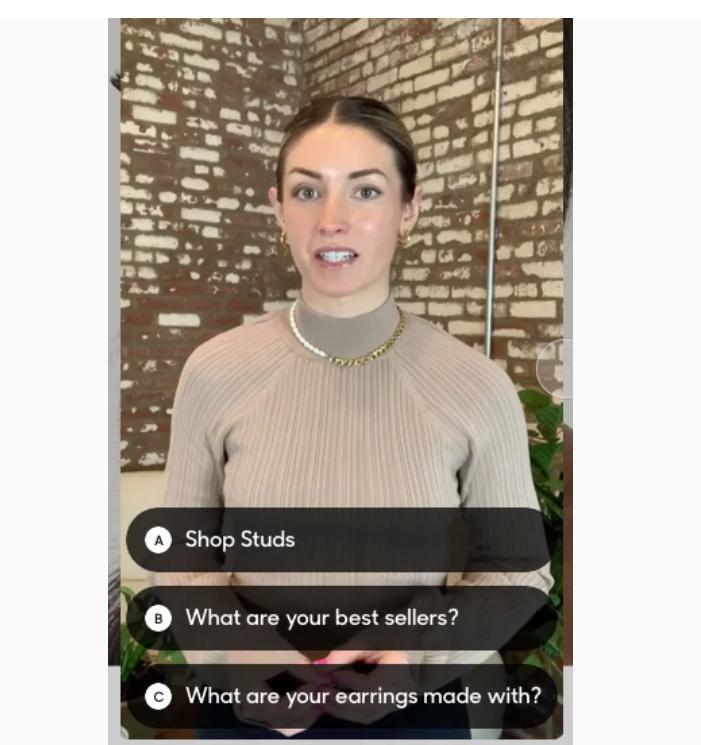
- Shoppable, Interactive Video as the “Front Door” to Concierge Help: Tolstoy’s AI Player lets brands publish shoppable video widgets that shoppers can interact with, helping turn browsing into guided discovery, and creating more opportunities to ask, answer, and convert. Shopify store owners can directly add videos from their social media and turn them into shoppable content by embedding the related products.
- Smart Distribution So Concierge Experiences Show Up on the Right Pages: Tolstoy highlights an automatic distribution approach, using tagging to match videos to relevant pages at scale, so shoppers see the most relevant content while they browse, instead of generic widgets everywhere.
- Conversion Measurement Through Built-In Analytics: Tolstoy emphasizes analytics that track performance at multiple levels. For example, engagement/conversion signals tied to widgets/pages/products, which support optimizing concierge-led experiences over time.
- AI Studio for Creating Product Visuals That Feed the Experience: Tolstoy’s AI Studio is positioned for generating product visuals (images/video) via multiple AI engines inside the Tolstoy workflow, supporting a faster creative pipeline to keep on-site experiences fresh.
- Integrations with E-commerce Platforms: Tolstoy supports e-commerce integrations, including Shopify, and also connects with adjacent tools like Tapcart and Gorgias for broader shopping experiences and workflows.
Conclusion
AI concierges are increasingly becoming a practical layer in e-commerce, helping shoppers discover products faster, resolve uncertainty during checkout, and get support without waiting. As shopping journeys become more fragmented across ads, search, and on-site experiences, concierge-style guidance can reduce friction and improve conversion by meeting shoppers with the right help at the moment they’re deciding.
Frequently asked questions
Where should an AI concierge appear on an e-commerce site to actually drive conversions?
An AI concierge performs best when embedded directly into high-intent moments, not hidden behind a generic chat icon. Activate it on PDPs, cart pages, and comparison flows where uncertainty peaks. Trigger concierge prompts based on behavior signals (scroll depth, repeat filtering, exit intent). Align responses to page context so guidance feels native, not interruptive. Tolstoy recommends using video and interactivity across the funnel in its overview of interactive shopping experiences .
How do advanced brands use AI concierges to increase AOV without hurting trust?
They frame upsells as contextual problem-solving rather than revenue-driven suggestions. Tie add-ons to the shopper’s stated goal (e.g., “for travel,” “for daily wear,” “for gifting”). Use behavioral signals to cap recommendations to 1–2 highly relevant complements. Validate suggestions with social proof, usage demos, or return-safety reassurance. Explore how to cross-sell and upsell using shoppable videos .
What metrics actually prove an AI concierge is working beyond chat engagement?
The real value shows up in assisted conversion and funnel efficiency metrics, not conversation volume. Track PDP → cart and cart → checkout progression for users who interact with the concierge. Measure AOV lift on sessions with concierge-assisted recommendations. Attribute delayed purchases to prior concierge interactions using assisted conversion reporting. Learn how to measure shoppable video ROI and sales impact .
How does Tolstoy’s AI Sales Agent function as an AI concierge during live shopping sessions?
Tolstoy’s AI Sales Agent acts as a brand-trained sales agent that guides shoppers from questions to confident purchase decisions. Ingest your product catalog, sizing rules, and brand tone as inputs. Respond conversationally with product matches, fit guidance, and comparison logic. Trigger next-best actions like virtual try-on, video demos, or direct paths to checkout. Explore Tolstoy’s AI Sales Agent solution in detail.
How do shoppable videos strengthen AI concierge experiences in Tolstoy?
Shoppable videos become the visual interface that feeds context and intent into the concierge flow. Tag videos by product, use case, or persona so they auto-appear on relevant pages. Let shoppers ask questions directly from within video widgets, not separate chat layers. Use engagement data from videos to inform AI Sales Agent recommendations in-session. Tolstoy’s AI Player powers this concierge-plus-video model for shoppable video.
Create with Tolstoy
Put these ideas into practice
Turn your product ideas into AI images, videos, and shopping experiences.