
What is AI for E-commerce?
The e-commerce industry operates at a massive scale, with global revenues forecast to reach $4.96 trillion by 2030. This explosive growth is driven by rising consumer demand and transformative technologies like Artificial Intelligence (AI). By leveraging machine learning algorithms, complex business tasks - such as analysis, prediction, and decision-making - can be automated and refined.
This is why e-commerce brands are rapidly adopting AI to streamline operations. Approximately 88% of organizations reported using AI in at least one business function, with common e-commerce applications spanning inventory management, customer service, and personalized shopping assistance.
Types of AI for E-commerce
AI is a diverse technology with a fairly large scope. Here are some of the different types of AI technologies that e-commerce organizations can make the most use of.
1. Generative AI and Content Creation Tools

Generative AI (or GenAI) is a type of artificial intelligence that creates original content from simple text or visual prompts. Large Language Models (LLMs) are widely used for text-based content in digital marketing campaigns, including customized SMS, emails, newsletters, optimized product pages, and ad copy. Similarly, text-to-image or text-to-video tools rapidly produce high-quality visual content for social media and websites.
2. Predictive Analytics and Forecasting Engines
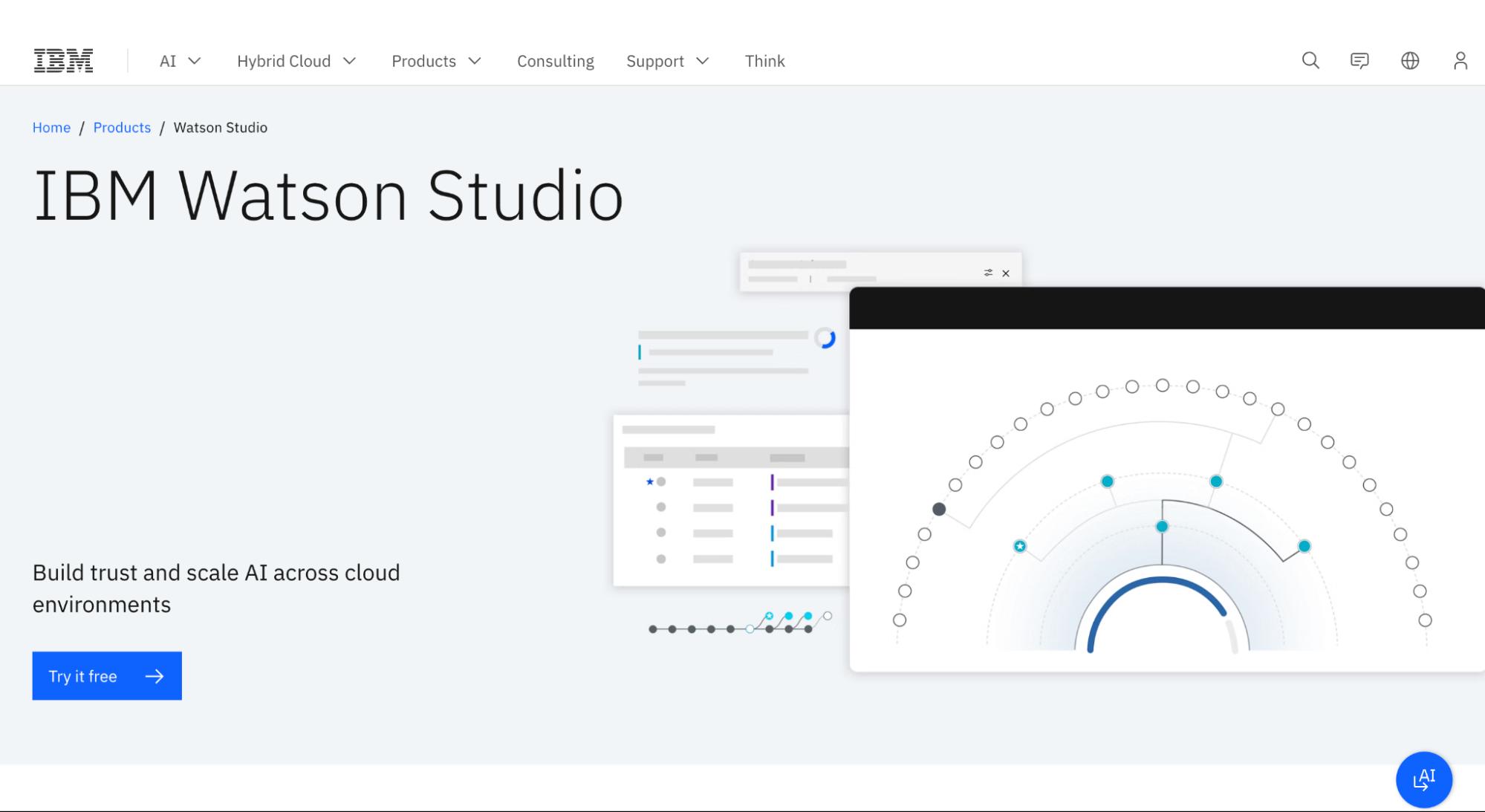
Predictive analytics uses historical data and real-time signals (like website traffic, clicks, and social media engagement) to forecast future business outcomes. This data is analyzed using statistical and machine learning techniques to predict market trends and guide strategic decision-making. Beyond strategy, algorithms can forecast demand and cash flows, helping organizations optimize working capital and inventory management to ensure a reliable stock level at all times.
3. Computer Vision and Visual Product Search
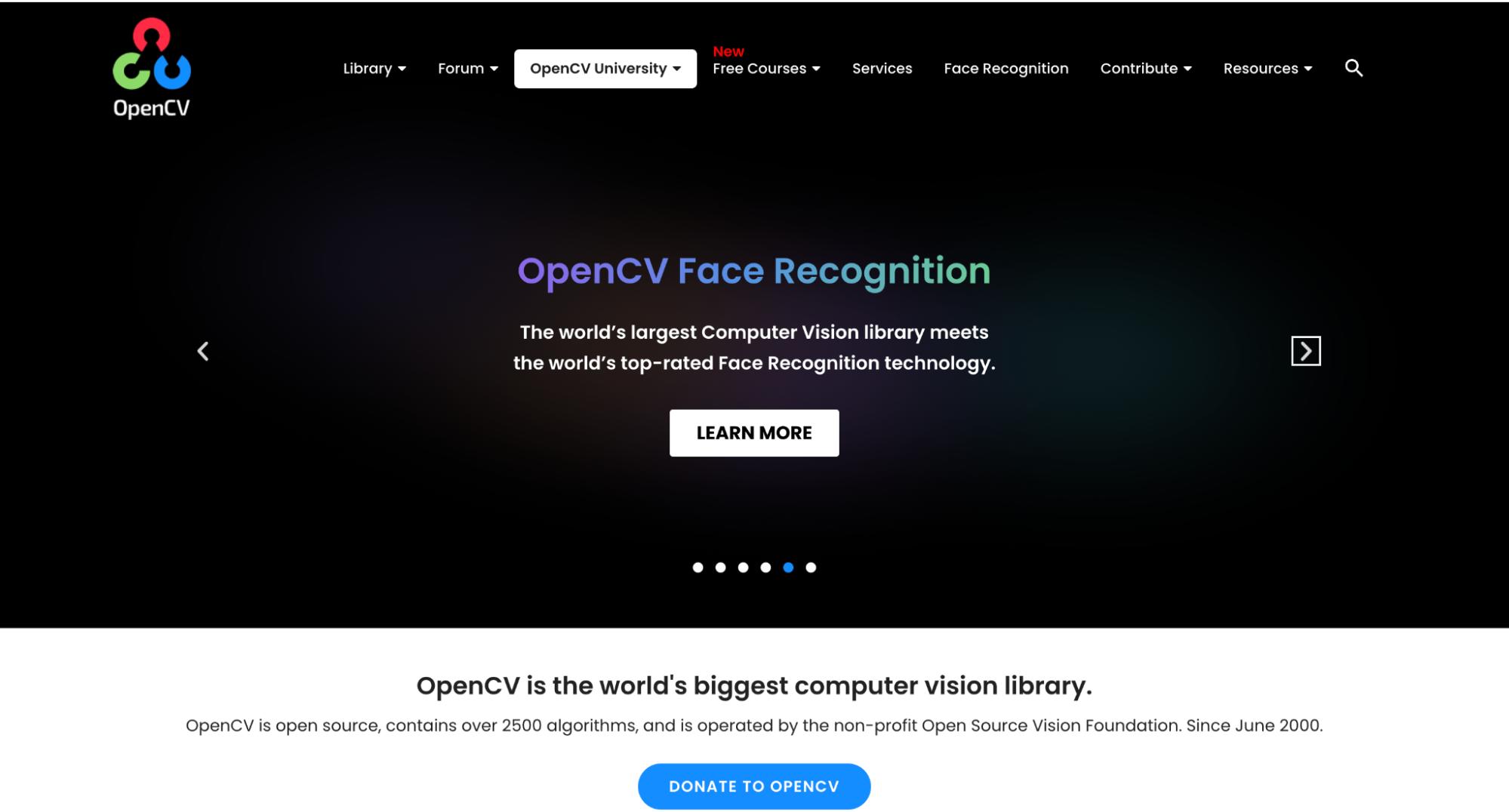
Computer vision is a form of AI technology that allows machines to recognize and analyze images and videos. With it, AI systems can pull information from any photo or video uploaded by users. This information can then be used to suggest similar products to customers, thereby improving conversion rates.
4. Conversational and Voice Shopping Assistants
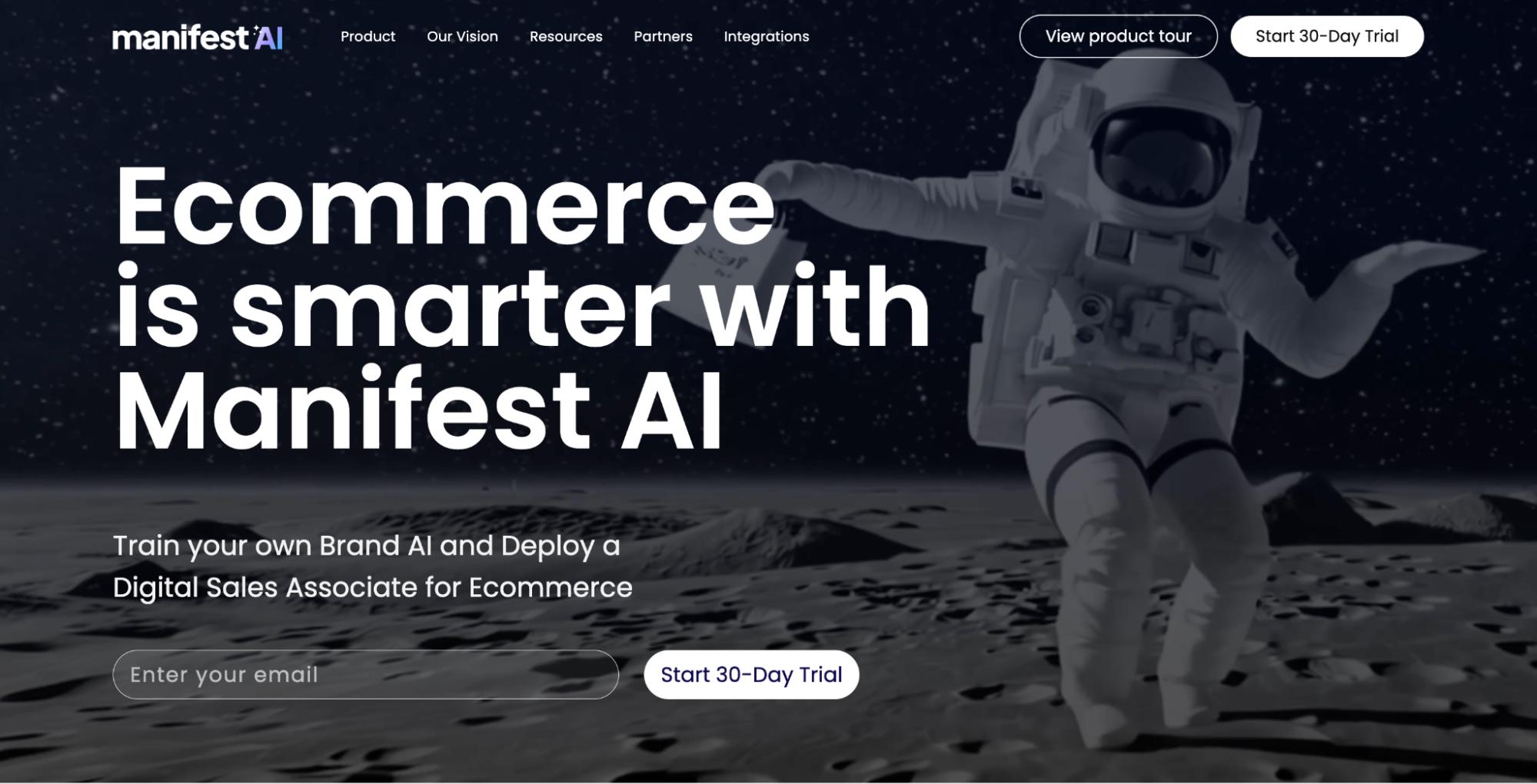
AI-powered chatbots leverage LLMs and Natural Language Processing (NLP) to interpret voice and text input. This allows them to function as virtual shopping assistants, greeting customers and helping with product searches. They can also efficiently address customer feedback and post-purchase dissonance. This scalability ultimately reduces the need for extensive manual customer support, thereby boosting the company’s net profit.
5. Personalized Recommendation Systems
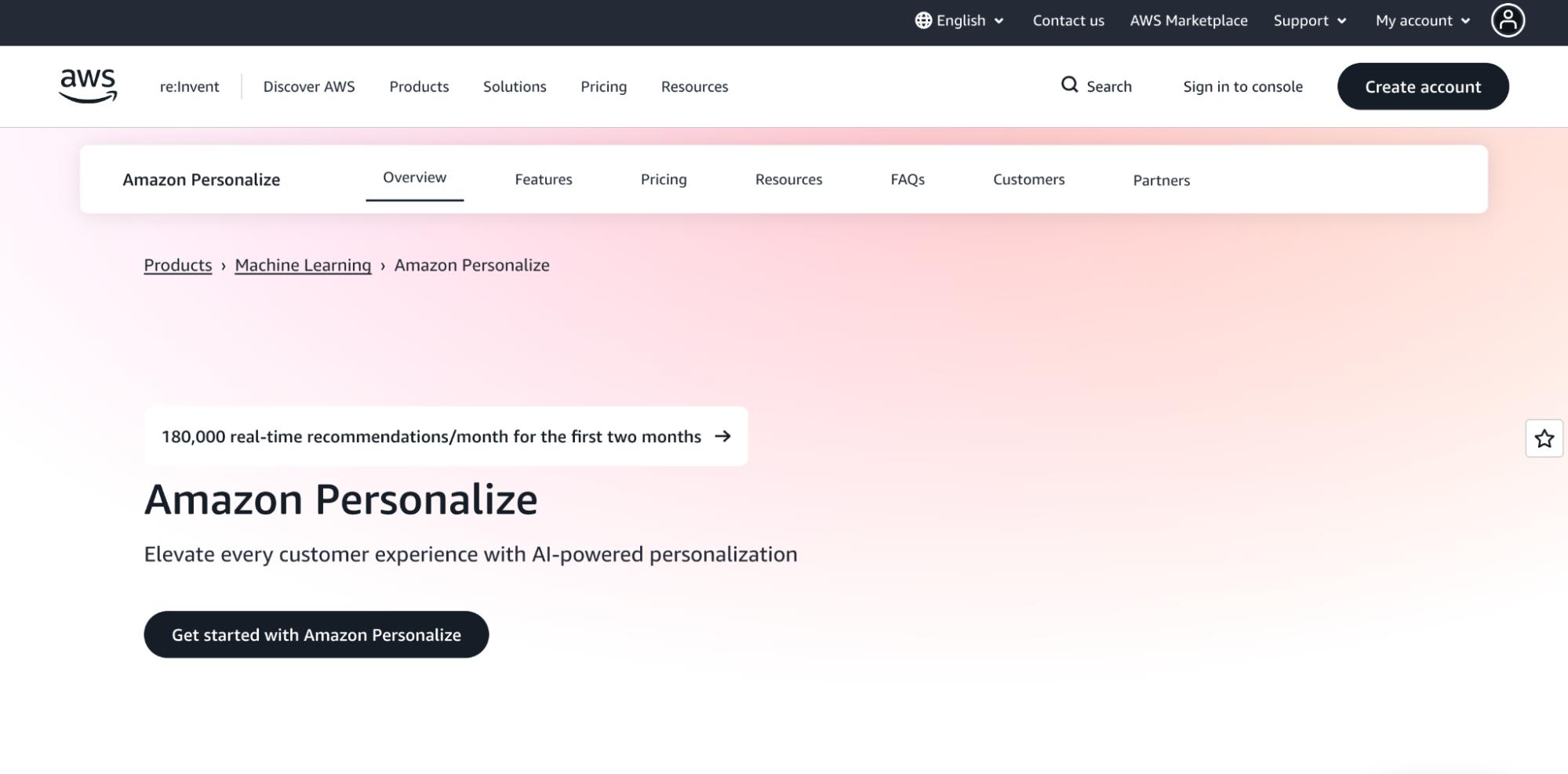
AI recommenders monitor user behaviors and purchase intentions in real time. They collect large amounts of data, which are then used to generate a detailed user profile. Based on that, suitable product recommendations are made that are specifically personalized to the user’s tastes, thereby improving customer convenience.
The Role of AI in Visual Commerce
Traditional ecommerce often falls short in user interactivity, engagement, and conversion. AI technology bridges this gap by providing a highly engaging, visual commerce experience. It personalizes the shopping journey for users through interactive images and videos. E-commerce brands can implement the following strategies to dramatically improve customer engagement and conversion rates:
- AI-Powered Video Personalization: Video commerce aims to transform the shopping experience by offering highly engaging video content. Since conventional video production is expensive, achieving hyper-personalization can be difficult. However, generative AI tools now allow e-commerce companies to produce tailored video content for every user at a fraction of the traditional cost.
- Predictive Engagement and Dynamic Storytelling: Using AI recommendation engines and forecasting tools, e-commerce brands can predict specific customer decisions and behaviors. Based on this prediction, they can offer dynamic content like videos and images with interactive storytelling elements to drive user engagement and conversions.
- Automated Product Video Creation and Optimization: Traditionally, implementing video commerce can be challenging for e-commerce brands since crafting optimized videos for every product can be expensive and time-consuming. Fortunately, with the help of generative AI, businesses can automate this process to scale for even long-tail products, while saving time, money, and human resources. This also allows brands to generate product content for different seasons, holidays and events, establishing a new standard for website freshness and engagement.
- AI-Driven Analytics for Conversion Insights: AI-powered predictive analytics can offer valuable insights on key performance metrics like clicks, add-to-cart rates, average order volumes (AOV), product purchases, and more. This not only helps e-commerce businesses monitor existing conversion rates but also highlights any drawbacks to be addressed for better future performance.
Process of AI Implementation in E-commerce
Here are the steps for implementing AI in an ecommerce environment:
Defining the Need and Use Case
Before implementing AI for ecommerce, brands need to define their goals clearly and identify any existing drawbacks within their business systems. Then they need to determine how the AI processes will be used to meet their goals and address the limitations.
Exploring Different Vendors and Solutions
Next, you need to choose suitable AI solutions in the planning phase. You must do extensive market research to identify the best vendor for your ecommerce business.
You also need to ensure that it is up to date with the latest AI frameworks to make your systems as future-proof as possible. And, make sure it is financially feasible and can integrate seamlessly with your existing tech stack without requiring extensive changes.
Running Tests and Checking in Small Scale
Testing minimizes the chances of errors and discrepancies during actual use. For this purpose, you can implement the AI within a controlled environment, preferably on a small scale. That way, if there are any issues, they will be easier to troubleshoot.
Optimize the Performance
Now, you will need to gather and organize data for the AI. Since most AI frameworks are trained on pre-existing data, this step is crucial for optimizing their performance. In this step, you will also need to identify the resources required to scale and maintain the AI systems. This way, you can ensure its optimal performance in the long run.
Implement at Scale
Once the resources have been allocated and the AI models have been trained on business data, you can implement them for your core business processes at scale. They can be embedded within the website and apps, and can even be integrated into the social media pages or other relevant channels.
Test Performance
After implementation, you have to test the AI's performance over time. This can be done by measuring KPIs like AOV, CTR, CLV, etc. Make periodic adjustments and refinements to the AI systems to ensure maximum performance at all times.
Best Practices for Using AI in E-commerce
There are different strategies and practices that you can follow to increase the efficiency of AI systems in e-commerce:
| Strategy | Importance |
|---|---|
| Start with Measurable Goals and Clear Use Cases | Using measurable goals can help in the seamless integration of the AI systems within the organization. And when clear use cases are outlined, e-commerce brands can avoid spending unnecessary resources on redundant processes. |
| Maintain Clean, Structured Customer Data | Since AI systems learn from data, it is crucial to maintain all data, particularly customer data, in a clean, structured format. This approach is essential for optimizing AI systems to deliver highly accurate, personalized, and engaging shopping experiences. |
| Market search | Explore the different solutions available in the market that can help you implement these workflows and achieve your use cases with ease. When evaluating options, consider the following: which solution is most up to date with industry standards, which is future-proof — supporting the latest AI models and ensuring compatibility with new models as they emerge, which integrates best with your existing tech stack, which requires the least effort from your team, and of course — the overall cost. |
| Run Pilot Projects Before Scaling Up | Scaling AI systems is necessary for growth, but it carries significant risk if not undertaken properly. Pilot projects - small-scale endeavors designed to test new concepts - are the perfect starting point for scaling AI systems due to their considerably lower risk profile. |
| Track AI Performance and Refine Continuously | It is important to track the performance of the different AI systems to ensure that they are functioning optimally. Besides, evolving e-commerce market trends may require business goals to be refined from time to time. That’s why continuously tweaking AI tools helps e-commerce brands keep their systems aligned with the organization's long-term goals. |
| Train Teams to Manage AI Systems Effectively | While AI systems are designed to be autonomous, some tasks need human intervention. These include downtime management, periodic hardware maintenance, or even updating AI systems to the changing market conditions. So, to manage these situations, e-commerce brands should maintain a team of trained AI professionals at all times. |
Over time, LLMs like ChatGPT will evolve into agentic commerce systems that allow users to buy products directly within their ecosystems. So, if the brand is integrated well into such LLM frameworks, it can be easily discoverable. Therefore, it is crucial that you represent your business within this ecosystem properly.
Related AI Tools for E-commerce
Most e-commerce brands today can choose from a wide range of AI-powered tools for their business. Some of the most popular and useful tools include:
Tolstoy - AI Video Commerce
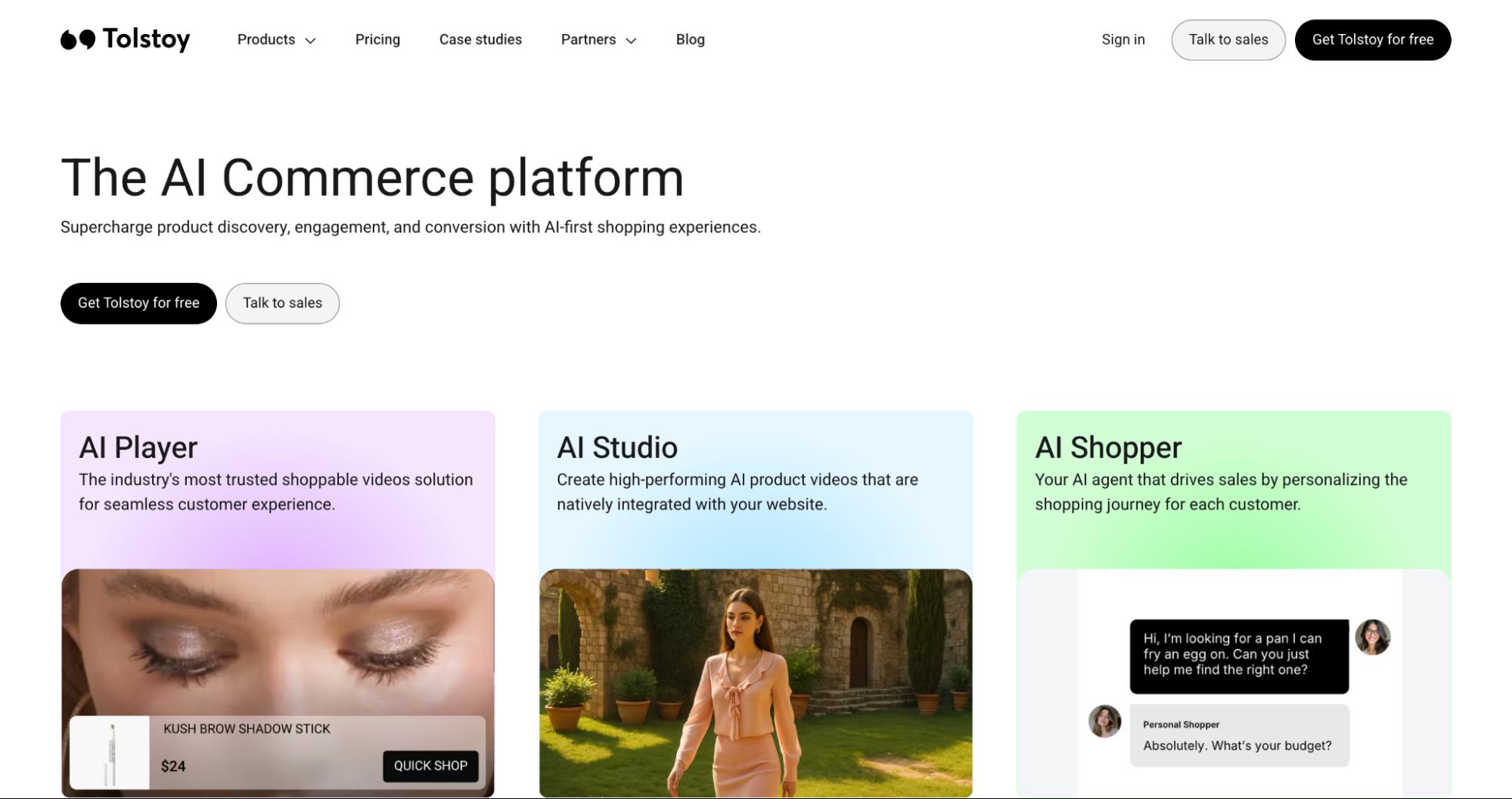
When it comes to video commerce, Tolstoy is one of the most competent AI solutions available. The Tolstoy AI Studio helps brands generate high-quality product images and videos in a cost-efficient manner, while the Tolstoy AI Player allows brands to publish these assets directly to the site, run A/B tests, and optimize based on Performance. Tolstoy AI Sales Agent allows brands to offer AI-Powered virtual try-on and sales chat experiences on the site.
ChatGPT and Jasper - Content Generation
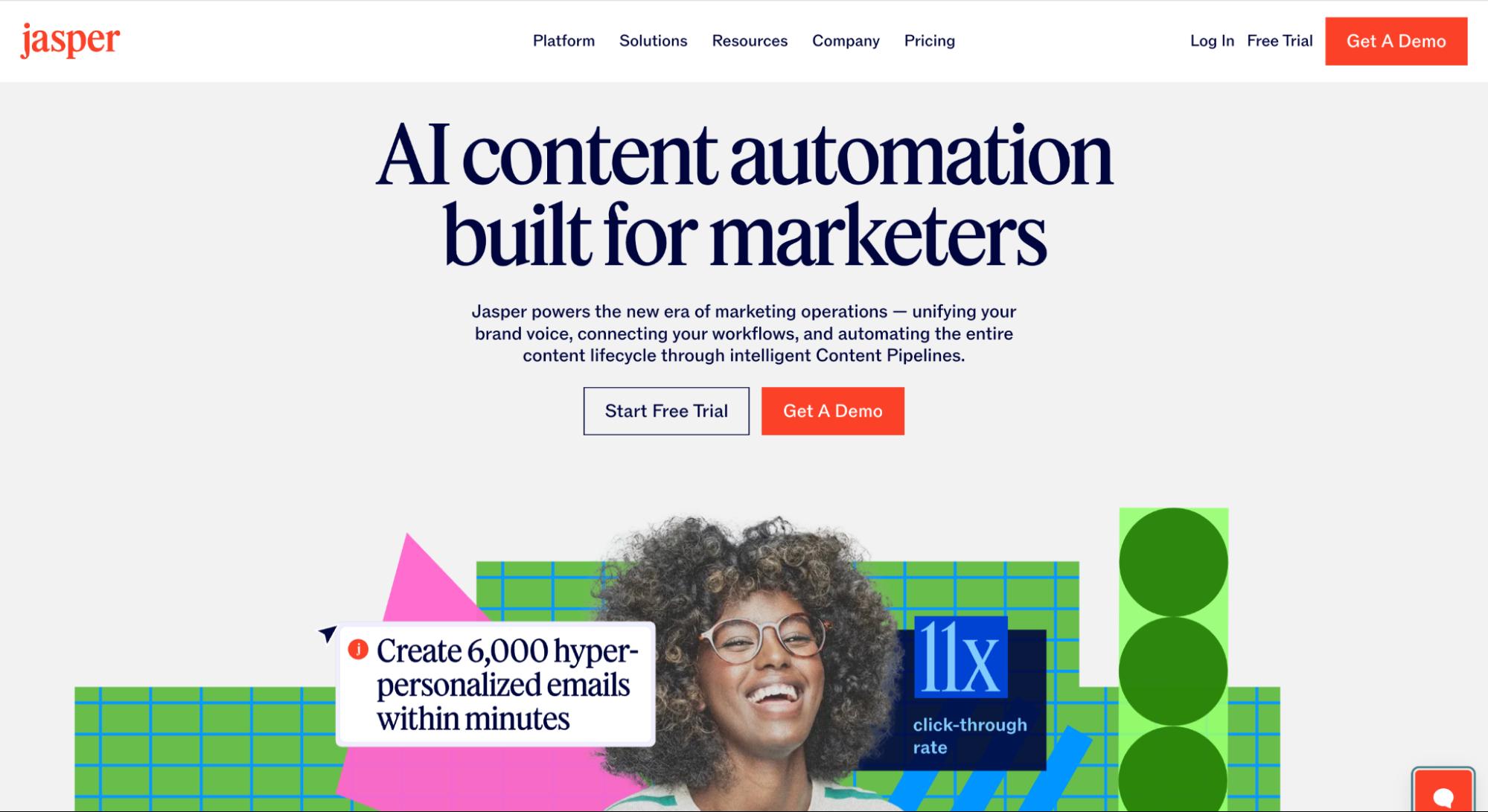
If you want to create interesting text-based content for your e-commerce platform, try an LLM like ChatGPT. With a few simple text-based prompts, you can create detailed ad copies, product descriptions, and landing page content.
You can also opt for Jasper, which is another AI content generator like ChatGPT. It generates more marketing-focused content, which makes it a better choice for e-commerce.
Klaviyo - Marketing Automation
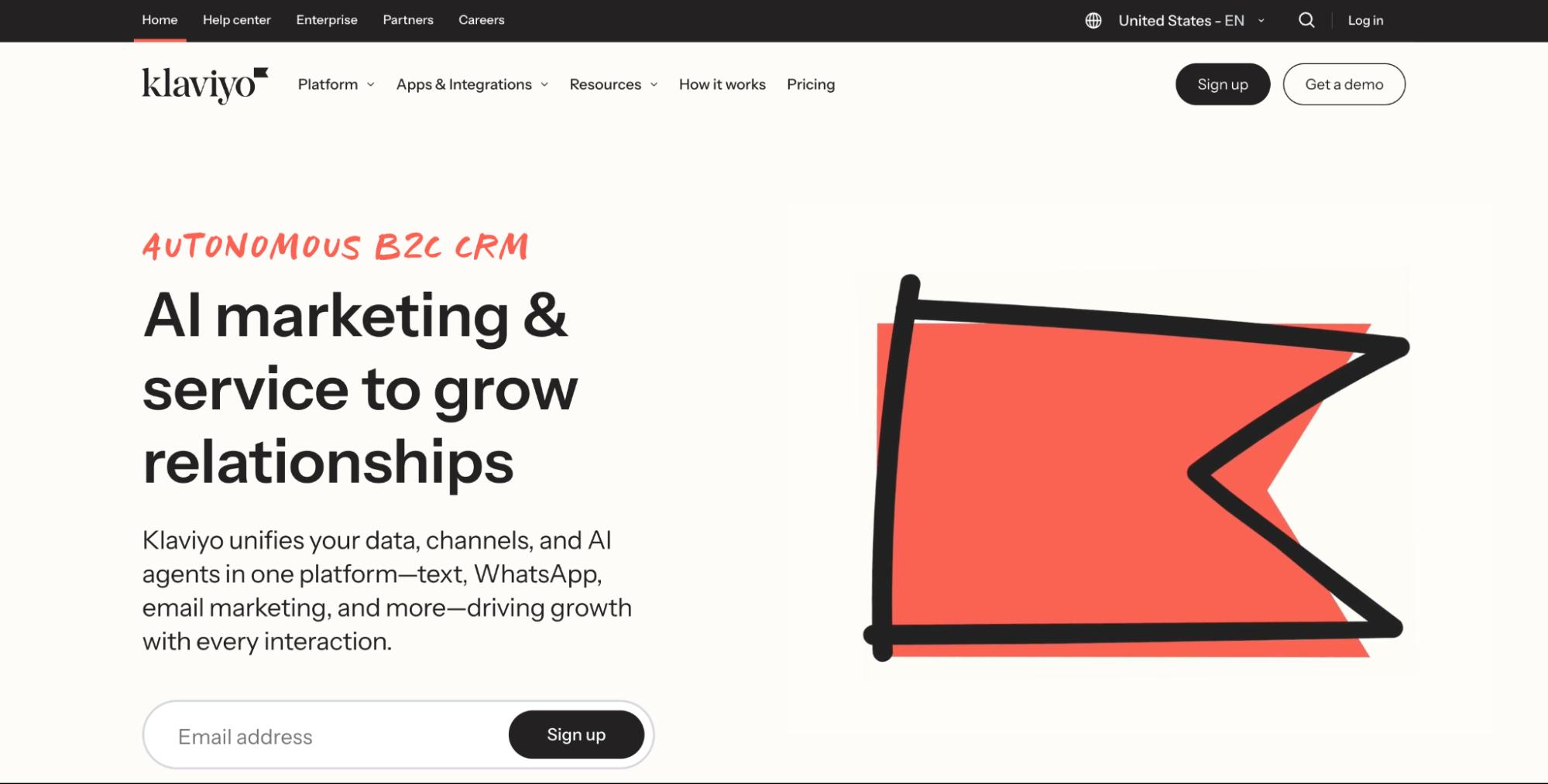
Klaviyo offers AI systems that aim to automate a wide range of marketing activities like email marketing, SMS marketing, customer management, and more. It is a comprehensive digital marketing solution that uses machine learning algorithms to deliver targeted marketing campaigns for e-commerce businesses.
Nosto - Personalization Engine
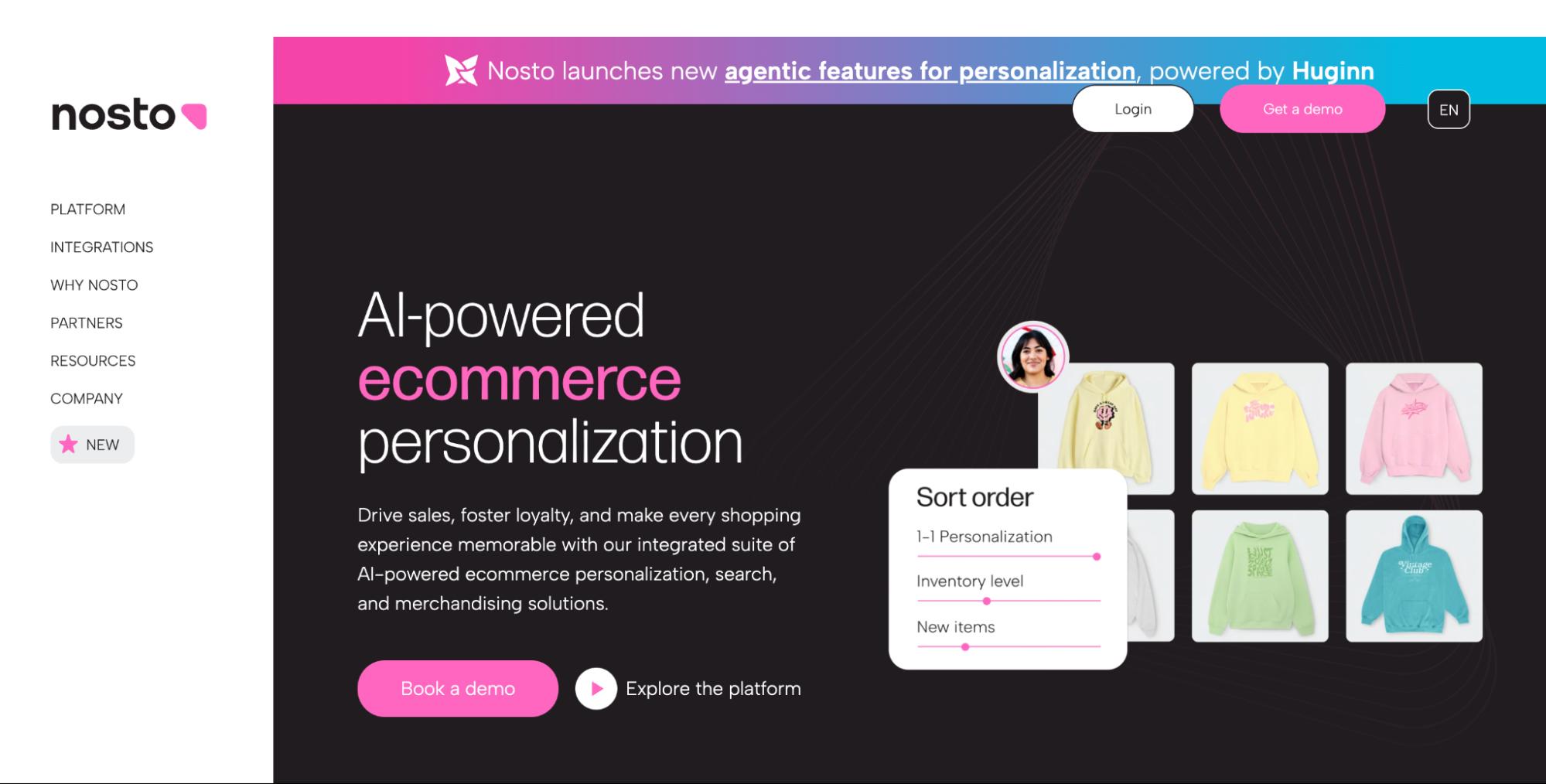
Nosto is an AI-powered personalization platform (CXP) that is specifically designed for e-commerce. It offers an agentic AI framework that can help your e-commerce platform deliver personalized content to customers. It also uses data collected from users to predict their behaviours. That way, it provides an engaging shopping experience, which improves conversion and builds loyalty.
Competera - Dynamic Pricing
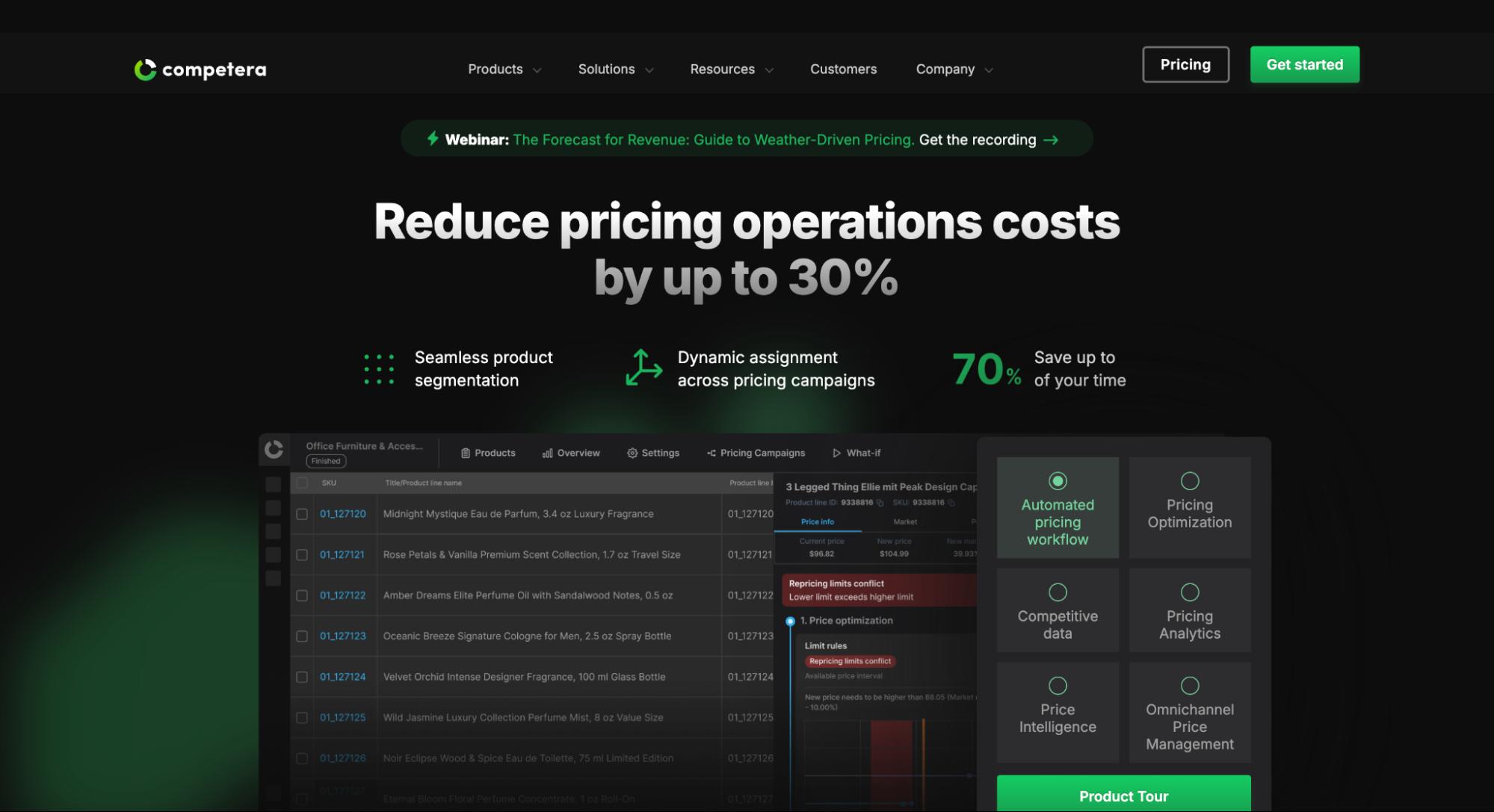
Competera is a platform that uses AI-powered systems to analyze customer and market trends. Based on that, it delivers optimal pricing strategies for e-commerce businesses. This framework helps you reduce costs for your business operations without affecting efficiency.
Zoho Analytics - Business Intelligence
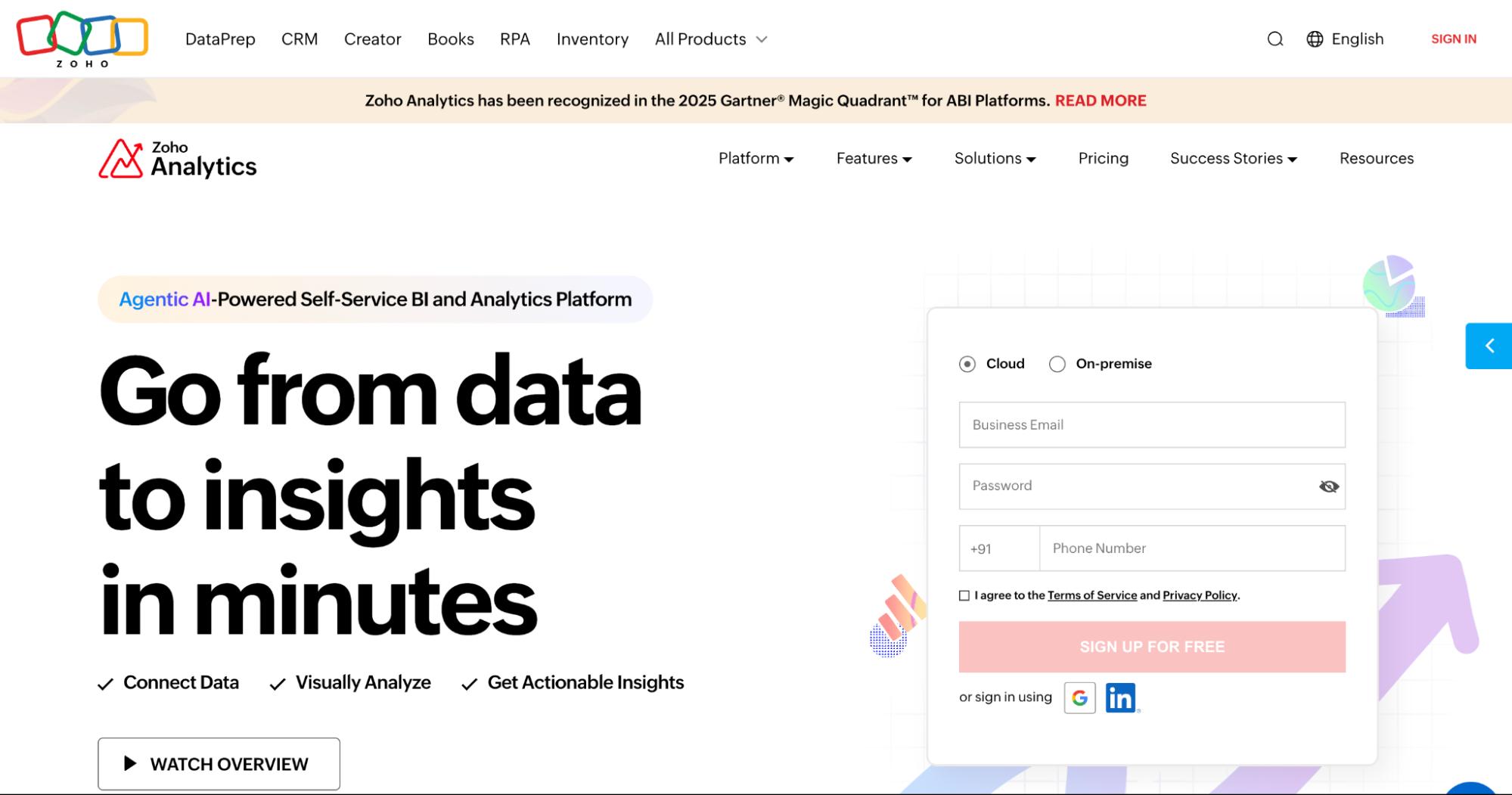
Zoho Analytics is an AI-driven Business analytics platform. It collects data from a wide range of sources and then analyzes them using machine learning algorithms. With this, you can monitor your e-commerce business performance and track the key performance indicators.
How Tolstoy Elevates AI for E-commerce Experiences
Tolstoy is an AI-driven commerce platform offering three unique products: the AI Studio (for image and video creation), the AI Player (for shoppable videos), and the AI Sales Agent (for virtual try on and sales chat). By leveraging these three AI-powered solutions, e-commerce brands can integrate AI seamlessly into their business processes to deliver a highly engaging shopping experience. With Tolstoy, you gain:
- AI-Powered High-quality Product Images and Videos (via Tolstoy AI Studio): Designed specifically for e-commerce, the Tolstoy AI Studio helps businesses generate professional product images and videos at scale.
- Customized Visuals on PDPs: With the Dynamic Media Gallery, brands can generate tailored variations of their product visuals — such as size-specific images for fashion or different skin tones for beauty. Shoppers can select the model that best represents them, automatically personalizing visuals across all site pages. Brands can also A/B test creative variations or dynamically serve different visuals based on traffic sources to maximize engagement and conversion.
- Personalized Video Shopping Journeys at Scale: Helps e-commerce brands deliver tailor-made, shoppable video content to users and allows customers to purchase products directly from these videos.
- Real-Time Engagement and Conversion Analytics: Real-time analytics on engagement and conversion metrics allow marketers and brand owners to immediately assess the effectiveness of their AI shopping framework.
- Seamless Platform Integrations: Integrates seamlessly with your websites, apps, and other platforms within the workflow, such as Shopify, Tapcart, Magento, and more.
- AI-Driven Content Automation and Optimization: Tolstoy’s AI solutions automate complex, resource-intensive tasks, such as video production and customer assistance, to optimize user engagement and conversions at scale.
- Success Stories from E-commerce Brands Using Tolstoy: Several e-commerce retailers have leveraged Tolstoy AI products to drive conversion rates, increase RoI, and promote business growth. For instance, the fashion boutique brand CSB saw a 6% rise in conversion rate with Tolstoy’s AI Sales Agent. Similarly, the fashion brand Hampden registered a 232% increase in AOV with Tolstoy’s AI video content.
Since Tolstoy integrates with other platforms, it can improve the agentic shopping experience through supported AI tools. Tolstoy AI Sales Agent can represent the brand’s products in supported shopping experiences, providing product descriptions and links to purchase.
Conclusion
As AI becomes the backbone of modern business, forward-thinking brands are rapidly integrating AI for e-commerce to optimize operations and drive revenue. A wide variety of AI systems are available to manage virtually every e-commerce process. When implemented correctly, AI platforms like Tolstoy are uniquely positioned to help e-commerce brands adopt innovative commerce strategies and refine organizational goals to drive rapid growth.
Frequently asked questions
How can AI for e-commerce improve customer experience and conversions?
AI for e-commerce can improve customer experience by delivering highly personalized content and product recommendations. It can analyze past interactions, predict customer behavior, and provide engaging experiences to increase conversions and build brand loyalty.
What are the main challenges businesses face while adopting AI for e-commerce?
When adopting AI for e-commerce, brands may face challenges like: Organizational resistance from existing employees High upfront and recurring costs for implementing and maintaining AI systems Skill gaps and a shortage of talent for managing AI workflows Replacing outdated legacy systems that may still be in use in different business processes Difficulty in gathering and governing data for training the AI models
How does Tolstoy use AI to personalize shopping journeys for e-commerce brands?
Tolstoy uses AI for e-commerce and delivers personalized shopping experiences through its three innovative products AI Player - allows personalized content on PDPs and shoppable video experiences, driving higher conversion rates. AI Studio - generates high-quality image and video content for different products AI Sales Agent - AI-powered virtual try-on and sales chatbot that guides customers through their buying process.
Can Tolstoy integrate with existing e-commerce platforms and tools?
Yes, Tolstoy supports seamless integrations with several existing e-commerce platforms, such as: Shopify Shop App Tapcart Klaviyo VTEX Magento Yotpo WooCommerce BigCommerce
What trends should e-commerce brands watch for in AI advancements?
E-commerce brands need to watch for the following AI trends: Autonomous commerce: Using Agentic AI to automate the whole shopping experience Augmented reality: Using augmented reality frameworks to drive customer engagement further Voice commerce: Increased focus on voice-based e-commerce processes Sustainable AI systems: Eco-friendly AI solutions can reduce energy costs, ensure ethical sourcing, and minimize product returns to improve the overall environmental impact of e-commerce platforms
Create with Tolstoy
Put these ideas into practice
Turn your product ideas into AI images, videos, and shopping experiences.