Storytelling Marketing Strategy: Authentic Storytelling is Key
Authentic storytelling is redefining marketing in 2026. Discover how brands connect with customers through video, interactivity and immersive content.
Key Takeaways
- Authentic storytelling wins attention: Shoppers are overwhelmed with choices, so brands that show real people, real use cases, and clear values stand out and build trust.
- Video is now the core shopping tool: Short, engaging videos help customers understand products better and are proven to influence buying decisions more than static images or text.
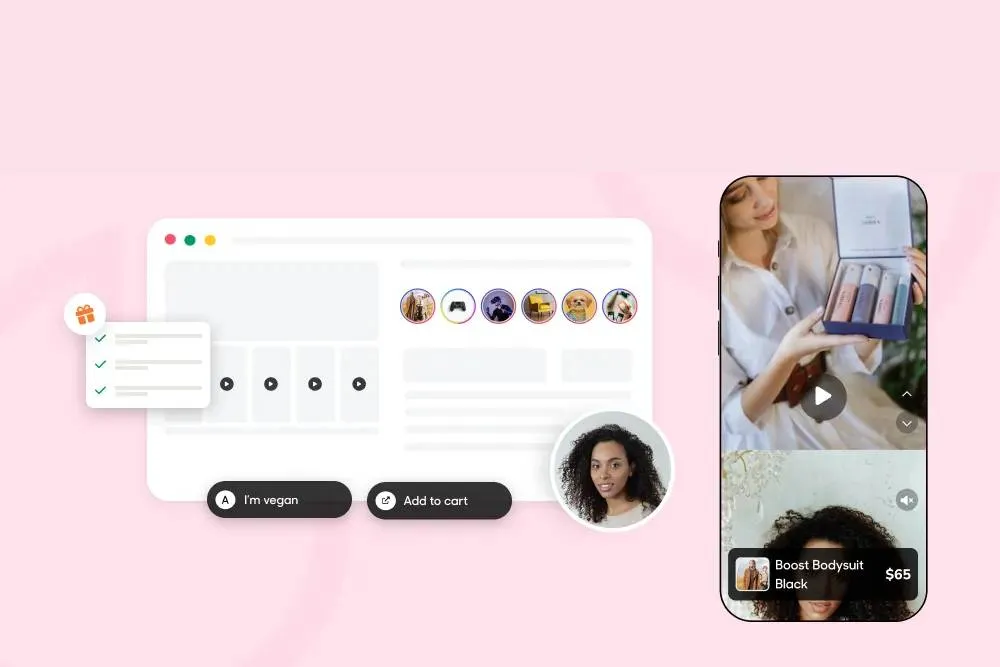
- Shoppable and interactive videos drive action: Letting shoppers explore products, ask questions, and buy directly inside videos keeps them engaged longer and increases conversions.
- Product demos reduce hesitation and returns: Interactive demonstrations help customers see how products actually work or look on them, leading to more confident purchases.
- Immersive experiences boost loyalty: Tools like AR, VR, games, and competitions make shopping more fun and personal, which increases time on site, brand recall, and repeat visits.
By Dov Kaufmann, co-founder of Tolstoy
The pandemic has had a monumental impact on the e-commerce industry, instigating a rapid-fire change in consumer behaviour. Bricks-and-mortar shopping experiences have been replaced with a digital shopping landscape, with more than two billion online shoppers scouring the internet globally for their next purchase. Consumers are enthusiastically buying into the convenience of online shopping, but on the flip side, they are facing the challenge of a limited understanding of their purchase through a lack of product visibility online.
Today there are an estimated 24 million e-commerce sites across the globe, and it is forecasted that by 2040 nearly 95% of all purchases globally will be made online or through a digital platform. Business owners find themselves in a situation where competition is increasing faster than the market is expanding, and drop-shipping is gaining huge traction. It is now more and more difficult to stand out in an overly saturated market.
This change in buying behaviour along with the rising demand for short-form video has revealed that marketing tactics need to be redefined to be about immersive, customer-centric content, not just disruptive messages. TikTok’s monumental success can be attributed to its ability to allow brands to inspire their fans in authentic and entertaining ways, and that’s what consumers want—genuine connections with authentic brands.
“The writing is on the wall and it’s telling us that to stay front-of-mind in audiences of the future, brands need to up their game in terms of creative storytelling and the representation of their ethos. The globally minded audiences of tomorrow demand more complexity, more authenticity, and more transparency,” said co-founder and CEO of market-leading video-based platform, Tolstoy, Dov Kaufmann.
“Marketing tactics like interactive and shoppable videos can channel the desire for authenticity and help businesses build the valuable connections they need to succeed and stand out from their competitors,” said Dov. “Marketing is poised to be about making the shopping experience more fun, convenient, and meaningful.”
What Marketing Tactics Can We Expect to See in 2026?
1. Shoppable Videos
In 2026 the shoppable video experience will take over much of the way we shop online. Shoppable video is rapidly transforming the e-commerce storefront by capturing an audience's attention with an experience as immersive as TikTok, with eye-catching product videos to show how their products look in real life, on real people.
Videos alone have proven to be a powerful sales tool with more than 50% of shoppers saying that online videos help them decide which brand or product to buy. With shoppable videos, customers can research all they need to know and read more about the products all within the same shopping session. Videos can be embedded in e-commerce sites, sent via SMS and email, or displayed as stories, a Carousel or Widget, enabling users to scroll through videos to view products and buy directly from the videos with "add to cart" or "shop now" buttons.
These days over 82% of all consumer online traffic is spent viewing video content, and businesses are realising the tremendous potential of this incredibly effective tool.
Pro Tip: Turn Authentic Stories Into Shoppable Moments
Authentic storytelling works best when customers can act on it instantly, not later.
- Story first, SKU second: Build short videos around real use cases, creators, or customers, then layer products in naturally using Tolstoy shoppable tags instead of leading with price or promos.
- Let viewers choose the story path: Use interactive video to ask what they care about like fit, use case, or problem to solve, then branch to the most relevant clips to keep it personal and human.
- Anchor stories on PDPs: Place your most authentic videos above the fold on PDPs so shoppers see real people and real outcomes before specs, reviews, or FAQs.
2. Interactive Videos
Savvy customers now gravitate towards brands that can provide them with unique, tech-forward shopping experiences. In fact, 75% of consumers expect brands to leverage new technologies to build better online experiences. Interactive videos allow brands to send users on a unique journey where there's more of a person-to-person conversation or personal experience, as opposed to the linear monologue that traditional videos create.
Interactive videos have the capability to turn passive viewers into active participants by creating a memorable, thoroughly engaging experience. This results in reduced user drop-off and higher engagement. Research also shows that the click-through rate of interactive videos is 10 times higher than passive videos. By allowing viewers to ask the questions they want, or to see and interact with the products they're interested in, brands will save in costs and time and provide their customer base with more targeted, genuine leads.
3. Product Demonstrations
Interactive product demonstrations allow potential customers to experience a product and all its features through a self-guided, clickable process. Product demonstrations are seeing rapid growth in the digital world as brands are now turning their attention to virtual experiences—offering consumers a direct window into an e-commerce store from the comfort of their home. A product demonstration can be as complex as allowing a customer to explore the intricacies of an engine, or as simple as displaying different clothing items on different models with different body types.
By providing each customer with the opportunity of a personalised demonstration, they're able to view the product in a way that interests them, thus avoiding unnecessary information and potentially boring the customer. This method has the advantage of providing customers with tangible proof of how a product works which then aids them in their purchase decision. In addition, they can boost the appeal of a brand’s products to a wider audience and build a sense of familiarity with the brand.
4. Virtual Reality & Augmented Reality
Virtual reality (VR) marketing incorporates the full immersion of a customer into a virtual world. This can connect a customer with a brand or product by engaging a variety of the customer’s senses, encouraging more interaction. VR allows brands to create and imbed memorable experiences, as well as bring an entertainment factor to advertising. This is more immersive than a customer scrolling down a static catalogue and encourages visitors to spend more time viewing the products, interacting with the brand, and ultimately increasing the chance of sales.
Augmented reality adds to an existing environment by introducing computer-generated images and effects. Using AR, prospective customers can try on clothing items without needing to directly interact with them. According to Shopify, implementing AR technology into the online shopping experience can increase product interactions by 94%. And while in-store purchases are returned at a rate of 5-10%, online purchases returns currently sit at around 40%. To overcome this challenge, AR/VR can help customers to make more informed decisions, reducing the need for returns.
5. Competitions & Games
Competitions and games are prize-driven strategies that encourage people to participate and engage with a brand in the hopes of a reward. A competition or game is a great way for a new audience to follow a brand’s social media accounts as it incentivises their actions in exchange for a chance to win.
This marketing tactic can help a business obtain multiple goals such as increasing brand awareness, encouraging customer loyalty, increasing sales, and obtaining customer information with little effort. Not only are people more than willing to share their details when it comes to entering competitions and playing games, but they will also share achievements around social platforms which can further boost awareness.
With more and more people spending time at home and working remotely, the demand and consumption of authentic storytelling and genuine connections with brands has—and will continue—to accelerate. Brands are optimally positioned to embrace technology like shoppable videos to meet their customers' need for an immersive, personalised online experience.
Frequently asked questions
How can a brand prove its storytelling is authentic, not just well-produced?
Authenticity shows up when stories are rooted in real customer experiences rather than brand scripts. Audit your last 10 pieces of content and label what’s customer-led vs. brand-led. Replace polished slogans with UGC clips, founder explanations, or customer problem/solution narratives. Show trade-offs, constraints, or “why we built it this way” moments instead of only outcomes. Test whether customers recognize themselves in the story via on-site polls or comments. Link these efforts with proven video storytelling strategies tailored to e-commerce brands .
What’s the fastest way to turn passive site visitors into engaged story participants?
You do it by giving visitors choices that let them self-direct the story based on intent. Add a first-question entry point (e.g., “Who are you shopping for?” or “What problem are you solving?”). Branch content paths so different answers reveal different videos or products. Track drop-off by branch to see where stories lose relevance. Iterate weekly by removing low-engagement paths. This approach works best when using interactive video marketing to engage customers .
How should storytelling change when scaling from one hero product to a full catalog?
At scale, storytelling must shift from narrative depth to narrative structure. Create repeatable story templates (problem → proof → product-in-use) instead of one-off campaigns. Assign one core customer tension per product rather than telling the full brand story every time. Use performance data to retire stories that don’t assist conversion. Centralize assets so stories stay consistent across PDPs, ads, and email. Explore our e-commerce guide to shoppable videos .
How do you measure whether “authentic” content is actually driving revenue?
You measure downstream buying confidence, not just engagement metrics. Compare conversion rates for PDPs with and without real-person video. Track assisted conversions where video was viewed but not clicked. Monitor return rates for products with demos vs. static imagery. Tie qualitative feedback (“this helped me decide”) to quantitative lift. Learn how to measure the effectiveness of shoppable videos .
How can Tolstoy AI Studio help brands scale authentic storytelling without constant shoots?
AI Studio lets brands generate story-consistent visuals and videos from simple prompts while preserving brand intent. Input your product details, audience, and use-case into AI Studio. Generate multiple lifestyle visuals or short videos that show real-world context. Refresh PDP media regularly to keep content current for shoppers and search engines. Deploy outputs across product pages, ads, and social without reshoots. Learn more about Tolstoy’s AI Studio .
Create with Tolstoy
Put these ideas into practice
Turn your product ideas into AI images, videos, and shopping experiences.