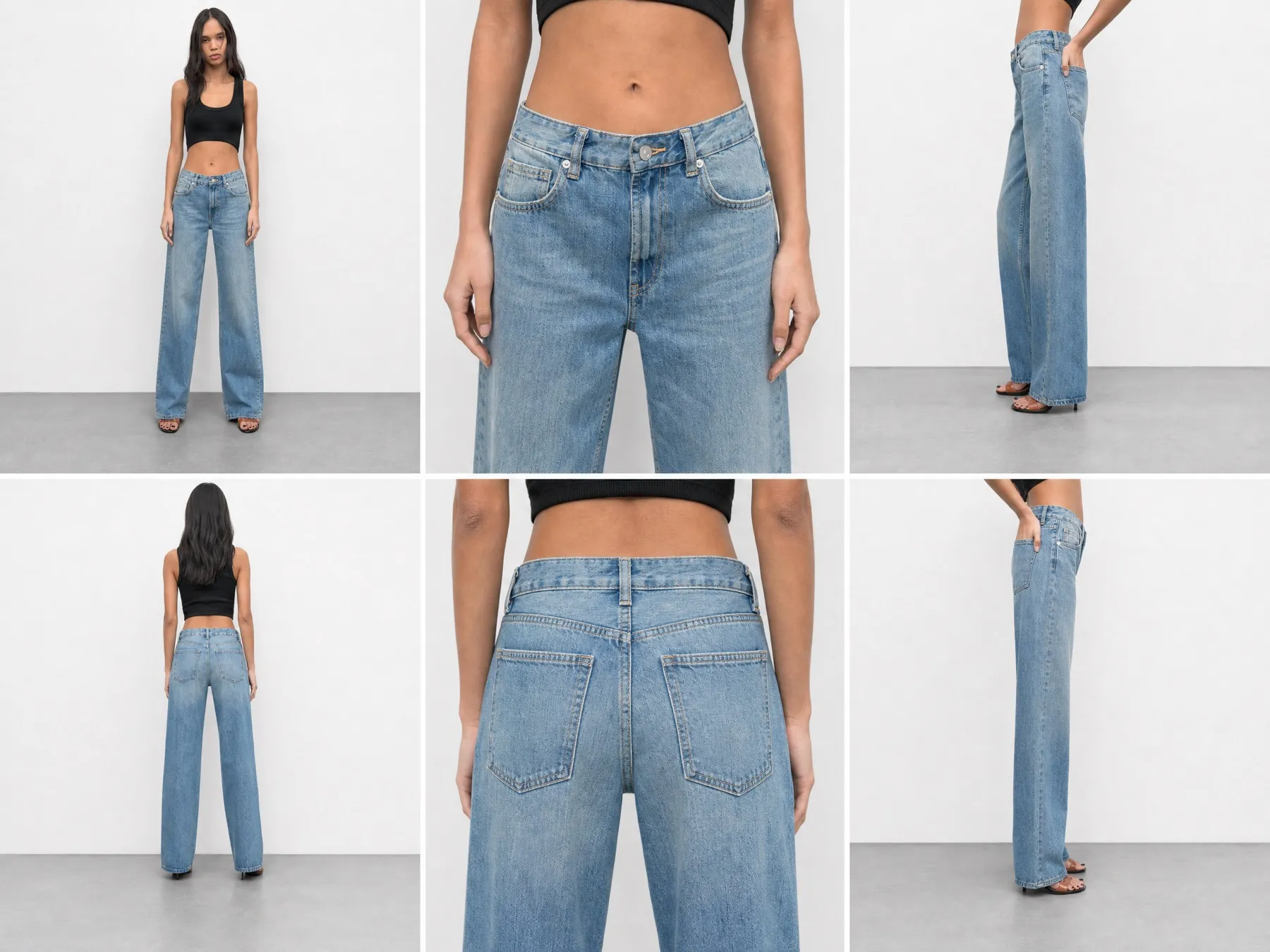
Quick answer: prompting controls whether AI content is usable
Prompting matters for apparel brands because AI content has to understand the product, not just create a pretty image. A stronger prompt helps guide the garment, fabric, crop, styling, model presentation, and brand safety before the output is generated.
- Why it matters: apparel creative depends on fit, texture, silhouette, color, construction, and styling consistency.
- What prompts should define: product type, commercial use case, crop, fabric details, reference image instructions, and brand rules.
- Where this is most important: bras, underwear, shapewear, swimwear, activewear, base layers, and any product where fabric and fit presentation are central.
- How Tolstoy helps: Tolstoy AI Studio helps ecommerce teams generate product photos, videos, ad creative, and social assets from catalog and brand inputs.
Why prompts matter for apparel brands
For apparel brands, AI content is only useful if the product stays accurate, polished, and commercially appropriate.
A vague prompt can produce an image that looks interesting but misses the point: the fabric texture is wrong, the crop feels awkward, the product detail is softened, or the styling does not match the brand.
A better prompt works more like a creative brief. It tells the AI tool what the asset is for, what the garment needs to show, what details must stay accurate, and what kind of image would be safe to use across ecommerce channels.
Apparel AI content needs product direction
Apparel is more sensitive to small creative choices than many other product categories. The same bralette, bodysuit, legging, or swimsuit can feel premium, casual, technical, or off-brand depending on crop, lighting, pose, styling, and wording.
That is why prompting matters so much. It gives the model product direction before it makes creative decisions.
For bras, underwear, base layers, shapewear, swimwear, and similar products, the prompt should make one thing unmistakable: this is professional product content, not body-focused content.
1. Prompt for the commercial context first
Start by naming the kind of asset you want. Use phrases like professional ecommerce photography, catalog product image, apparel campaign image, PDP product visual, or brand-safe social ad creative.
This tells the AI tool how the output should behave. A PDP image needs clarity. A paid social asset needs a stronger hook. A campaign image needs more styling direction. The prompt should make that job clear.
Prompt example: Professional ecommerce product photo of a ribbed knit bralette on an AI-generated model, clean studio lighting, neutral background, garment-focused composition.
2. Define crop and framing so the product stays central
Composition is one of the fastest ways AI apparel content can go wrong. If the crop is too broad, the product may get lost. If it is too close, the result may feel less useful for ecommerce.
When appropriate for the product, use a professional crop such as neck to mid-thigh. That framing can keep bras, underwear, shapewear, and similar apparel visible while keeping the image commercial and product-focused.
Prompt example: Neck-to-mid-thigh crop, centered on the garment, professional catalog styling, neutral pose, clean product presentation.
The goal is to show the product clearly in a way that feels appropriate for a product page, paid ad, email, or shoppable experience.
3. Describe fabric, fit, and construction
The strongest prompts for apparel brands sound like they were written by someone who understands the product.
Instead of relying on broad words like nice, flattering, premium, or stylish, describe the actual garment details a shopper needs to see.
Textile and garment language to use
- Fabric: ribbed knit, cotton modal, satin finish, mesh paneling, brushed jersey, seamless knit.
- Construction: bonded edge finishing, underband support, flat seams, adjustable straps, molded cup shape.
- Texture: visible ribbing, fine knit pattern, soft matte finish, smooth stretch fabric.
- Fit presentation: clean silhouette, natural fit, product-centered pose, consistent styling.
This kind of language gives the model usable instructions and keeps the creative focused on the product instead of generic fashion imagery.
4. Use reference images to protect product detail
Reference images are especially important for apparel because the details matter: ribbing, knit patterns, seams, edge finishing, lace, color, and silhouette can all change the way a product is understood.
When you include a reference image, tell the model exactly what to preserve.
Prompt example: Use the reference image to preserve the ribbed knit texture, soft matte fabric finish, underband shape, and neutral color. Keep the final image clean, commercial, and garment-focused.
This reduces the chance that the output invents new construction details or smooths away the texture that makes the product recognizable.
5. Keep brand safety in the prompt
For apparel brands, brand safety is not only about avoiding the wrong words. It is about making sure the final asset feels appropriate for the product category, channel, and audience.
A useful prompt should define the level of polish, styling restraint, model presentation, and commercial use case. This is especially important for intimate apparel and close-fitting clothing.
Prompt example: Keep the image polished, commercial, garment-focused, and appropriate for an ecommerce product page. Prioritize fabric quality, silhouette, fit presentation, and styling consistency.
Prompt template for apparel brands generating AI content
Use this structure when creating AI product photos, product videos, or ad creative for apparel:
Create [content type] for [product type] using professional ecommerce styling. Show [garment] with [crop/framing] and [lighting/background]. Preserve [fabric texture], [construction detail], [color/material finish], and [silhouette] from the reference image. Keep the output product-focused, polished, commercial, and aligned with [brand style or channel].
For intimate apparel or close-fitting products, add more explicit direction around crop, garment focus, and commercial presentation.
Checklist before generating AI content
Before you generate, check whether the prompt answers these questions:
- What is the content for? PDP, paid social, email, landing page, shoppable video, or another channel?
- What product is being shown? Product type, key feature, fabric, color, and silhouette.
- What should the image preserve? Texture, seams, edges, construction, fit, color, and material finish.
- What crop keeps the content product-first? Full body, cropped product shot, neck-to-mid-thigh, flat lay, or detail shot.
- What brand rules matter? Styling, polish, model presentation, background, lighting, and tone.
- What should be reviewed before publishing? Product accuracy, brand fit, channel fit, and commercial appropriateness.
How Tolstoy AI Studio helps apparel brands generate AI content
Tolstoy AI Studio is built for ecommerce teams that need on-brand product visuals, product videos, ad creative, and social content from existing catalog and brand inputs.
For apparel brands, that means prompts can become a repeatable creative system. Instead of starting from scratch every time, teams can use product-specific prompt patterns to generate PDP images, social-ready assets, model shots, campaign concepts, or shoppable video creative.
The practical workflow is simple:
- Start with the product asset. Use the garment image, catalog data, or brand context.
- Add prompt instructions. Define crop, fabric, construction, styling, channel, and brand safety.
- Generate content variations. Create different product photos, videos, ad creatives, or social assets.
- Review before publishing. Approve, tweak, or regenerate outputs that need more product or brand direction.
- Repurpose across channels. Use the final creative across PDPs, PLPs, email, social, ads, or shoppable video placements.
Work with Tolstoy's AI strategist team
Prompting works best when it is tailored to the brand, product category, and creative channel. A premium basics brand, a technical activewear brand, and a lingerie brand may all need different prompt libraries, even if the core principles are similar.
Tolstoy's AI strategist team helps ecommerce teams learn best prompting methods for apparel and develop prompting practices that fit each brand's specific needs. That can include category-safe language, product-specific templates, styling rules, and repeatable workflows for generating creative in AI Studio.
For teams using Tolstoy AI Studio, the goal is to make prompting repeatable: one clear brand framework that helps teams generate more useful product imagery, videos, and shoppable creative without starting from scratch every time.
If you want help turning product detail and brand rules into reusable prompt systems, book a free AI Studio demo.
Final takeaway
Prompting is important for apparel brands because apparel AI content has to do more than look good. It has to show the product clearly, preserve the details shoppers care about, and fit the brand's commercial standards.
When prompts define the product, fabric, crop, styling, reference details, and channel, AI-generated content becomes much easier to review, reuse, and scale. And when teams are ready to build that workflow into a repeatable system, Tolstoy AI Studio can help turn strong prompting practices into on-brand ecommerce creative.
FAQ
Why is prompting important for apparel brands generating AI content?
Prompting is important because apparel content depends on product accuracy, fabric detail, fit presentation, crop, styling, and brand safety. Better prompts give AI tools clearer instructions before they generate images, videos, or ads.
How should apparel brands prompt AI for bras or underwear product photos?
Use professional ecommerce or catalog framing, describe the garment and fabric details, and keep the composition product-focused. A neck-to-mid-thigh crop can help keep the output commercial for many intimate apparel products.
What details should an apparel AI prompt include?
Include the content type, product type, crop, fabric, construction details, color, material finish, reference image instructions, brand style, and intended channel.
Why use reference images for AI apparel content?
Reference images help preserve product-specific details such as ribbing, knit patterns, color, edge finishing, and silhouette. They give the model a clearer visual anchor.
Can Tolstoy AI Studio help apparel brands generate AI content?
Yes. Tolstoy AI Studio can help ecommerce teams generate product images, product videos, ad creatives, and social content from catalog and brand inputs, then review or regenerate outputs before publishing.
Does Tolstoy help brands create better prompting practices?
Yes. Tolstoy's AI strategist team helps teams learn best prompting methods for apparel and identify prompt patterns that fit their product category, brand rules, and creative goals.
Create with Tolstoy
Put these ideas into practice
Turn your product ideas into AI images, videos, and shopping experiences.